

Guadeloupe in December: Weather, holiday traditions, budget & trip planning
December is one of the most appealing times of year to discover Guadeloupe. The islands move into a festive season, Chanté Nwel gatherings bring towns and neighborhoods to life, the days stay warm, and more travelers arrive to enjoy Grande-Terre’s beaches, Basse-Terre’s lush landscapes, and the surrounding islands. It is also a month that rewards advance planning: flights, accommodations, excursions, and certain rental car categories may become less available as Christmas and New Year’s approach.
Planning a December trip to Guadeloupe is therefore about more than checking the weather. It also means deciding where to stay, setting a realistic budget, understanding the rhythm of the holiday season, organizing transportation, and booking the most important parts of the trip at the right time. This guide brings together the essentials for a smoother vacation without turning every day into a race from one stop to the next.
Planning a December trip? Check rental car availability for your travel dates now.
Why visit Guadeloupe in December?
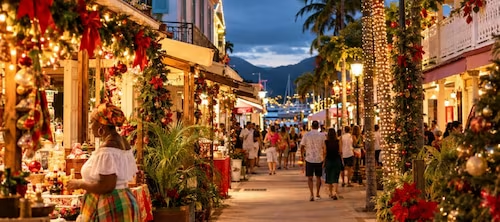
December brings together several advantages: a strong holiday atmosphere, weather that generally begins to become less humid after the wet season, and a calendar filled with family gatherings and local traditions. For visitors, the experience goes far beyond the beach: markets, music, holiday meals, decorated towns, and Chanté Nwel evenings all add another layer to the trip.
The trade-off is simple: as school breaks, Christmas, and New Year’s get closer, demand increases. Traveling at the beginning of the month can offer a festive atmosphere with generally less pressure on availability than the period from roughly December 20 through the first days of January. Visiting during the heart of the holidays, on the other hand, offers the island at its most animated but requires more advance planning.
What weather should you expect in Guadeloupe in December?
December sits between the end of the wetter season and the approach of the Carême, or dry season. According to Météo-France, the wetter season generally runs from June through November, while the Carême typically extends from January through April. In practice, December can bring beautiful stretches of sunshine while still allowing for occasional showers, especially in higher elevations and on Basse-Terre.
It is better to avoid promises such as “guaranteed sunshine.” Tropical weather can change quickly: a brief, localized shower may be followed by bright skies only minutes later. That variability is part of island travel and does not necessarily need to disrupt the entire day.
Grande-Terre and Basse-Terre: the weather can differ on the same day
Basse-Terre’s mountainous terrain tends to create more clouds and rainfall, particularly around La Soufrière and the rainforest. Grande-Terre is flatter and generally drier, so conditions there may be clearer at the same time. For travelers with a rental car, that difference can be useful: you may be able to adjust the day’s plans based on local conditions instead of canceling everything.
What should you pack for December?
Lightweight, breathable clothing for daytime.
Sunscreen, a hat, and a reusable water bottle for outdoor activities.
A light jacket or windbreaker for evenings, boat rides, or higher elevations.
A compact rain jacket or small umbrella: a tropical shower is still possible.
Appropriate shoes if you plan to hike, visit waterfalls, or walk on wet trails in Basse-Terre.

Chanté Nwel: experience December through a Guadeloupean holiday tradition
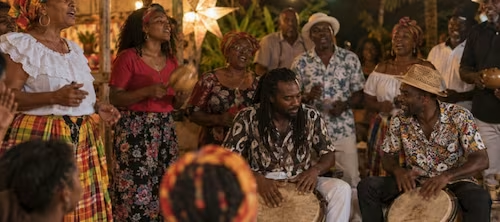
It is impossible to talk about December in Guadeloupe without mentioning Chanté Nwel. These gatherings combine Christmas songs, Creole rhythms, and a strong sense of community. They may be organized by towns, associations, businesses, or neighborhood groups in many different settings. For visitors, they offer a lively way to experience local culture beyond the island’s classic tourist attractions.
Programs change from year to year. Rather than relying on dates that may quickly become outdated, check the official channels of local towns, tourism offices, and event organizers shortly before your trip. That approach keeps your plans current and helps you find events near the area where you are staying.
How can you enjoy the holiday atmosphere without overpacking your schedule?
A good strategy is to leave one or two evenings open during the week. A Guadeloupe vacation is often better with a little flexibility: a Chanté Nwel you hear about after arriving, a temporary market, a town event, or simply a longer dinner can become a highlight of the trip. Planning every hour too tightly can make transportation more stressful during a period when roads and shopping areas may be busier.
December crowds: what changes for travelers?
As the holidays approach, accommodations, restaurants, excursions, and transportation services become more in demand. Roads around Pointe-à-Pitre, Les Abymes, and Jarry may also be busier at certain times, especially when normal traffic overlaps with holiday shopping.
That does not mean you should avoid December. It simply means building that reality into your plans: leave a little earlier for a booked activity, avoid scheduling two far-apart excursions on the same day, do not build an itinerary around a chain of very tight appointments, and confirm important schedules the day before.
Early, mid, or late December: when should you go?
Early December: the Christmas atmosphere is already present, with generally less pressure on availability than during the peak holiday period.
Mid-December: a good compromise for enjoying seasonal events while, depending on the dates, avoiding the absolute Christmas and New Year’s peak.
Christmas and New Year’s: the fullest holiday experience, but with a greater need to book the essential parts of the trip earlier.
How much should you budget for a December trip to Guadeloupe?
December falls within the high travel season. Prices can therefore be higher than in September or October and, more importantly, the most attractive options can disappear quickly. Instead of looking for one “average budget” that will not fit every travel style, it is more useful to plan by major expense category.
1. Flights
Dates around Christmas and New Year’s are especially popular. If your vacation dates are fixed, booking earlier mainly gives you more choice among flight times and itineraries.
2. Accommodations
Your budget will vary significantly depending on the area, the type of lodging, and the length of your stay. A vacation rental with a kitchen can help balance food costs on a trip of a week or more, while a hotel may simplify day-to-day logistics. The best option is the one that matches your travel style and the amount of driving you expect to do.
3. Rental car
Compare the total rental cost, not just the advertised daily rate. Vehicle category, add-ons, protection options, fuel policy, an additional driver, and deposit requirements can all affect the final cost. If you are traveling with family or several pieces of luggage, choosing a car that is too small just to save a few dollars can quickly become uncomfortable.
4. Meals and groceries
Mixing restaurant meals with markets, bakeries, and meals prepared at your lodging can help keep the budget under control while still letting you discover local food. During the holiday season, it is also smart to reserve restaurants in advance for the evenings that matter most, especially on high-demand dates.
5. Activities
Boat excursions, diving, guided tours, and family activities can make up a significant part of the trip budget. Pick a few priority experiences and leave room for free or lower-cost options such as beaches, scenic viewpoints, markets, walks, and exploring different towns.
Traveling with family or prefer an automatic? Compare the vehicle categories that fit your trip before December availability becomes more limited.
Where should you stay in December based on your travel style?
Where you stay directly affects how much time you spend on the road. Guadeloupe is easier to enjoy when you accept that travel between two points may take longer than the distance on a map suggests.
For a vacation focused on beaches, restaurants, and Grande-Terre’s livelier resort areas, places such as Le Gosier, Sainte-Anne, or Saint-François keep you close to many services. If your trip is more about rainforest, waterfalls, mountains, and the leeward coast, spending several nights on Basse-Terre can reduce back-and-forth driving.
On a trip of a week or more, some travelers split their stay between Grande-Terre and Basse-Terre. This makes it easier to experience both sides of the destination without spending every day crossing the islands. It simply requires coordinating accommodations and luggage a little more carefully.
Getting around Guadeloupe in December: plan ahead
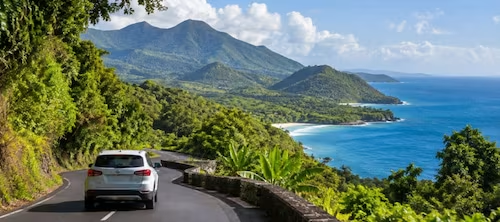
If you want to explore several towns, beaches, or natural sites during the same vacation, having a car provides real flexibility. This is especially helpful when your itinerary alternates between Grande-Terre and Basse-Terre or when your lodging is outside a busy town center.
In December, advance planning matters most when it comes to vehicle type. Automatic cars, family-size vehicles, and 7-seaters can be popular with international travelers and families gathering for the holidays. Booking ahead is therefore not only about finding a better price; it is also about keeping more choices available.
Which vehicle should you choose?
Couple or light travel: a compact car can be practical for parking and everyday driving.
Family with luggage: prioritize usable cargo and passenger space rather than only the advertised number of seats.
Automatic transmission: book earlier if driving an automatic is essential to your comfort.
Basse-Terre itinerary: choose a vehicle you feel comfortable driving on winding, wet, or sloped roads; an SUV is not automatically necessary for every route.
Three habits that can keep your days from becoming too packed
Group activities by geographic area instead of crossing the islands several times in the same day.
Build in extra time before a boat departure, excursion, or restaurant reservation.
Check local weather and traffic conditions before leaving, especially for activities in Basse-Terre.
How can you plan a week in Guadeloupe in December without rushing?
A good vacation is not measured by how many places you check off a list. For a one-week trip, it is often better to alternate sightseeing days with more open time. A simple plan might include several days on Grande-Terre, one or two days on Basse-Terre, and one flexible day that can change depending on the weather, the group’s energy, or an activity you discover after arriving.
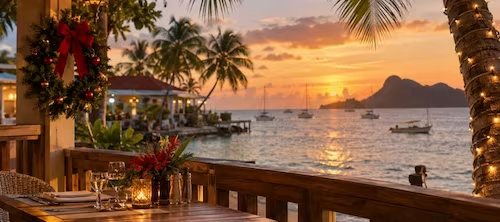
That “buffer day” is particularly useful in December. You can use it to move an outing affected by rain, attend a Chanté Nwel announced at the last minute, take a boat excursion when conditions are favorable, or simply slow down after several active days.
Practical checklist: what to book or verify before you leave
When? | What to book / verify |
As soon as your dates are confirmed | Flights, accommodations, and rental car if you are traveling over the Christmas holidays or need a specific vehicle category. |
A few weeks before | Priority excursions, important restaurant reservations, and any necessary transfers. |
The week you leave | Weather forecast, updated Chanté Nwel schedules, and events in the town where you are staying. |
Before you drive | Opening hours, realistic drive time, gas level, parking location, and access conditions for the place you are visiting. |
December is better planned than improvised
Traveling to Guadeloupe in December means enjoying a warm destination just as the holiday atmosphere takes center stage. It is a rewarding time to visit, but it favors travelers who plan ahead: book the essentials, leave flexibility in the itinerary, account for the differences between Grande-Terre and Basse-Terre, and do not underestimate driving times.
The best approach is to secure what could become unavailable — flights, accommodations, a rental car, or a priority activity — and then leave enough room for spontaneous discoveries. That balance between preparation and freedom is often what makes a December trip to Guadeloupe especially enjoyable.
December is a transition period after the wetter season and before the Carême, which Météo-France generally places from January through April. Sunny periods are common, but showers are still possible, especially in the higher terrain of Basse-Terre. It is better to think in terms of climate patterns rather than guaranteed sunshine.
Yes, especially for the holiday atmosphere, Chanté Nwel traditions, and outdoor activities. The trade-off is higher visitor demand as Christmas and New Year’s approach, which makes it useful to book the most important parts of the trip in advance.
Grande-Terre is well suited to travelers who prioritize beaches, restaurants, and resort areas. Basse-Terre is a stronger fit for rainforest, waterfalls, the leeward coast, and mountain scenery. For a trip of a week or more, splitting a few nights between the two can reduce driving time.
Locations and dates change every year. Events may be organized in different towns, by local associations, or in private and commercial venues. Check current local programs shortly before your trip instead of relying on an old calendar.
Not necessarily. For many standard routes, the most important thing is choosing a vehicle that fits your passengers, luggage, and driving comfort. Roads can be winding, steep, or wet, but that does not mean an SUV is required in every case.
