

What to do in Guadeloupe when It rains: indoor activities and flexible itineraries
September falls within Guadeloupe’s wetter season. That does not mean a rainy day has to become a wasted day.
Between tropical showers, the weather can improve quickly, and conditions may be very different between Grande-Terre and Basse-Terre.
The best approach is to keep your plans flexible, group activities by area, and always have an indoor backup option.
Museums, distilleries, markets, local heritage sites, and food stops can all help you make the most of your time even when the sun takes a break.
Planning a Trip to Guadeloupe in September?
Having your own rental car makes it easier to adjust your plans based on the weather and switch between outdoor and indoor activities.
→ Explore compact cars, family vehicles, and SUVs available with Jumbo Car Guadeloupe.
Why can the weather change so quickly in Guadeloupe?
Guadeloupe’s landscape creates very different conditions between Grande-Terre and Basse-Terre.
Basse-Terre is more mountainous and covered in tropical rainforest, so it generally receives more rainfall. Grande-Terre is flatter and can experience very different weather at the same time.
That means a heavy shower along the Route de la Traversée does not necessarily mean it is also raining in Sainte-Anne, Le Gosier, or Saint-François.
Before heading out:
check the local forecast;
review any weather alerts;
plan an indoor activity in the same general area;
avoid driving back and forth across the island just to chase the sun.
This approach helps reduce unnecessary driving and makes the day much more enjoyable.
How should you plan a day in Guadeloupe when it rains?
When the weather looks unstable, avoid building a packed schedule with five or six stops spread across the island.
Instead, choose one main area and plan two or three activities nearby.
For example, you can build your day around:
Pointe-à-Pitre and Le Gosier;
Sainte-Anne and Saint-François;
Basse-Terre and the west coast;
your hotel or vacation rental and the surrounding area.
Then adjust the order of activities depending on when the weather clears.
Another useful tip in September: check opening hours that same morning. Some attractions may operate on reduced schedules depending on the season.
What to do in Guadeloupe when It rains
1. Visit museums and cultural sites
When the rain settles in for a while, a cultural visit is one of the best alternatives to the beach or hiking.
In Pointe-à-Pitre, the Mémorial ACTe is a major cultural destination and can easily fill several hours with history and heritage.

It also fits well into a day focused on Pointe-à-Pitre, without requiring long drives between activities.
Depending on your route, other heritage centers, museums, and places connected to Guadeloupe’s agricultural and cultural history can also work well as backup options.
Before you go, check:
opening hours;
days of operation;
whether advance reservations are required;
approximate visit duration.
2. Visit a Guadeloupe rum distillery
A rainy day is also a great opportunity to discover one of Guadeloupe’s most iconic products: agricultural rum.
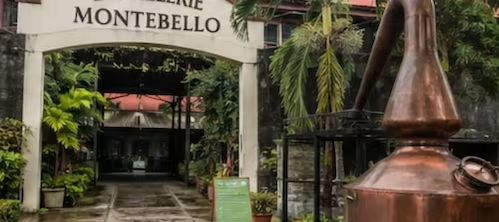
Several distilleries offer shops, discovery areas, or guided experiences.
You can learn more about sugarcane cultivation, the production process, and the role rum has played in local history and culture.
The easiest strategy is to choose a distillery close to your planned route, rather than crossing the island just for one visit.
If the weather clears afterward, you can continue toward a nearby viewpoint, beach, or outdoor stop.
3. Explore the markets in Pointe-à-Pitre
Markets offer another way to discover Guadeloupe through spices, tropical fruit, local products, and crafts.

In Pointe-à-Pitre, they can easily be combined with a walk through the city center.
A simple rainy-day combination is:
market + cultural visit + lunch in town.
That way, you avoid getting back in the car after every shower.
4. Turn lunch into part of the experience
Rainy weather is also a good excuse to slow things down.
A longer lunch at a Creole restaurant, tasting local specialties, or enjoying a relaxed café stop can give the weather time to improve without adding more miles to your day.
This works especially well if you have an outdoor activity planned later in the afternoon.
Three flexible rainy-day itineraries in Guadeloupe
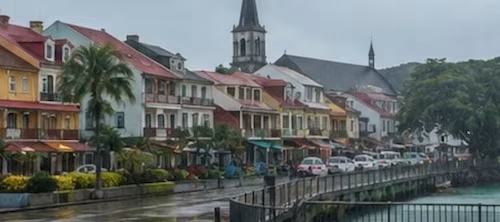
Itinerary 1 — Pointe-à-Pitre and Grande-Terre
Morning
Start with a cultural visit in Pointe-à-Pitre.
Midday
Explore a local market or spend time in the city center before lunch.
Afternoon
If the weather clears, continue toward:
Le Gosier;
Sainte-Anne;
Saint-François.
If the rain continues, keep your plans focused on indoor or cultural activities nearby.
This option minimizes driving and works especially well for travelers staying on Grande-Terre.
Itinerary 2 — Basse-Terre in changeable weather
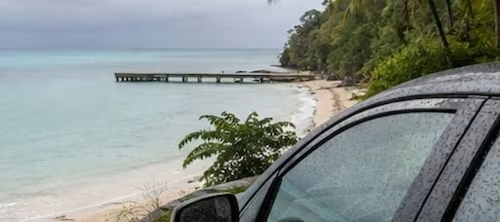
Weather on Basse-Terre can change quickly, and some roads are more mountainous.
Morning
Plan a distillery, museum, or heritage visit.
Midday
Have lunch in the same area instead of immediately getting back on the road.
Afternoon
If conditions improve, continue to a nearby viewpoint or outdoor attraction.
If rainfall becomes heavy, postpone hiking and exposed outdoor stops.
The main goal is to avoid turning the day into a series of long drives in heavy rain.
Itinerary 3 — Stay close to your accommodation
If the forecast looks especially unpredictable, this is often the easiest option.
Choose:
an indoor attraction within 30 to 45 minutes;
a restaurant in the same area;
possibly a market or cultural stop;
a beach or viewpoint as a last-minute option if the weather clears.
Save longer island drives for a day with better conditions.
Staying on Basse-Terre?
Planning activities closer to where you are staying can help reduce unnecessary driving when the weather changes quickly.
→ Explore Jumbo Car rental options near your route.
Driving in Guadeloupe in the rain: Best practices
Tropical rain can reduce visibility quickly and make the road surface more slippery.
On some of the hillier roads of Basse-Terre, driving can also feel more demanding if you are not familiar with the island.
The most important thing is to adjust your speed to the actual road conditions.
A few simple tips:
slow down when visibility drops;
increase your following distance;
use headlights when conditions require them;
avoid sudden braking;
keep your steering smooth on winding roads;
do not try to maintain the same travel time you would in dry weather.
If the rain becomes very heavy or visibility is too poor, it is safer to stop in a secure location and wait for conditions to improve.
Do you need an SUV in Guadeloupe when it rains?
Not necessarily.
A compact car in good condition is suitable for most trips on the island’s main roads.
An SUV may be a good choice if you want:
more space;
extra room for luggage;
additional comfort;
to spend several days driving around Basse-Terre.
But rain by itself does not make an SUV necessary.
The most important thing is choosing a vehicle that matches your itinerary, number of travelers, and luggage.
What should you keep in the car on rainy days?
A few simple items can make your day much easier:
a lightweight rain jacket;
a towel;
a bag for wet clothes;
a bottle of water;
a snack;
a fully charged phone;
an extra pair of shoes.
These small items make it easier to adjust your plans without having to return to your hotel every time the weather changes.
What kind of rental car should you choose for Guadeloupe in September?
The best vehicle depends on your travel plans.
A compact car is a good option if you:
are traveling as a couple;
have limited luggage;
plan to spend most of your time on Grande-Terre;
want a car that is easy to park and maneuver.
An SUV may be more suitable if:
you are traveling with family;
you have more luggage;
you want additional space;
your trip includes several longer driving days.
Automatic Transmission
If you are not used to hilly roads or frequent changes in elevation, an automatic car may also make driving more comfortable.
Availability depends on the fleet at the time you book.
When is it better to postpone an activity?
Light rain does not automatically mean you need to cancel your plans.
However, postponing may be the better choice when:
visibility becomes poor;
a road feels difficult to drive safely;
an attraction recommends delaying access;
the activity depends heavily on good weather.
For hikes, scenic viewpoints, or exposed outdoor activities, waiting for better weather can often make the experience far more enjoyable.
That is exactly why having a nearby backup activity is so useful.
You can focus on cultural attractions, museums, selected distilleries, markets, and food experiences.
The best approach is to choose several activities in the same area so you do not spend most of the day driving.
A rainy day in Pointe-à-Pitre can include a cultural visit, local markets, the city center, and lunch nearby.
This gives you a full day of activities even when the weather makes the beach or outdoor plans less appealing.
Yes, but it is better to reduce the number of stops and adjust your route to the conditions.
Long hikes and exposed viewpoints can be postponed if rainfall becomes heavy.
Yes, as long as driving conditions remain normal. Reduce your speed, increase your following distance, and adjust your route if visibility becomes poor or conditions worsen on mountain roads.
No. A compact car is suitable for most main roads. An SUV is more about space, comfort, and cargo capacity than a requirement caused by rainy weather.
A compact or economy car will work well for many travelers. Families or groups with more luggage may prefer an SUV or a larger vehicle. Your choice should mainly depend on your itinerary, passenger count, and luggage.
