
Cultural road trip itinerary: Discover Dominican history, museums, and architecture
The Dominican Republic is famous around the world for its resorts and picture-perfect beaches, but it also has a remarkably rich history. Here, on the island of Hispaniola, an important chapter of the modern history of the Americas began. Across the island, you will find extraordinary landmarks, from some of the earliest colonial buildings in the New World to 20th-century architectural masterpieces, religious sanctuaries, and museums filled with pre-Columbian treasures.
For travelers looking for authentic experiences, exploring the island’s cultural heritage is a fascinating adventure. And what better way to connect historic buildings and museums than with the freedom of a road trip at your own pace? Buckle up, set your GPS, and follow this detailed itinerary to discover some of the Dominican Republic’s most important historic sites.
🚗 Start your cultural road trip in Santo Domingo
From the Colonial Zone to the capital’s major museums, discover Santo Domingo at your own pace. Pick up your rental car at one of the Jumbo Car locations in Santo Domingo and set out to explore the city’s historical treasures before continuing on your itinerary.
Stop 1: Santo Domingo, the birthplace of colonial America and its national museums
Your journey through history starts where so much of the colonial story began. After picking up your vehicle at a Jumbo Car location (at the airport or in the city), head toward the historic center and major museum district of the capital.
↳ The Colonial zone: An open-air museum
A UNESCO World Heritage Site, the Colonial Zone (Zona Colonial) is home to an exceptional collection of historic firsts.
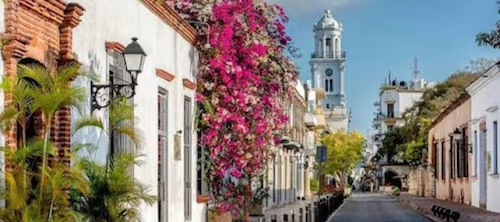
🚗 Parking tip: Avoid looking for parking on the narrow streets. Use monitored parking facilities around the district, including the underground parking at Plaza de España or parking on José Reyes Street. The source lists average rates of DOP 50–100 per hour (approximately US$1–2).
Explore the cobblestone streets on foot and visit these must-see landmarks:
Alcázar de Colón: Built by Diego Columbus (Christopher Columbus’s son), this fortified Gothic-Mudéjar palace overlooks Plaza de España.
Hours: Tuesday through Sunday, 9:00 a.m.–5:00 p.m.
Admission: DOP 150 (approximately US$2.50), including an audio guide.
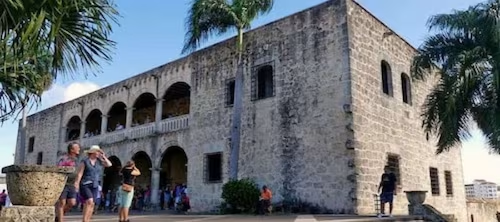
Cathedral of Our Lady of the Incarnation: The first cathedral built in the Americas combines late Gothic and Spanish Renaissance architectural styles.
Hours: Monday through Saturday, 9:00 a.m.–4:00 p.m.
Admission: Free (a voluntary contribution toward upkeep is suggested).
Important: A strict dress code applies. Shoulders and knees must be covered; shorts and tank tops may be refused at the entrance.
Calle Las Damas: Considered the oldest paved street in the New World, where women of the Spanish colonial court once walked in the 16th century.
Museum of the Royal Houses (Museo de las Casas Reales): This magnificent 16th-century palace once housed the Spanish royal administration. Its rooms display armor, historic maps, and artifacts recovered from shipwrecked galleons.
Hours: Tuesday through Sunday, 9:00 a.m.–5:00 p.m.
Admission: DOP 100 (approximately US$1.70).
Museum of the Royal Shipyards (Museo de las Atarazanas Reales, MAR): This modern maritime museum occupies former waterfront warehouses and showcases an impressive collection of Caribbean underwater archaeology.
Hours: Tuesday through Sunday, 9:00 a.m.–5:00 p.m.
Admission: DOP 200 (approximately US$3.30).
Plaza de la Cultura: The modern museum district
Leave the old colonial city behind and drive a few minutes toward the Gascue neighborhood. Here you will find Plaza de la Cultura, a leafy complex housing some of the country’s most important cultural institutions.
🚗 Parking tip: The complex has a large, free outdoor parking area with attendants near the main entrance on Máximo Gómez Avenue.
National Museum of History and Geography: Recently renovated, this museum is an essential stop for understanding the country’s development. Its modern galleries include rare artifacts, objects from the Trujillo dictatorship, and exhibits on the island’s physical and political geography.
Hours: Tuesday through Sunday, 9:00 a.m.–5:00 p.m.
Admission: DOP 100 (approximately US$1.70).
Museum of the Dominican Man: A key destination for exploring the island’s anthropology and identity, highlighting Taíno heritage and African influences through exhibits that include a distinctive collection of carnival masks.
Hours: Tuesday through Sunday, 9:00 a.m.–5:00 p.m.
Admission: DOP 100 (approximately US$1.70).
Museum of Modern Art (MAM): Perfect for art lovers, featuring works by leading contemporary Dominican painters and sculptors.
Hours: Tuesday through Sunday, 9:00 a.m.–5:00 p.m.
Admission: DOP 150 (approximately US$2.50).
Stop 2: Eastern Dominican Republic – architecture, religious traditions, and stone villages
Take the Autovía del Este highway east. This modern route, comfortable to drive in either a sedan or an SUV, leads to some truly distinctive architectural landmarks.
↳ Altos de Chavón (La Romana): A mediterranean illusion
Park your car in the La Romana area and discover an extraordinary destination. Altos de Chavón is a re-creation of a 16th-century Mediterranean village perched above the Chavón River. Designed in the 1970s by an Italian designer, the complex was built with hand-cut coral stone and has become an important cultural center.
It features a remarkable 5,000-seat Greek-style amphitheater (inaugurated with a performance by Frank Sinatra) and a regional archaeological museum. The museum holds an extensive collection related to Taíno culture, including thousands of well-preserved pre-Columbian pottery pieces and tools.
Site hours: Daily, 8:00 a.m.–10:00 p.m. (the Archaeological Museum closes at 5:00 p.m.).
Admission: Entry to the village requires a Casa de Campo visitor pass, listed in the source at US$25 per adult (free for children under 12). The pass includes access to the village, amphitheater, and museum.
🚗 Parking tip: A large, free, monitored outdoor parking lot is available near the pedestrian entrance to Altos de Chavón.
↳ Basilica of Our Lady of Altagracia (Higüey): A landmark of sacred architecture
Continue east to Higüey. The city skyline is dominated by an imposing raw-concrete structure: the Basilica of Our Lady of Altagracia, a major pilgrimage destination and one of the country’s most important religious landmarks.
Inaugurated in 1971, this modern building is known for its enormous 69-meter (approximately 226-foot) concrete arch, reminiscent of hands joined in prayer. Inside, French stained-glass windows cast colorful light across the altar holding the sacred image of Our Lady of Altagracia, patroness of the Dominican people. It is a memorable introduction to local faith and architectural traditions.
Hours: Daily, 8:00 a.m.–6:00 p.m.
Admission: Free.
Important: Modest clothing is required; shoulders and legs should be covered. Local guides near the entrance sometimes offer wraps for rent for a few pesos.
🚗 Parking tip: A large, free parking area is located directly in front of the basilica and is easy to access in an SUV.
↳ Cueva de las Maravillas (Cave of Wonders)
As you travel along the eastern route toward La Romana, make time for this remarkable underground site. Long before Europeans arrived, Indigenous Taíno people created hundreds of petroglyphs and cave paintings here. It is one of the Dominican Republic’s most fascinating historic sites for learning about pre-Columbian culture.
Hours: Tuesday through Sunday (and holiday Mondays), 9:00 a.m.–5:00 p.m.
Admission: DOP 300 for adults (approximately US$5) and DOP 100 for children. Visits require a local park guide, included in the price; tips are appreciated.
🚗 Parking tip: The national park complex has a paved, shaded parking area included with admission.
Stop 3: The north coast – Historic fortifications and natural treasures in Puerto Plata
Take the highway north to the beautiful Atlantic coast. This longer cross-island drive is a chance to appreciate the comfort and dependability of your Jumbo Car rental.
↳ Puerto Plata: Colonial Defenses and the Beauty of Amber
Puerto Plata is one of the island’s most historically and architecturally interesting cities.
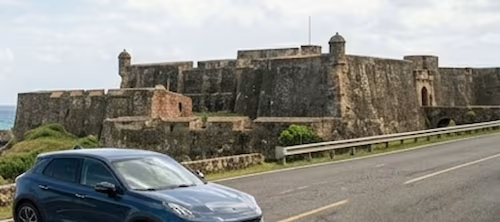
Fortaleza San Felipe: Built in the 16th century, this stone military fort defended the coast against English and French pirates. Its thick walls and ocean-facing cannons offer a fascinating glimpse into Spanish colonial military strategy.
Hours: Monday through Friday, 9:00 a.m.–5:00 p.m.; Saturday and Sunday, 9:00 a.m.–4:00 p.m.
Admission: DOP 150 (approximately US$2.50), including a multilingual audio-guide device.
🚗 Parking tip: A large, free public parking area surrounds La Puntilla Park at the foot of the fortress.
Amber Museum: Located downtown in an elegant 19th-century Victorian mansion, Puerto Plata’s Amber Museum is internationally known. Dominican amber is among the clearest in the world. Exhibits include rare prehistoric specimens containing insects, leaves, and even tiny lizards preserved in resin millions of years ago.
Hours: Monday through Saturday, 9:00 a.m.–5:00 p.m.
Admission: DOP 200 or US$4 per adult.
🚗 Parking tip: Park on nearby streets in the historic center. Choose authorized parking spaces or ask local parking attendants (parqueadores) for help, with a small tip of around DOP 50.
↳ Traditional cigar workshops: Puerto Plata’s living heritage
Before leaving the north, take time to explore one of the island’s longstanding economic and cultural traditions: tobacco. Santiago is the agricultural heart of this industry, while the Puerto Plata coast also has well-known cigar workshops that are accessible by car.
At established craft workshops such as Espigón Cigars or small studios in the historic center, you can discover the art of hand-rolling cigars. Skilled cigar makers, known as tabaqueros, share techniques passed down through generations. Learn the difference between filler, binder, and wrapper leaves and why Dominican cigars are highly regarded around the world. This is a distinctive cultural and sensory stop on your road trip.
Hours: Generally Monday through Saturday, 9:00 a.m.–6:00 p.m.
Admission: Workshop visits and demonstrations are free at many shop-factories, where products are offered for sale. Private introductory rolling workshops may require a reservation and cost approximately US$20–30.
4. Why rent a car for this cultural road trip?
Connecting destinations as far apart as Santo Domingo, Altos de Chavón in La Romana, and Puerto Plata’s Amber Museum is difficult to accomplish by standard public transportation in just a few days.
↳ The freedom to plan your own route
Having your own Jumbo Car rental lets you travel without the rigid schedules of organized tours. Spend the morning exploring pre-Columbian artifacts at the Altos de Chavón Archaeological Museum, enjoy lunch overlooking the river, and drive toward the Higüey Basilica in the afternoon to admire the late-day light through its monumental stained-glass windows.
↳ Which vehicle should you choose for the full itinerary?
This itinerary covers hundreds of miles and a range of driving conditions, from flat eastern highways and Santo Domingo city streets to northern hills. A compact or midsize SUV, such as a Hyundai Tucson or Kia Sportage, offers an excellent balance of comfort and practicality. Its higher ride height gives you a better view of the scenery, while the spacious, air-conditioned interior makes the journey more comfortable for everyone.
🚗 Explore Dominican heritage at your own pace
Discover the country’s cultural richness, sacred landmarks, and fascinating museums. Reserve your rental car today.

Respectful clothing is required to enter Santo Domingo Cathedral and the Basilica of Our Lady of Altagracia in Higüey. Short shorts, sleeveless tops, and skirts above the knee may not be permitted. Keep a lightweight cover-up, such as a wrap or loose pants, in the trunk of your Jumbo Car rental.
Yes. The source identifies parking areas at destinations including Altos de Chavón, Cueva de las Maravillas, the Amber Museum in Puerto Plata, and the Higüey Basilica. In Santo Domingo, consider paid parking facilities around the Colonial Zone or Plaza de la Cultura; availability and security arrangements may vary.
Many national museums and historic sites run by the Ministry of Culture are generally open Tuesday through Sunday, often from 9:00 a.m. to 5:00 p.m. Plan your stops ahead, as many sites close on Mondays for maintenance.