
Santo Domingo to Barahona and Pedernales: A Southwest Road Trip
There’s a Dominican Republic that looks nothing like the big resorts of Punta Cana or the most popular routes.
To find it, head Southwest.
From Santo Domingo, the road crosses increasingly wild landscapes before reaching Barahona, then follows part of the coast between mountains, pebble beaches, rivers and villages all the way to Pedernales. San Rafael, Los Patos and, of course, Bahía de las Águilas are among the highlights of the trip.
But this road trip takes more planning than a typical excursion. Distances are long, services become scarcer the farther west you go, and access to some natural sites sometimes needs to be arranged in advance.
The goal of this itinerary is simple: enjoy the Southwest without spending your days only behind the wheel, by planning each leg wisely. If you’d rather loop around the whole island, our 7-day Dominican Republic road trip gives you the big picture; this guide covers the Southwest stop by stop.
Here’s how to plan the drive, where to spend the night, when to fill up and which car to choose.
Planning your trip to the Southwest? Check the cars available at our Santo Domingo Downtown agency and pick the one that fits your route, your group and your luggage.
Planning the drive from Santo Domingo to Barahona
The first rule for this road trip: don’t treat Pedernales as a simple day trip from Santo Domingo.
The trip is at its best when you split it into several legs. Barahona makes an excellent first base. It lets you reach the Southwest without starting your trip with an overly long day of driving.The route passes through Baní and Azua before continuing on to Barahona. It’s best to leave Santo Domingo in the morning. That gives you plenty of time for breaks, traffic and any changes to your plans.
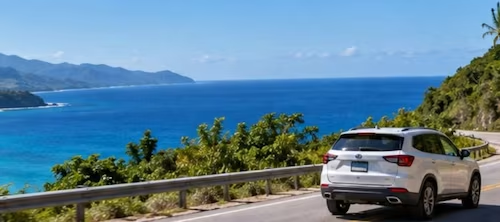
Before you go
Fill up before leaving the capital or in a larger town along the way, check your tire pressure and make sure your route is available on your phone. For road rules and tolls, see our guide to driving in the Dominican Republic.
For the more remote stretches, downloading an offline map can also help. Bring plenty of water and don’t overload your schedule. In the Southwest, a few unplanned stops are often part of the trip: a coastal viewpoint, a river or simply a landscape worth a few extra minutes. Tip: don’t plan to arrive in Pedernales late at night on the day you leave Santo Domingo. Stopping in Barahona makes for a much more balanced trip.
Step 1: Santo Domingo to Barahona
Hitting the road to the Southwest
This first leg eases you into the region. Leave Santo Domingo in the morning and head toward Barahona via Baní and Azua. Along the way, the scenery changes. The busy capital gives way to more open areas, then to the hills and landscapes typical of the Dominican south. The goal isn’t to pack in sights as soon as you arrive.
Once in Barahona, check into your accommodation and leave time to explore the town at an easy pace or make a first stop on the coast. Barahona, often nicknamed “the Pearl of the South,” is above all a strategic base for exploring the beaches, rivers and natural landscapes farther west.
What to do in Barahona in the evening
Depending on when you arrive, you can stroll around the center, head to the waterfront or simply use this first evening to plan the rest of the trip. If you’d like to add a beach stop without stretching your schedule, Playa Quemaito also fits nicely into this part of the trip. The key is not to turn this first leg into a race against the clock.
Where to stay: Barahona.
Step 2: San Rafael and Los Patos
This is one of the highlights of the road trip. From Barahona, take the coastal road toward Paraíso and Pedernales.
Here, the drive becomes an experience in its own right. The road follows a coastline where the mountains drop down to the Caribbean Sea. Pebble beaches, rivers and lush vegetation create a landscape very different from Punta Cana’s long sandy beaches. Two stops are especially worth taking your time over: San Rafael and Los Patos.

First stop: San Rafael
San Rafael combines a river, waterfalls, natural pools and the Caribbean coast. The river’s cool water flows down from the mountains to just steps from the beach. It’s a nice stop for the first part of the day, while you still have time to enjoy it before driving on. It’s a great place to cool off, but be careful on the ocean side: the coastline in this part of Barahona can have strong waves and currents. Stick to suitable swimming areas and pay attention to conditions on site.
Second stop: Los Patos
Then continue to Los Patos, right on the road between Barahona and Pedernales. Here again, river and sea meet.
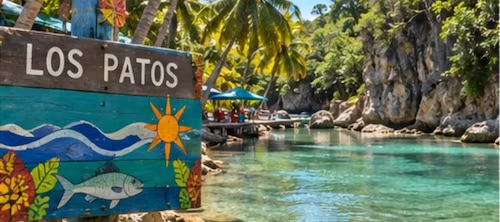
The balneario is known for its clear, cool freshwater. Several small spots in the area also let you take a break and grab a bite. That makes Los Patos a good place for a longer lunch stop. Here too, don’t assume river and sea are the same: the ocean side can be rougher. Enjoy the balneario and check conditions before getting in the water.
Is your road trip continuing on to Pedernales? Compare Jumbo Car’s vehicle categories and find the space and comfort you need for the long legs of your trip.
Should you continue to Pedernales?
You can, but you don’t have to.
If you want to take your time at San Rafael and Los Patos, you can spend the night around Barahona or Paraíso and drive on to Pedernales the next morning. If you’d rather spend more time in Pedernales and at Bahía de las Águilas, continue to Pedernales in the afternoon, making sure to arrive before dark.
Where to stay: Pedernales, if you continue the drive.
Step 3: Exploring Pedernales and preparing for Bahía de las Águilas
After the first legs of the trip, Pedernales lets you slow down. This small border town is a base for exploring several natural areas in the Southwest. Rather than seeing it only as a place to sleep, use your stay to explore the surroundings and, above all, prepare properly for your trip to Bahía de las Águilas.
Why not go straight to Bahía de las Águilas?
Because this visit deserves time. Access and visiting arrangements can change. Depending on the option you choose and current conditions, the trip may combine car and boat or require suitable overland access.
So it’s best to confirm locally or with a local operator the current access conditions, where the boats leave from, schedules, weather and sea conditions, and what to bring. This lighter leg also keeps you from arriving at Bahía de las Águilas after several hours of driving.
Get your car ready
Before the trip, check your fuel level. It’s also the right time to buy water, some food and everything you’ll need to spend several hours in a natural area with limited services.
Where to stay: Pedernales.
Step 4: Bahía de las Águilas
For one of the big highlights of the road trip, leave early. Bahía de las Águilas, inside Jaragua National Park, is one of the most iconic natural landscapes in the Dominican Southwest.
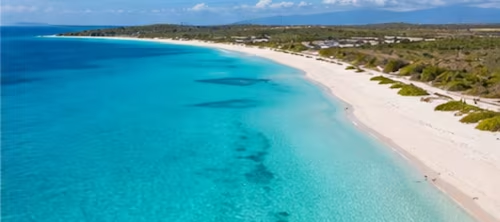
Turquoise water, a long pale beach and a protected setting: the scenery is a world away from the landscapes you’ll have seen since Santo Domingo. That feeling of remoteness is exactly part of the experience.
How to get to Bahía de las Águilas
Check access before you go, as conditions and arrangements can change.
The most common option is to drive to the Cabo Rojo area and La Cueva, then continue by boat with a local operator: the ride takes about 15 minutes. From La Cueva, the beach can also be reached on a hike of about 5 km (3 mi) or via a dirt track, depending on current conditions. So don’t assume an SUV or a 4x4 will automatically let you drive all the way to the beach. Ask about the actual conditions and the recommended option before your trip.
What to bring
The beach has no restrooms and almost no shade. So bring plenty of water, strong sunscreen, a hat or cap, food if your trip doesn’t include a meal, and everything you need to spend several hours outdoors. The area is protected: don’t leave any trash behind and take everything you brought back with you. The sun can be especially strong. A morning visit is usually the most comfortable way to enjoy the site.
Planning the drive back to Santo Domingo
The return trip deserves a place in your plans too.
Visiting Bahía de las Águilas and driving back to Santo Domingo on the same day can make for a very packed schedule. If you can, plan an extra night in Pedernales, Barahona or along the way before heading back to the capital.
If you have to return the same day, leave early enough and adjust the length of your visit to avoid a long stretch of night driving as much as possible. The goal is to enjoy the Southwest without turning the end of the trip into hours behind the wheel.
How far is it on the Barahona–Pedernales route?
Here are the main reference points for planning the route:
Route | Approximate distance | Estimated drive time |
Santo Domingo → Barahona | about 200 km (125 mi) | about 3 h to 3 h 30 |
Barahona → Cabo Rojo entrance (via San Rafael, Los Patos and Pedernales) | about 110 km (70 mi) | about 2 h 15, without stops |
La Cueva → Bahía de las Águilas | by boat | about 15 min |
Above all, keep the logic of the route in mind:Santo Domingo → Barahona → San Rafael → Los Patos → Pedernales → Cabo Rojo / Bahía de las Águilas.
Don’t build your schedule only around mileage.
In the Southwest, 100 km (60 mi) doesn’t always take the same time as on a highway around Santo Domingo. Driving through villages, taking breaks and following the coastal stretches can naturally slow you down.
Before each departure, check your navigation app and add some extra time to the estimated arrival.
Fuel and services: should you plan ahead?
Yes. On a Southwest road trip, it’s best not to wait until your tank is nearly empty to look for a gas station.
You’ll find services in the main towns along the route, but they become scarcer the farther you get from the big urban centers. A simple rule: fill up in Barahona and Pedernales, especially before heading to more remote natural areas. The same logic applies to your other travel needs. Buy water, snacks and essentials before the most remote outings. If you need to withdraw cash, buy medicine or take care of anything else practical, it’s better to do it in town than to wait until you’re on a secondary road.
The goal isn’t to travel with huge supplies, but simply not to depend on a service that might not be available when you need it.
Where to stay between Barahona and Pedernales
Choose your accommodation to cut out unnecessary driving and avoid long stretches on the road at the end of the day.
In Barahona
Pick a place with easy parking, or ask about parking options nearby. Barahona is a handy base for the first part of the trip and for exploring the coast toward San Rafael and Los Patos.
Between Barahona and Pedernales
Travelers who prefer a slower pace can also look for accommodation around Paraíso or along the coast. This lets you enjoy the scenery more without rushing to Pedernales.
In Pedernales
Staying in Pedernales before visiting Bahía de las Águilas is especially convenient. You can prepare your trip the day before, check access conditions and leave earlier the next morning.
What about parking?
Before booking, check whether the accommodation has private, guarded or clearly marked parking. Don’t leave luggage, electronics or shopping visible in the car, even during a fairly short stop.
On a road trip, parking matters as much as location or breakfast when choosing where to stay.
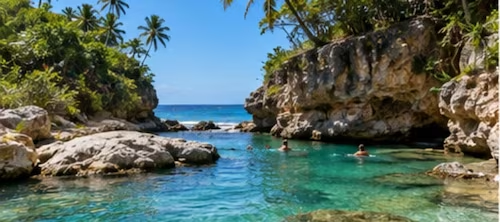
SUV or 4x4 for Pedernales?
This is one of the most important questions on this route, and the answer is more nuanced than a simple “yes.”
To drive from Santo Domingo to Barahona and Pedernales
You don’t automatically need a 4x4 to drive the main roads. If your plans are limited to Santo Domingo, Barahona, San Rafael, Los Patos and Pedernales on the main roads, choose your car based first on the number of travelers, your luggage and the comfort you want.
When is an SUV worth it?
An SUV can make a long road trip more comfortable, especially if you’re traveling as a group, carrying lots of luggage or planning to use secondary roads.
Its ground clearance can also help on rougher stretches.
But an SUV isn’t automatically a 4x4, and having one doesn’t mean you can take any dirt track. If your plans include dirt tracks, a true 4x4 is the category to consider, after checking the actual conditions.
And for Bahía de las Águilas?
This is exactly where generalizations don’t work. Access can vary depending on track conditions, park restrictions and local arrangements. Before choosing a car just to reach Bahía de las Águilas overland, check the actual conditions at the time of your trip.
In many cases, the simplest option is to drive to the right departure point, then do the last stretch with a local operator or by boat. The right car isn’t necessarily the biggest one: it’s the one that fits your actual route.
Barahona–Pedernales road trip in the rainy season: what to expect
During the rainy season, the Southwest is especially lush, but you’ll need to plan around the weather.
Showers can change a beach day, slow down some drives or occasionally affect access to a natural site.
For this kind of trip, the best strategy is to stay flexible. Schedule your top outings in the morning when you can, check the forecast before long drives and confirm local conditions before taking a secondary road. If heavy rain is forecast, it’s better to adjust your plans than to push through with a trip to a remote area.
The Southwest is perfect for this way of traveling: have a general direction without timing every stop.
Quick checklist before you go
Fuel: fill up in Barahona and Pedernales, before the remote areas.
Bahía de las Águilas: current access conditions, boat departure point and schedules.
Accommodation: private or clearly marked parking.
Gear: water, sunscreen, a hat and food (no restrooms or shade on the beach).
Driving: arrive before dark at each stop and check the forecast before long days.
Discover another side of the Southwest
This road trip isn’t just a way to get to Bahía de las Águilas.
It’s everything between Santo Domingo and Pedernales that makes the trip worth it. Barahona gives you your first taste of the South. San Rafael and Los Patos show you that unique meeting of mountains, rivers and the Caribbean Sea. Pedernales then marks the entry into more remote landscapes before the big highlight of Bahía de las Águilas.
The trip takes you gradually from the capital to one of the most unique natural areas in the Dominican Republic.
But the best way to enjoy it is not to try to do everything. Take time to stop, plan your main legs without filling every hour of the day and adapt the route to the conditions you find.
That’s the whole point of exploring the Southwest by car: the road isn’t just a way to reach your destination. It’s part of the journey.
Several days are recommended to enjoy the main stops without spending most of the trip on the road. The pace will mainly depend on how many stops you make, the outings you plan and whether you need to get back to Santo Domingo quickly.
Yes. Barahona is about 200 km (125 mi) by road from Santo Domingo and is a logical base to start a road trip in the Southwest.
Yes. Both sites are on the coastal road between Barahona and Pedernales and can be combined in the same leg if you leave early enough.
You can drive to the areas that serve as access points to Bahía de las Águilas, including Cabo Rojo and La Cueva. Final access, often by boat, depends on conditions and the option you choose. Check the arrangements before your visit.
Not necessarily. You don’t need a 4x4 for all the main roads on the route. It mostly depends on the secondary roads you plan to use and the actual conditions at the time of your trip.
Don’t count on the most remote areas for fuel. Use your stops in the main towns, especially Pedernales, to check your tank and fill up if needed before the trip.
