
Dominican Republic cacao route: A road trip guide
When you think about a road trip in the Dominican Republic, Punta Cana’s beaches, Samaná’s scenery, and winding mountain roads may be the first things that come to mind. But beyond the most popular tourist destinations, there’s another way to experience the country: exploring the world of Dominican cacao.
From Santo Domingo to the agricultural heartland of the Cibao region, cacao plantations, chocolate workshops, and local growers offer an opportunity to discover the traditions and craftsmanship behind one of the country’s most important agricultural products.
Opening a cacao pod, learning how the beans are fermented and dried, watching chocolate being made, or joining a hands-on workshop: each experience reveals a different side of cacao production.
This isn’t a single, officially marked tourist route. Instead, it’s a flexible itinerary connecting different regions and cacao-related experiences.
Here are four stops to help you plan your own cacao road trip in the Dominican Republic, from plantation tours to chocolate workshops, along with driving distances, booking recommendations, and tips for choosing the right rental car.
Planning to start your trip in Santo Domingo? Browse available vehicles at our Airport Santo Domingo rental location and choose the category that best fits your road trip.
Why is cacao so important in the Dominican Republic?
Cacao plays an important role in the agricultural landscape and rural economy of several Dominican regions.
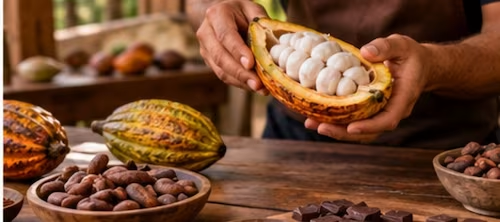
Production is particularly concentrated in the northeastern part of the country, around Duarte Province and San Francisco de Macorís, an area closely associated with Dominican cacao production. Neighboring Hermanas Mirabal and Espaillat provinces also contribute, along with parts of Puerto Plata and eastern Dominican Republic.
The Dominican Republic has also become a recognized producer and exporter of organic cacao, supplying international markets.
Two terms are commonly used in the Dominican cacao industry: Hispaniola cacao, which is fermented before drying, and Sánchez cacao, traditionally marketed without fermentation.
But cacao is also part of everyday Dominican life. It is used to prepare traditional hot chocolate, sometimes flavored with cinnamon and other spices, a familiar part of Dominican cuisine.
Exploring cacao production offers a different perspective on the Dominican Republic, one that goes beyond beach resorts and brings travelers closer to rural communities, agriculture, and local traditions.
Where can you discover cacao and chocolate in the Dominican Republic?
Several regions offer opportunities to include a cacao-related experience in your road trip.
For a well-organized itinerary, Santo Domingo makes a convenient starting point before heading into the Cibao region and, if you have additional time, continuing toward the North Coast.
1. Discover Dominican chocolate in Santo Domingo’s colonial zone
Your cacao journey can begin in the heart of the capital.
In Santo Domingo’s UNESCO-listed Colonial Zone, chocolate-focused experiences introduce visitors to the main steps involved in turning a cacao pod into a chocolate bar.
Kahkow Experience is one of the places dedicated to this tradition. Depending on the activities available during your visit, you may be able to learn about Dominican cacao history, the chocolate-making process, and different chocolate experiences.
This first stop offers several advantages.
It helps you understand the product before visiting the agricultural regions. It also fits easily into a day of exploring Santo Domingo and can be an enjoyable activity for families.
During the wetter months, an indoor chocolate experience can also provide a convenient alternative when a rain shower changes your plans.
Practical tip: In the historic center, use a designated parking facility instead of spending time looking for a space along the Colonial Zone’s narrow streets.
After this introduction, head north toward the cacao-growing region.
2. Visit a cacao plantation near San Francisco de Macorís
From Santo Domingo, drive north toward the Cibao region and San Francisco de Macorís, located in one of the country’s major cacao-producing areas.
This is where the experience changes.
After discovering chocolate in its finished form in Santo Domingo, you can visit plantations and learn how cacao is grown and processed.
Some farms in the region welcome visitors. Hacienda La Esmeralda and El Sendero del Cacao are among the experiences associated with exploring the local cacao industry.
Depending on the tour, you may observe several stages of production, including growing cacao trees, harvesting and opening pods, extracting beans, fermentation, drying, and processing.
The drive itself also introduces you to scenery very different from the main tourist areas along the coast. Rural roads, dense vegetation, and agricultural landscapes are part of the journey.
Because tour availability and visiting conditions can change, book before making the trip.
3. Stop in Salcedo: Cacao, countryside, and Dominican history
Continue toward Salcedo, in Hermanas Mirabal Province, a short drive from San Francisco de Macorís.
This stop adds another dimension to your cacao road trip.
The region retains its agricultural and rural character, making it a natural addition to the itinerary. It also offers an opportunity to explore an important chapter of modern Dominican history.
In Ojo de Agua, the Mirabal Sisters Museum honors Patria, Minerva, and María Teresa Mirabal, historical figures remembered for their resistance to Rafael Trujillo’s dictatorship.
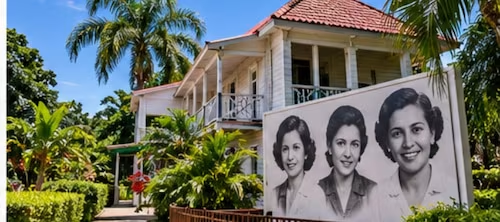
Including this visit turns the cacao route into a broader cultural journey through the Cibao, combining food traditions, agriculture, and history.
Depending on your schedule, Salcedo can be a stop before continuing toward the North Coast or a convenient place to spend the night in the region.
4. Extend your cacao road trip to Puerto Plata
If you have an extra day or two, continue toward Puerto Plata and the rural communities of the North Coast.
Around Altamira and other agricultural communities, cacao growing and chocolate production offer a more community-centered perspective on the industry.
In Palmar Grande, in the municipality of Altamira, Chocal is an artisanal chocolate producer founded by women from the local community. It focuses on transforming locally grown organic cacao and also welcomes visitors.
Other farms and rural experiences may complement this stop, depending on availability during your stay.
This final part of the route offers another advantage: the opportunity to combine countryside exploration with the Atlantic Coast.
After several days visiting plantations and Cibao communities, you can finish your road trip in the Puerto Plata area before driving back to Santo Domingo or continuing your vacation along the North Coast.
Which cacao route should you choose based on your trip length?
You don't have to visit every stop. One of the advantages of traveling by rental car is being able to adapt the itinerary to your available time.
If you have one day
Stay in Santo Domingo.
Enjoy a cacao or chocolate experience in the Colonial Zone and spend the rest of the day exploring the historic center.
This option works especially well for a short stay or families who want to avoid spending several hours driving.
If you have two days
Day 1: Santo Domingo and the Colonial Zone.
Day 2: Drive to San Francisco de Macorís and visit a cacao plantation or participate in a cacao-related experience.
Depending on your schedule, consider spending the night in the Cibao region rather than driving back to Santo Domingo late in the evening.
If you have three days
Add Salcedo and Hermanas Mirabal Province.
This allows you to combine cacao experiences, agricultural landscapes, and historical heritage.
If you have four days or more
Extend your trip to Puerto Plata.
Your road trip will then follow this route:
Santo Domingo → San Francisco de Macorís → Hermanas Mirabal → Puerto Plata
Compact car, family vehicle, or SUV? Compare Jumbo Car’s available vehicle categories based on your group size, luggage, and planned stops.
Dominican Republic cacao route: Driving distances and travel times
The following approximate distances will help you plan your itinerary:
Route | Approximate distance | Estimated driving time |
Santo Domingo → San Francisco de Macorís | 135 km / 84 miles | 2 hr 15 min–2 hr 45 min |
San Francisco de Macorís → Salcedo | 20 km / 12 miles | 20–30 min |
Salcedo → Altamira / Puerto Plata area | 100–120 km / 62–75 miles | 2–2.5 hr |
Puerto Plata → Santo Domingo | 215 km / 134 miles | 3.5–4 hr |
These driving times are estimates.
Traffic, roadwork, weather conditions, and driving through towns can significantly affect your travel time.
Check your route using a navigation app before each departure and allow extra time in your schedule.
The Duarte Highway is the main route connecting Santo Domingo with the Cibao region. However, reaching some cacao plantations or rural farms may require leaving the main highways.
Plan rural driving during daylight hours whenever possible. For more information, read our tips for renting and driving a car in the Dominican Republic.
Can you explore the cacao route from Punta Cana?
Yes, but you'll need to adjust your itinerary.
The Cibao region is several hours from Punta Cana, making it impractical for a comfortable same-day round trip.
If you're staying primarily in eastern Dominican Republic, two alternatives make more sense.
The first is to choose a cacao experience closer to your accommodations. In the eastern region, producer associations offer chocolate routes in Hato Mayor and El Seibo, where visitors can learn about plantations and cacao processing.
The second is to turn your cacao experience into a longer road trip:
Punta Cana → Santo Domingo → Cibao → Puerto Plata (optional)
This option is especially appealing if your vacation already includes several destinations.
It also allows you to combine beaches, historical attractions, local food, and countryside experiences rather than staying in just one tourist area.
You can pick up your rental car at our Punta Cana International Airport location.
Do you need to book cacao plantation tours and chocolate workshops?
Advance reservations are strongly recommended.
Plantations and rural experiences do not necessarily operate like tourist attractions that are open throughout the day. Some tours are offered only at specific times or by reservation.
Confirming your visit the day before can also be helpful, especially in rural areas.
When is the best time to explore Dominican cacao?
Cacao-related experiences can be enjoyed at different times of the year, but travel conditions vary by season.
During the wetter months, particularly September and October, the Cibao countryside is especially green, although rain showers may affect driving times.
When possible, schedule your most important visits in the morning and keep the rest of your day flexible.
A flexible itinerary is often more enjoyable than one with every stop planned down to the minute.
Exploring the cacao route with kids
A cacao experience can be particularly interesting for families because it transforms something children already know—chocolate—into a hands-on learning experience.
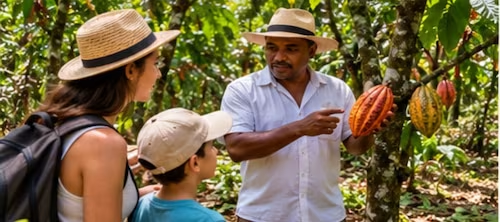
Seeing a cacao pod, discovering the beans, and learning how they become chocolate makes the visit much more interactive.
A few precautions can make the trip easier:
Check age requirements. Not every workshop offers the same activities for younger children.
Break up longer drives. A rest stop between Santo Domingo and the Cibao can make the journey more comfortable.
Prepare for walking around a plantation. Closed-toe shoes, drinking water, sunscreen, and insect repellent can be useful in rural, humid environments.
Arrange child car seats in advance. If you're traveling with young children, request the appropriate car seat when booking your rental and confirm availability with the agency.
Have a backup plan. An indoor activity in Santo Domingo can be useful if heavy rain forces you to postpone an outdoor plantation visit.
How to keep chocolate from melting during your road trip
It's something you may not think about before your first stop.
Chocolate bars, cacao, nibs, and other artisanal products can quickly fill your shopping bags. But chocolate and tropical heat don't mix well.
The inside of a car parked in direct sunlight can become extremely hot in a short time.
A few simple precautions can help:
Don't leave chocolate bars in a vehicle parked in the sun.
Take your purchases with you during longer stops.
Bring a small insulated bag for heat-sensitive products.
During the drive, keep them in the air-conditioned passenger cabin rather than a hot trunk whenever possible.
When practical, make your purchases at the end of a visit or shortly before returning to your accommodations.
If you're bringing food products back to the United States, check the applicable U.S. customs and agricultural entry requirements before traveling.
What type of rental car should you choose for visiting cacao plantations?
The best vehicle depends primarily on your itinerary.
If you're staying in Santo Domingo
An economy or compact car can be a good option if your plans are mainly limited to the capital and major roads.
If you're driving to the Cibao
A standard rental car can also be suitable for the main highways.
However, if your itinerary includes several rural areas or farms located away from major roads, an SUV or 4x4 may offer additional comfort and ground clearance.
Before choosing this category specifically to reach a plantation, ask the property about actual road conditions.
If you're traveling with family
Prioritize space.
Passengers, suitcases, child car seats, and purchases can quickly take up the available room.
A family-size vehicle or spacious SUV may be more comfortable than a compact car, especially on a multi-day itinerary.
Air conditioning is also useful during longer drives, both for passengers and for the chocolate bars you'll probably bring back with you.
Before you hit the road: Final checklist
Reservations: Confirm opening days, schedules, and booking requirements for each plantation or workshop.
Tour details: Check available languages, included activities, and minimum ages for children.
Road access: Ask about road conditions leading to the plantation to determine whether an SUV would be useful.
Daily driving route: Check your itinerary and travel times in a navigation app, allowing extra time.
Essentials: Arrange child car seats if needed, and bring an insulated bag for chocolate, closed-toe shoes, and insect repellent.
Discover a different side of the Dominican Republic
Following the cacao trail means leaving the country's most familiar tourist routes behind and discovering a more rural, flavorful, and culturally rich Dominican Republic.
Start by learning about cacao in Santo Domingo's Colonial Zone, continue toward the producing areas around San Francisco de Macorís, explore Hermanas Mirabal Province, and, if time allows, extend your trip to Puerto Plata.
You don't have to see everything.
The best cacao route is the one that matches your available time, the experiences you're most interested in, and your preferred travel pace.
And that's exactly what makes exploring the Dominican Republic by car so appealing: the freedom to stop, adjust your plans, spend more time somewhere you enjoy, and create your own itinerary.
There is no single, officially marked cacao tourist route. Instead, several cacao-related experiences can be connected by car, particularly between Santo Domingo, San Francisco de Macorís, Hermanas Mirabal Province, and parts of Puerto Plata.
Duarte Province, around San Francisco de Macorís, is one of the main areas to consider for learning about cacao production. Other experiences are available around Altamira, near Puerto Plata, and in Hato Mayor and El Seibo in the eastern region.
Some experiences are family-friendly, but available activities and visiting conditions vary by location. Check for age restrictions before booking.
Not necessarily. A standard car is suitable for the main highways. An SUV may offer additional comfort if your itinerary includes rural access roads or you're traveling with several passengers and luggage.
Yes, but the Cibao region is too far away for a comfortable day trip. From Punta Cana, consider a chocolate route in Hato Mayor or El Seibo, or include Santo Domingo and the Cibao region in a multi-day road trip.
