

Road Trip from Cayenne to Saint-Laurent-du-Maroni: Route and tips
Driving from Cayenne to Saint-Laurent-du-Maroni is a great way to discover the landscapes and towns along French Guiana's coast. Along the way, savannas, forested areas, and historic communities alternate.
In October, the dry season can make this trip easier to plan, although showers and changes in visibility are still possible. For this roughly 155-mile (250-km) drive, plan for breaks, heat, traffic conditions, and less-traveled stretches.
🚗 Planning the drive from Cayenne to Saint-Laurent-du-Maroni? Explore available Jumbo Car French Guiana rental vehicles.
Driving the RN1: From eastern to western French Guiana
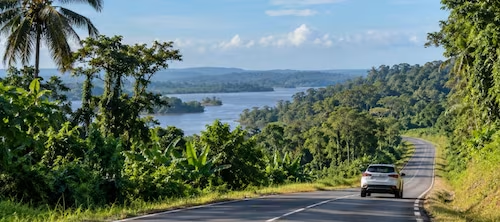
The RN1 is the main road route between Cayenne and Saint-Laurent-du-Maroni. It passes through Macouria, Kourou, Sinnamary, and Iracoubo before reaching western French Guiana.
Drive time, distance, and road conditions
A few practical figures to help plan your day:
Key figures | Cayenne → Saint-Laurent-du-Maroni |
Distance from Cayenne | Approximately 155 miles (250 km) via the RN1 |
Distance from the airport | Approximately 150–160 miles (240–260 km), depending on departure point and route |
Driving time | Approximately 3.5–4.5 hours, depending on conditions, excluding stops |
Recommended duration | A full day with stops, or two days at a relaxed pace |
Road surface | Mostly paved; check conditions before departure |
The RN1 is mostly paved, but pavement and weather conditions can vary, even during the dry season. Watch out for:
potholes and uneven pavement caused by clay soils;
long, straight stretches through forest, which can cause drowsiness;
wildlife crossing near forest edges, especially around dawn and dusk;
logging trucks and other large vehicles: pass only when visibility is completely clear;
speed limits, particularly when driving through towns.
Our tip: leave early if it fits your plans, but never drive while tired. Schedule breaks and check road conditions before departure. You can also read our guide to driving in French Guiana during the dry season.
Gas, Cell service, and breaks: Preparing for the drive
Gas: start with enough fuel and identify gas stations along your route. Check their opening hours before relying on a stop for refueling.
Cell service: coverage varies by carrier and location. Download offline maps before leaving.
Breaks: stop about every two hours. The towns along the RN1 offer possible places to pause.
Water: bring enough drinking water for everyone, adjusting for the heat, travel time, and individual needs.
Nightfall: daylight fades early, generally around 6 p.m. Favor daytime driving, especially on unfamiliar stretches.
Border: Saint-Laurent-du-Maroni faces Albina, Suriname, across the Maroni River. Before crossing, check entry requirements and river transportation arrangements. Do not take a rental vehicle across the border without explicit authorization in your rental agreement.
🗺️ Need a vehicle for the RN1? Check availability at our Cayenne rental location.
What type of rental car should you choose?
A compact car can handle this route, but on a 155-mile (250-km) drive in October's heat, comfort and effective air conditioning make a real difference for both drivers and passengers.
SUVs: Extra comfort on the RN1
Depending on the model, an SUV may offer more room, a higher driving position, and useful luggage space. However, an SUV is not required for the RN1, and renting one does not automatically authorize driving on unpaved tracks. Check your rental agreement before taking a detour.
Sedans: Comfort and value on long highway stretches
For two travelers or a business trip, a well-equipped compact sedan can be a comfortable, economical choice on paved roads. Check the air conditioning before leaving. Unlimited mileage is included with most passenger vehicle rentals, depending on the selected offer and the terms of the rental agreement.
Worthwhile stops along the route
Driving straight through would mean missing some of the RN1's cultural, historical, and natural highlights. Here are suggested stops (distances are approximate, measured from Cayenne).
Stop 1: Macouria, your first break (around mile 16 / Km 25)
After crossing the Larivot Bridge over the Cayenne River, you enter Macouria. If you left early, this is a good place for your first break: bakeries and small shops in Tonate offer coffee, pastries, and local fruit juices before you continue toward the savannas.
Stop 2: Kourou, space and ocean (around mile 37 / Km 60)
About an hour from Cayenne, Kourou is a natural stop on this route.
Guiana Space Centre: Europe's spaceport. Visits require advance reservations and are subject to current access rules; check several days ahead. The Space Museum adds to the experience.
Pointe des Roches: enjoy a seaside walk near the Dreyfus Tower, with views of the Atlantic Ocean and, in the distance, the Salvation Islands.
Lunch: restaurants along the waterfront and in the old town serve grilled local fish, including acoupa and machoiran, overlooking the ocean.
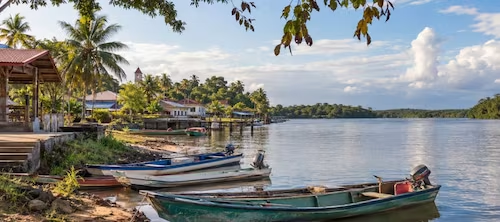
Stop 3: Sinnamary, along the river (around mile 68 / Km 110)
After crossing the savannas, you reach Sinnamary on the river of the same name. Its relaxed atmosphere, moored canoes, and small Creole restaurants make it a pleasant lunch stop if you left Kourou late in the morning. Enjoy a coffee in the shade before continuing.
Stop 4: Iracoubo and its painted church (around mile 87 / Km 140)
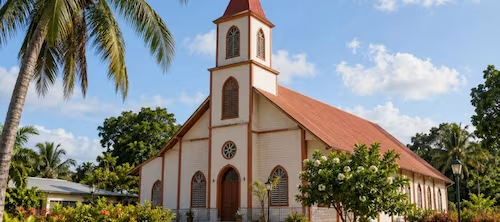
Saint Joseph Church in Iracoubo is known for its interior paintings, created in the late 19th century by Pierre Huguet. Check visiting arrangements before making a stop.
Stop 5: Organabo and arrival in Saint-Laurent-du-Maroni (around mile 155 / Km 250)
After Iracoubo, the RN1 crosses a more remote area around Organabo, with forest lining long stretches of road. Staying alert and keeping an eye on your fuel level are especially important here. If time allows, Mana and Awala-Yalimapo can be reached via detours from the RN1.
The final miles lead to Saint-Laurent-du-Maroni, recognized for its artistic and historical heritage, colonial-era architecture, and the Transportation Camp, a major site in the history of French Guiana's penal colony. In the evening, relax at a riverside terrace overlooking the Maroni and the Suriname shore.
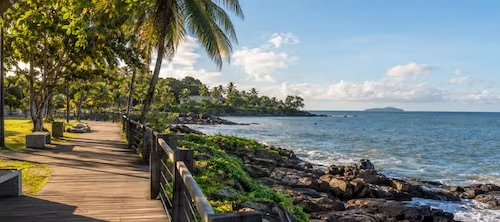
The route from Cayenne to Saint-Laurent-du-Maroni introduces you to French Guiana's landscapes, communities, and important heritage sites. In October, plan a suitable departure time, take regular breaks, and choose a vehicle that fits your needs while keeping an eye on weather and road conditions.

Driving lets you travel at your own pace and stop in towns along the way. Shared transportation options may also be available; check schedules, prices, and departure points before your trip.
Local flight services can change. Check which connections are available at the time of your trip; driving remains a common way to reach Saint-Laurent-du-Maroni from Cayenne.
The fare depends on the type of service, travel date, and pickup arrangements. Ask the transportation provider for a quote and compare it with the total cost of a rental car if you plan to make several trips.
Do not plan to cross the border with a rental car without the rental company's explicit written approval. To visit Albina, check river crossing options, required travel documents, and Suriname entry requirements.
Matoury and Rémire-Montjoly are neighboring municipalities of Cayenne. Heading west on the RN1, Kourou is a major stop roughly 37 miles (60 km) away, depending on your starting point.