

Driving in French Guiana in the dry season: Safety tips
At the height of the dry season, especially in September and October, French Guiana is a particularly pleasant place to hit the road and explore. Days are often very sunny, rain is less frequent and conditions make it easier to plan trips between Cayenne, Matoury, Kourou, Saint-Laurent-du-Maroni and the many natural areas you can reach by car.
But the dry season, which locals call the “grand été” (big summer), has its own quirks. The coast generally enjoys a sea breeze, while the heat can be much stronger inland. Add to that laterite dust on some roads, glare, long distances between towns and heavy use of the air conditioning.
So driving in French Guiana in the dry season isn’t necessarily harder: it mostly means adapting a few habits.
Whether you’re on vacation, on a business trip or living in French Guiana, here are the right habits to plan your drives and make the most of the road during the dry season.
☀️ Planning long drives during the dry season? Discover our SUVs and air-conditioned cars suited to your route.
Driving in French Guiana at the height of the dry season: what changes on the road
The dry season gradually changes driving conditions.
After several weeks of less rain, the ground dries out. Laterite, the red earth found across much of French Guiana, gets dustier, and some road shoulders may be covered with dirt or gravel. At the same time, high temperatures make long drives more tiring, especially when you’re behind the wheel for several hours.
Three things deserve special attention:
visibility, especially on dusty stretches;
heat in the cabin and the fatigue it can add to;
planning long-distance drives, which are common in French Guiana.
The goal isn’t to turn every trip into an expedition. A few simple precautions already make the road much more relaxed.
French Guiana’s road network: few roads and long distances
French Guiana’s road network is nothing like Europe’s or North America’s: there are few main roads, distances are long and road surfaces take a beating from the climate.
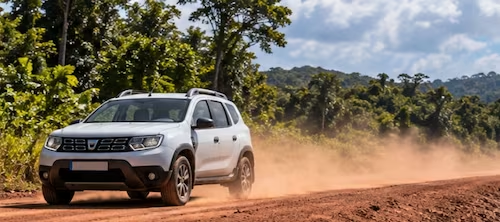
The territory is organized around two national roads. The RN1 links Cayenne to Saint-Laurent-du-Maroni over about 250 km (155 mi), passing through Macouria, Kourou, Sinnamary and Iracoubo. If you’re heading to Kourou for work, our guide to a business trip to Kourou covers the drive from Cayenne. The RN2 heads east through the forest, via Régina, to Saint-Georges-de-l’Oyapock, nearly 190 km (120 mi) from Cayenne.
Both roads are paved, but the alternation of intense heat and long rainy months, along with heavy trucks and log trucks, wears down the pavement. Expect potholes, sometimes deep ones, sunken or wavy sections caused by shifting clay soils, and eroded or soft shoulders that are best avoided when passing another vehicle.
Once you leave these main roads, the pavement often gives way to laterite dirt tracks. With a rental car, they’re not part of the plan: Jumbo Car French Guiana’s rental terms exclude driving the vehicle on dirt tracks, and any damage that occurs off paved roads is entirely the customer’s responsibility, even with a damage waiver. So plan your outings on paved roads.
Dust and visibility: adapting your driving
Even if you stay on paved roads, laterite is everywhere during the dry season. Trucks coming off dirt tracks or construction sites leave it on the road, and a single heavy vehicle can raise a cloud of dust thick enough to hide the road for a moment.
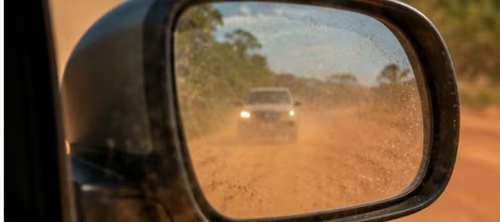
In this situation, the priority is simple: get your visibility back before making any maneuver.
Slow down gradually and leave much more distance from the vehicle ahead. The lower the visibility, the more you should adjust your speed and following distance.
Turn on your low beams when visibility calls for it. Above all, they help other drivers see you.
Never pass when dust is hiding the road. An oncoming vehicle, an obstacle or a bend can be invisible for a few seconds.
When passing a truck or driving alongside roadwork, slow down, stay well in your lane and close the windows to keep dust out of the cabin.
You can also switch the ventilation or air conditioning to recirculation mode for a while to reduce outside air coming in.
Finally, think about the windshield. A layer of dust combined with intense sun can greatly increase glare. Keep enough washer fluid and avoid using the wipers on a very dusty, dry windshield.
Also watch for gravel and dirt on the road, especially near the shoulders and construction site exits.
And after a long dry spell, a sudden shower can quickly change road grip: the dust built up on the pavement turns slippery. If the rain returns suddenly, slow down and adapt your driving to the new conditions.
Creeks and the Kaw road: classic dry-season outings
During the dry season, weekends are ideal for getting out into nature. The “carbet crique” tradition is part of local life: people hang their hammocks in an open-sided shelter (carbet) by a creek to enjoy the cool water and the shade of the forest. With a rental car, choose creeks you can reach by paved road: those at the end of a dirt road are excluded under the rental terms. If in doubt, ask the agency for advice before you go.
The most iconic route is the Kaw road (RD6). From the Roura area, this paved road crosses the Kaw mountain and leads to the Dégrad de Kaw area. The village of Kaw itself can’t be reached by road: the last part of the trip is by water.
Tight bends, steep slopes, dense roadside vegetation and uneven pavement in places: the Kaw road is a true crash course in tropical driving. Even in dry weather, adjust your speed on blind bends and keep well to the right. Watch out for branches and plant debris that can fall after a gust of wind or a storm, and slow right down before water crossings, breaks in the pavement and damaged sections. Finally, plan your return: in French Guiana, night falls around 6 p.m. all year round.
Heat and air conditioning: staying comfortable and alert
In French Guiana, effective air conditioning isn’t just about comfort.
After several hours parked in the sun, the temperature inside a car can get extremely high. A very hot cabin quickly makes a drive uncomfortable and can add to fatigue.
Before you set off, start by airing out the car. Open the doors or windows for a moment to let some of the hot air out.
Then turn on the air conditioning gradually rather than aiming for a very low temperature right away. The goal is to keep the cabin comfortable without creating too big a gap with the outside temperature.
On long drives, a few simple habits also make a difference:
take regular breaks;
keep enough water on board for everyone and for any surprises;
wear good sunglasses when the light is strong;
if your plans allow, leave early in the morning for the longest drives, and aim to arrive before dark, around 6 p.m.;
use a sunshade when the car is parked in full sun;
never leave a child or an animal alone in a closed car, even for a short time.
Before leaving a large town for a long drive, also think about fuel.
Distances can be long in French Guiana, and an unplanned detour to a creek, a trail or a village can quickly add miles to your route. Filling up before you leave keeps an outing from turning into a hunt for a gas station.
🔧 For your long drives, set off in a well-maintained car with useful assistance contacts at hand: contact the Jumbo Car French Guiana team.
Simple checks before a long drive in the dry season
When you rent a car, maintenance is the rental company’s responsibility. You don’t have to do any mechanical work yourself.
That said, it’s still useful to recognize a few simple signs.
Heat, long distances and some road conditions can put more strain on the car. Before a long drive, a few seconds are enough for a quick visual check to make sure nothing looks unusual.
Engine temperature: watching for warning signs
On a long drive, simply keep an eye on the dashboard warning lights.
If a temperature light or any unusual alert comes on, don’t carry on as if nothing happened.
Slow down and stop as soon as you can do so safely. If the car shows an abnormal engine temperature, let it cool down and contact roadside assistance or the agency for the right instructions.
Never open the radiator or coolant cap when the engine is hot. The system may be under pressure and could cause burns.
With a rental car, don’t try to fix the problem yourself either. A call to roadside assistance will tell you what to do based on the car and the situation.
Tires: a quick visual check before you go
Tires deserve special attention too.
Before a long drive, walk around the car. Make sure no tire looks underinflated and that there are no visible cuts, bulges or objects stuck in the tread.
If you need to check the pressure, do it when the tires are cold, following the manufacturer’s recommended values.
On the other hand, don’t let air out of a hot tire just because its pressure seems higher after driving.
If you feel an unusual vibration, hear a new noise or see a tire pressure warning, stop somewhere safe and contact roadside assistance rather than continuing a long drive without a check.
Your checklist before hitting the road in the dry season
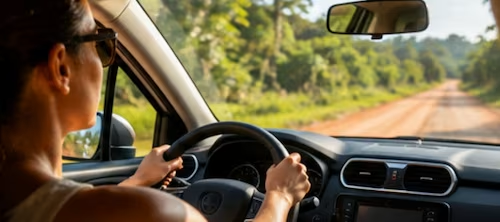
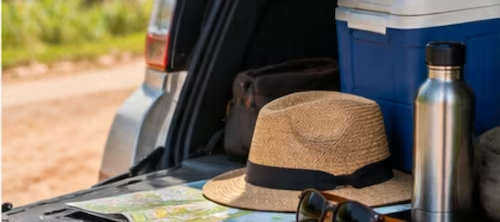
No complicated preparation needed: before a day on the road in French Guiana during the dry season, a few checks are enough. The day before or the morning you leave, check your fuel level, bring enough water, sunglasses and something to protect you from the heat, then go over your route and make sure it stays on paved roads, since dirt tracks are excluded under the rental terms.
When you’re ready to go, take a minute to walk around the car and glance at the tires, and make sure the windshield is clean. If the car has been sitting in the sun, air out the cabin for a moment before gradually turning on the air conditioning.
On a dusty stretch, adjust your speed and leave plenty of distance from the vehicle ahead. Turn on your lights as soon as visibility drops, never pass without a clear view of the road, and close the windows, switching the ventilation to recirculation if needed.
During a long drive, take regular breaks and remember to drink. Also keep an eye on the dashboard warning lights: if the car isn’t behaving normally, it’s better not to keep going.
If a warning comes on, stop somewhere safe, don’t attempt a makeshift repair and contact roadside assistance or the agency, who will tell you what to do.
Making the most of the dry season to explore French Guiana by car
The dry season is one of the best times to explore French Guiana.
From Cayenne or Matoury, a car lets you reach Kourou, continue to Sinnamary or Saint-Laurent-du-Maroni, and get to the starting points of many outdoor trips and activities.
The drive becomes part of the journey.
This freedom simply means planning ahead for distances. Between Cayenne and Saint-Laurent-du-Maroni, for example, the drive is about 250 km (155 mi). Drive time can vary with traffic, stops and your route. Good news: Jumbo Car rentals in French Guiana include unlimited mileage, so you don’t have to watch the odometer on these long drives.
On this kind of route, it’s best not to plan around a tight schedule. A break, an unplanned stop or simply the urge to enjoy a place you find along the way can easily change your day.
And that’s the whole point of having a car in French Guiana: you can adapt your route as your trip goes on.
So the ideal car depends less on the season than on your plans.
For mostly city driving or main roads, an economy car is perfectly fine. For a trip with more luggage, several passengers or long drives on sometimes damaged roads, an SUV can offer more comfort and ground clearance. You can compare all our vehicle categories to find the right fit.
What matters is choosing a car based on how you’ll actually use it during your stay.
The dry season generally offers good driving conditions, with less rain and more sunny days. September and October are at the heart of this period. Still, keep in mind the heat, laterite dust and the long distances between some towns.
Not necessarily. For mostly main roads and urban areas, an economy car can easily meet the needs of many travelers.
An SUV can offer more comfort, space and ground clearance for long drives, on sometimes damaged roads or when you’re traveling as a group with luggage. So the best choice depends above all on your route, the number of passengers and your luggage.
No. Jumbo Car French Guiana’s rental terms exclude driving the vehicle on dirt tracks. Any damage that occurs off paved roads is entirely the customer’s responsibility, even with a damage waiver. If you’re unsure about a route, ask the agency for advice before you go.
No. The Kaw road (RD6) leads to the Dégrad de Kaw area, but the village of Kaw can only be reached by water. Plan the last part by dugout canoe (pirogue) or with a local operator.
Close the windows, switch the ventilation to recirculation for a while and keep a safe distance from the vehicle ahead, especially behind a truck.
Also avoid using the wipers on a dry windshield covered in dust.
The road distance is about 250 km (155 mi) via the RN1. Drive time depends on traffic, breaks and your route. For such a distance, allow extra time, bring water, fill up before you leave and plan to arrive before dark.
