

Guadeloupe beaches in October: Where to swim and how to plan your days
October can still be a great time to enjoy Guadeloupe’s beaches and generally warm Caribbean water. Crowds vary by location, weekends, and the late-October French school break (Toussaint).
October also falls within the rainy and Atlantic hurricane seasons. Weather and sea conditions can change quickly, so keep your plans flexible and check official forecasts and alerts before leaving.
Explore these beaches on Grande-Terre and Basse-Terre, with practical advice on choosing a spot based on daily conditions, finding parking, and swimming safely.
Want the flexibility to choose a beach based on the day’s weather? Compare rental vehicle categories for your travel dates.
Why October can be a great month for Guadeloupe beaches
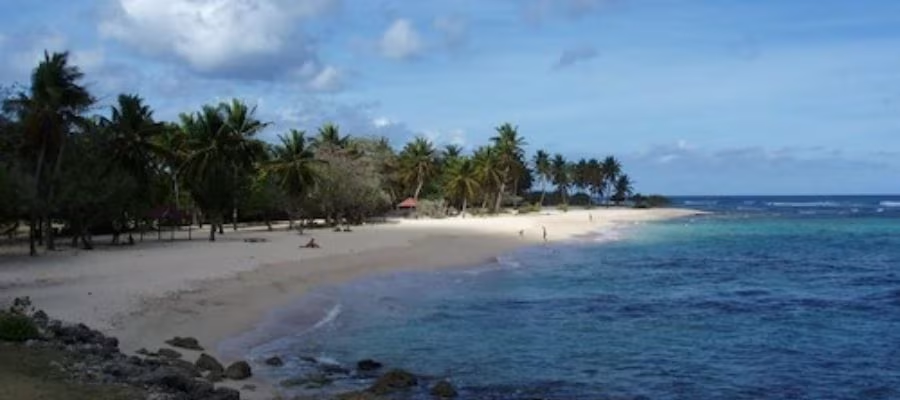
The water is still warm
Sea temperatures in Guadeloupe are generally warm in October, often around 82°F (28°C), depending on conditions. Warm water does not automatically mean safe swimming: always check waves, currents, and local guidance.
Fewer visitors before the late-october school break
Before the French Toussaint school vacation, some beaches may be quieter than during peak travel periods. Crowds still depend on the day, weather, and local events, so do not assume empty beaches or readily available parking.
Prepare for changeable weather
October is still part of the rainy season and Atlantic hurricane season. Brief showers are possible, but some weather systems can bring prolonged rain, hazardous surf, or closures. Check Météo-France Guadeloupe weather alerts and local instructions.
October travel tip
Check Météo-France Guadeloupe alerts before heading out. Adjust your plans if heavy rain, thunderstorms, or hazardous surf are forecast.
Our Grande-Terre beach picks for October
Southern Grande-Terre has several beaches reachable by car between Le Gosier, Sainte-Anne, and Saint-François. Swimming conditions depend on wind, surf, and local restrictions, even in usually sheltered areas.
Beach | Why visit in October | Practical tip |
La Datcha (Le Gosier) | Convenient stop near the town center when the weather allows | Use permitted parking areas in town |
La Caravelle (Sainte-Anne) | Scenic beach; check the day’s surf conditions | Confirm access and parking conditions locally |
Bois Jolan (Sainte-Anne) | Shallow areas in some locations, depending on the sea | Watch children closely and follow posted guidance |
Raisins Clairs (Saint-François) | Beach near town and local services | Allow extra time to find parking |
Les Salines (Saint-François) | Natural setting near Pointe des Châteaux | Check access, surf, and local instructions |
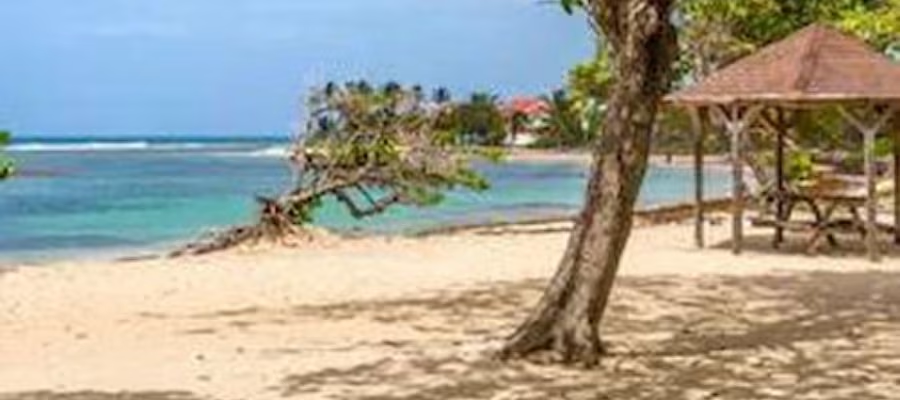
For detailed access information, parking tips, and suggested routes, read our guide to Grande-Terre beaches by car [internal link].
What about Northern Grande-Terre?
In northern Grande-Terre, especially Anse Laborde near Anse-Bertrand, surf and currents can make swimming dangerous. If the water looks rough, enjoy a walk instead and consider another beach only after checking current local conditions.
Basse-Terre’s Leeward coast: Another October option
The western, or leeward, coast of Basse-Terre is generally less exposed to the trade winds. This does not guarantee calm water or good underwater visibility: check conditions before swimming or joining a water activity.
Malendure (Bouillante): Snorkeling near the Cousteau Reserve
Malendure Beach in Bouillante faces the Pigeon Islets, in the Cousteau Reserve area. It is popular for snorkeling and scuba diving when conditions permit. Visibility and boat excursions depend on rainfall, surf, and decisions made by local operators.
Grande-Anse (Deshaies): A long Golden-sand beach
Grande-Anse in Deshaies is a long, golden-sand beach known for its scenery. Waves and currents can become strong here; if swimming is unsafe, enjoy the beach for a walk and the views instead.
Staying on Guadeloupe’s leeward coast? Explore Jumbo Car pickup options and confirm locations and hours for your dates.
To combine beaches, waterfalls, and Route de la Traversée over one or two days, see our Basse-Terre driving itinerary .
How to swim safely in October
Check the ocean and posted warnings
Follow beach flags and posted signs wherever they are present.
Do not swim alone at beaches without lifeguards.
Stay out of the water when surf is rough or waves break forcefully near shore.
Supervise children closely at all times, even in shallow lagoons.
After heavy rain
After heavy rain, avoid swimming near river mouths, drainage channels, and discolored water. Runoff can carry debris and temporarily affect water quality. Do not rely on a fixed waiting period; follow official advice and choose a different location if needed.
Sargassum seaweed
Sargassum can wash ashore on certain coastlines depending on winds and currents. Check recent local reports before you go. Avoid areas with decomposing seaweed or strong fumes.
Manchineel trees
Some beaches have manchineel trees, which are highly toxic and may be marked with red paint on their trunks. Never shelter underneath one in the rain: water dripping from its leaves can irritate skin. Do not touch its small, apple-like fruit.
Planning beach days with a rental car
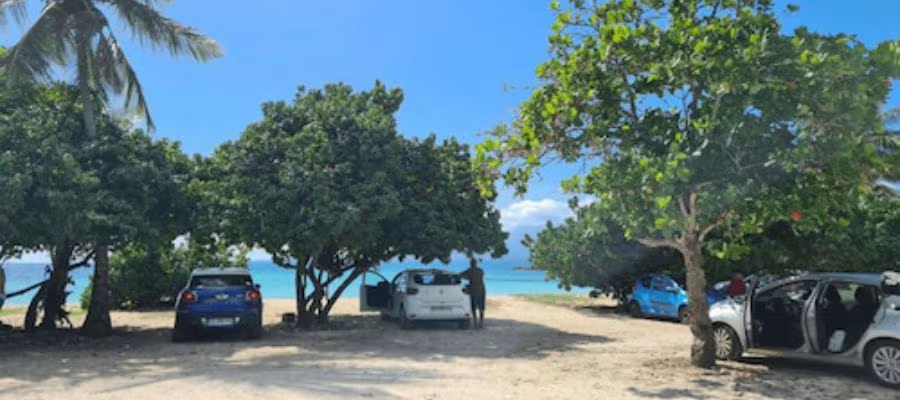
Always have a backup plan
Conditions can differ across the island, but you cannot assume another beach will be sunnier or safer. Keep an alternative activity in mind and check weather, access, and sea conditions before changing destinations.
Parking without surprises
Park only in permitted areas, never on soft, waterlogged shoulders.
Avoid parking beneath coconut palms because falling coconuts can cause damage.
Do not leave valuables or belongings visible inside the car.
Keep your keys with you in a waterproof pouch.
What rental car works best for beach trips?
For two travelers with light luggage, an economy car may be enough for beach outings on open roads. If you have children, a stroller, or extra gear, compare the trunk space and seating of compact cars and family-size vehicles.
Yes, when local conditions are safe. The water is generally warm, but surf, currents, heavy rain, or weather alerts may make swimming inadvisable.
Bois Jolan, La Caravelle, and Raisins Clairs may be options for families, depending on the day’s conditions. Shallow-looking water can still be hazardous: read posted warnings and keep children within close reach.
The French late-October Toussaint school break can increase visitor numbers at some beaches and parking areas. Crowds vary by day and weather, so allow extra time and do not count on parking at a particular hour.
Malendure Beach in Bouillante, facing the Pigeon Islets, is well known for snorkeling. Underwater visibility depends on conditions. Ask local professionals for current advice and avoid heading out in unsafe weather or surf.
