
Discover Guayabo National Monument
If you’re looking for a different kind of adventure in Costa Rica, Guayabo National Monument reveals a side of the country that many travelers never discover. Hidden in the green foothills of Turrialba Volcano, it is Costa Rica’s most important archaeological site and preserves the remains of a sophisticated pre-Columbian settlement occupied for more than two thousand years.
Stone roads, circular house foundations, tombs, plazas, underground water channels, and aqueducts lie among the rainforest here. Yet only a fraction of the archaeological area has been scientifically excavated, which means much of Guayabo’s story is still waiting to be understood.
Planning to visit Guayabo? Renting a car from San José is one of the easiest ways to reach the monument and also turns the journey itself into part of the experience, taking you through Cartago and the agricultural landscapes of the Turrialba region.
In this article, I’ll share everything you need to plan your visit:
What Guayabo is and why it matters
How to get there and what to expect on-site
When to go and what to pack
Tips for combining it with nearby experiences around Turrialba
A touch of history, a few micro-adventures, and real-world travel insights
Ready to uncover Costa Rica’s version of Machu Picchu (minus the crowds and the altitude)? Let’s go.
What is Guayabo and why is it special?
Guayabo is Costa Rica’s most important archaeological site. The area was occupied from around 1000 BC until approximately 1400 AD and was once home to an organized pre-Columbian settlement led by chiefs and religious figures.
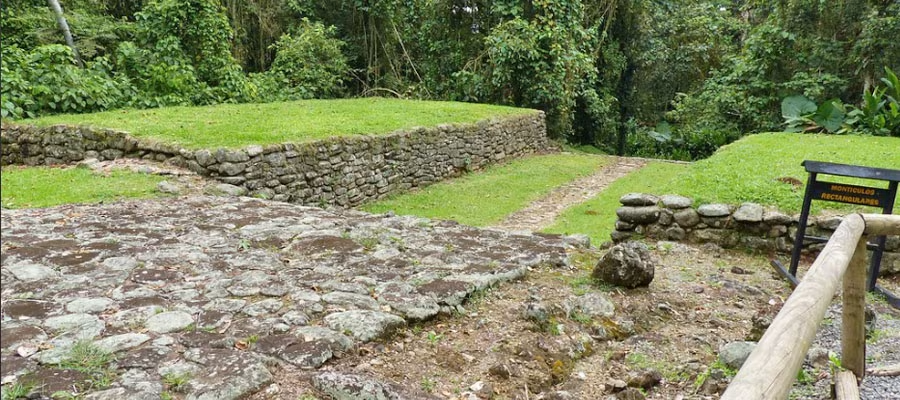
Today, visitors can see circular stone foundations that once supported houses, plazas, tombs, paved roads, petroglyphs, and an advanced water system.
Only part of the archaeological area has been excavated, so much of Guayabo’s history is still unknown.
An impressive pre-Columbian water system
One of Guayabo’s most remarkable features is its sophisticated water system. Its inhabitants built aqueducts, underground channels, drainage systems, and water storage structures, parts of which still function today.
In 2009, Guayabo was recognized by the American Society of Civil Engineers as an International Historic Civil Engineering Landmark for the quality of its ancient infrastructure.

Why is Turrialba an important crossroads?
Turrialba has long connected Costa Rica’s Central Valley with the Caribbean coast. Its role became even more important with the construction of the Atlantic railway in the late 19th century.
The region also became a meeting point between Central Valley and Afro-Caribbean communities. During the first half of the 20th century, racial discrimination and restrictive policies limited the movement and opportunities of Afro-Caribbean populations, making Turrialba a symbolic frontier between the Caribbean region and the Central Valley.
Today, the drive through Turrialba is part of the experience, with winding mountain roads, green farmland, coffee plantations, dairy farms, and the region’s famous Turrialba cheese.

Where is Guayabo and how to get there?
Guayabo is located in the province of Cartago, about 20 km northeast of Turrialba. It's roughly:
Around 1.5 to 2.5 hours from San José by car
1 hour from Cartago city
Accessible with a sedan, though an SUV makes it comfier on the final stretch
If you're coming from the Central Valley or already visiting the Turrialba volcano, Guayabo makes an excellent detour. After Cartago, the drive becomes part of the experience, with winding mountain roads, green farmland, coffee plantations, dairy farms, and beautiful views across the Turrialba region.
Pro tip: Google Maps will get you there, but download the map ahead of time, signal can get spotty near the monument.

How much does it cost?
Here’s what you’ll pay to visit Guayabo:
Foreign adult: around $5.65 USD
Children aged 2–12: around $5.65 USD
Children under 2: free
Opening hours: 8am–3:30pm
Parking: Available near the entrance; local residents may offer to watch vehicles for a small tip
You can visit without a guide, but hiring a local guide is strongly recommended. Many of the stone foundations, roads, tombs, and water structures are much more interesting once you understand what they were used for, and it also helps support the local community.

What to see when visiting Guayabo
Even though Guayabo isn't as massive as Machu Picchu or Teotihuacán, what it lacks in size, it makes up for in mystery and atmosphere.
Here’s what caught my eye the most:
Stone mounds: These raised circular platforms were once the foundations of wooden homes and ceremonial buildings. It’s crazy to think they’ve lasted more than a thousand years.
Petroglyphs: Look closely and you’ll find ancient carvings of jaguars, lizards, and geometric symbols. No one knows exactly what they mean, which adds to the intrigue.
Roadways: You’ll walk along stone-paved causeways that connected the site to other regions, proof that this was a major hub back in the day.
Underground aqueducts: Guayabo’s inhabitants built open and underground water channels, drainage systems, and storage structures. Parts of this ancient infrastructure still function today.
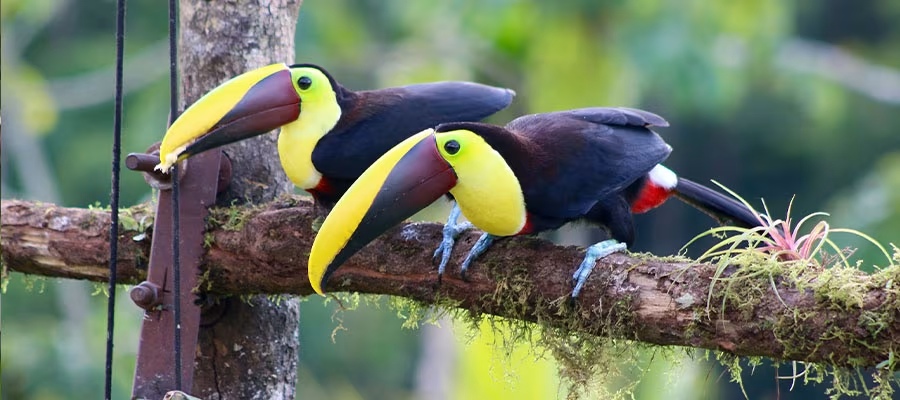
Lush jungle surroundings: Monkeys, toucans, and butterflies are part of the experience. Don’t be surprised if you hear howler monkeys calling through the trees.
The archaeological area itself is relatively compact, but allow around 2 to 3 hours for a relaxed visit, especially if you take a guide and explore the surrounding trails.

When is the best time to visit?
Guayabo is open year-round, but here’s how to plan smart:
Dry season (December to April): Best weather, clearest trails, more visibility for wildlife.
Green season (May to November): Lush, green, and moody. Bring a rain jacket and waterproof shoes. It’s magical but muddy.
Time of day: Visit early morning (8-10 AM) for cooler temps and fewer visitors.
Avoid weekends if you can, especially Sunday mornings, when locals often come for a family day out.
What to pack for your visit
Don’t overthink it, but don’t show up unprepared either. You’re in the jungle after all. Pack:
Closed walking or hiking shoes with good grip, as the trails can be wet, uneven, and slippery.
Water bottle (no refill stations inside)
Bug spray (essential)
Sunscreen and a hat
Rain jacket if you go during wet months
A camera or phone with enough battery, the setting is photogenic, especially in the morning light
Take extra care after rain, especially with young children, older visitors, or anyone less comfortable on uneven ground.
Bonus tip: There’s no café or restaurant on-site, so plan lunch before or after your visit. We drove back to Turrialba and had great casados at a local soda with volcano views. There are picnic areas near the entrance, as well as toilets, drinking water, and basic visitor facilities.
FAQ - What travelers ask about Guayabo
Is Guayabo good for kids? Yes. The distances are relatively short, but some paths can be slippery and uneven, especially after rain. Younger children should be supervised closely.
Can I go without a guide? Yes, but a local guide is strongly recommended. The site becomes much more interesting once you understand the purpose of the roads, houses, tombs, and water systems.
How long should I plan for the visit? Plan around 2 to 3 hours for a relaxed visit, especially if you take a guide and explore the surrounding trails.
Is it wheelchair accessible? Accessibility is limited because parts of the archaeological area include uneven natural surfaces, slopes, and forest trails.
Do I need to book in advance? Standard admission can normally be purchased at the entrance. If you specifically want a guided visit, arriving early is recommended.
What’s the entrance fee? The current rate for non-residents is around $5.65 USD. Rates may change, so check the official SINAC information before visiting.
What else to do around Guayabo
If you're already near Turrialba, don’t just hit the ruins and leave, there’s more to explore. Turrialba has historically been an important crossroads between Costa Rica’s Central Valley and the Caribbean coast. Its role grew with the development of the Atlantic railway, helping shape the region’s mix of agricultural and Caribbean influences.
Turrialba Volcano National Park: Open again after years of closures! You can now hike to scenic viewpoints and sometimes catch views of the smoking crater. It’s raw, rugged, and less touristy than other volcano parks.
CATIE Botanical Garden: A peaceful detour where you can walk among exotic plants, see giant bamboo forests, and learn about tropical agriculture. Great for families.
River rafting on the Pacuare: If you’re the adrenaline type, the Pacuare River offers world-class whitewater rapids. It’s one of the best rafting rivers in the Americas, no exaggeration.
Coffee and cheese tours: This region is known for high-altitude coffee and dairy farming, particularly Queso Turrialba, a fresh local cheese traditionally produced in the surrounding highlands. You can visit a finca to learn more about local agriculture and taste regional products.
Hiking and birding: The forests around Guayabo are filled with toucans, trogons, and hummingbirds. Bring binoculars if that’s your thing.
Final thoughts: why Guayabo is worth the detour
Guayabo is the kind of place that sneaks up on you. It’s not flashy. There are no big crowds or souvenir shops. But there's something quiet and powerful about walking through a forest where people once built stone cities long before Columbus ever set sail. Guayabo is also one of the best places in Costa Rica to understand the country’s pre-Columbian history, especially because only part of the archaeological site has been excavated and many questions about the settlement remain unanswered.
If you're road-tripping through the Central Valley, especially between San José and the Caribbean coast, make the detour. Renting a car gives you the freedom to explore at your own rhythm, stop for photos, grab fresh fruit on the roadside, and take that scenic mountain road just because it looks cool.
Need a rental? Start from San José or Turrialba with a reliable SUV and get ready for real Costa Rican adventure: jungles, ruins, volcanoes and all.