
Snakes in Costa Rica: Species, Safety Tips & What to Know Before You Go
Worried about dangerous animals in Costa Rica? Alongside snakes, travelers often ask about spiders and crocodiles. And while all three do live here, the truth is that encounters are uncommon and rarely dangerous if you know what to expect.
In this guide, I’ll focus on snakes, which species you might come across, which ones are venomous, and what to do if you spot one while hiking. You’ll also get tips on the safest ways to explore the country’s trails and national parks, so you can enjoy Costa Rica’s wild side with confidence.
Planning to explore Costa Rica’s jungles and rivers? The best way to see wildlife safely is by visiting reserves and parks, and renting a 4x4 or SUV from San José or Liberia gives you the freedom to reach them on your own schedule.
1. The Coral Snake
The Coral snake has a venom that can be very toxic for the nervous system.
At adult size, the snake can reach up to 1m15. They are mainly found in coffee plantations or pastures. Bites, however, are quite rare. Indeed, this snake is a nocturnal animal, and in general it avoids wasting its venom to attack a human, knowing him too big to be considered as a prey.
The Coral snake is distinguished by its brightly colored rings: red, yellow, black and yellow. The order is important, it could easily be confused with another snake, nicknamed the "false" coral snake, which is harmless! Indeed the rings of this last one are in another order. The Costa Ricans have a little memo to distinguish them: remember the word RANA ("frog" in French), initials of Rojo, Amarillo, Negro, Amarillo (red, yellow, black, yellow), the order of the colors of the "real" coral snake.

2. The Pelamide or Marine Snake
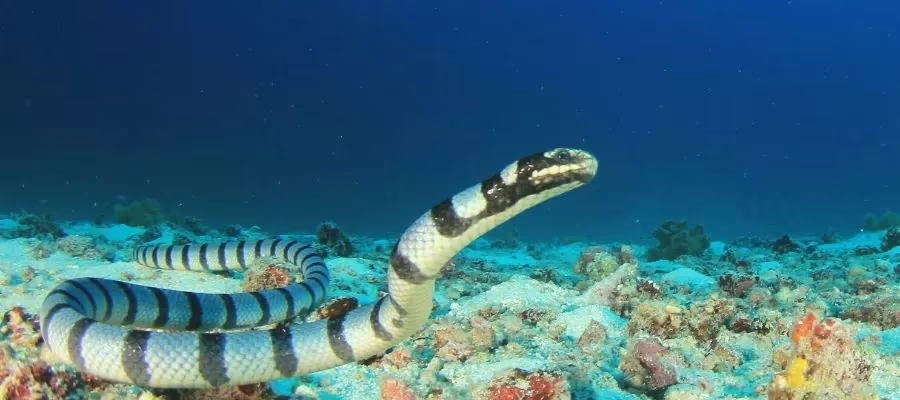
The marine snake, also called Pelamide or Hydrophis Platurus, is a species that lives in the open sea. It particularly likes floating objects in which it can hide. If you come across one in the water (which rarely happens) do not touch it; it is a poisonous species for humans.

3. The Spearhead
A member of the viper family, the spearhead - or "terciopelo" ("velvet") to the locals - is considered the most dangerous snake in Costa Rica because it is found everywhere!
It is the snake you are most likely to encounter: it has a very high reproduction rate and is omnipresent. As a result, the terciopelo is responsible for more fatal bites in Costa Rica than any other snake.
Do you know the other animals of costa rica ?

4. The Black-headed Viper (or Bushmaster snake)
Fortunately, these snakes are nocturnal and rarely encountered. However, the large Central American Bushmaster poses a significant threat to humans because of its extremely potent venom.
Victims of a Bushmaster bite have only a few hours to receive medical attention before risking serious injury, or death.

5. Schlegel's viper
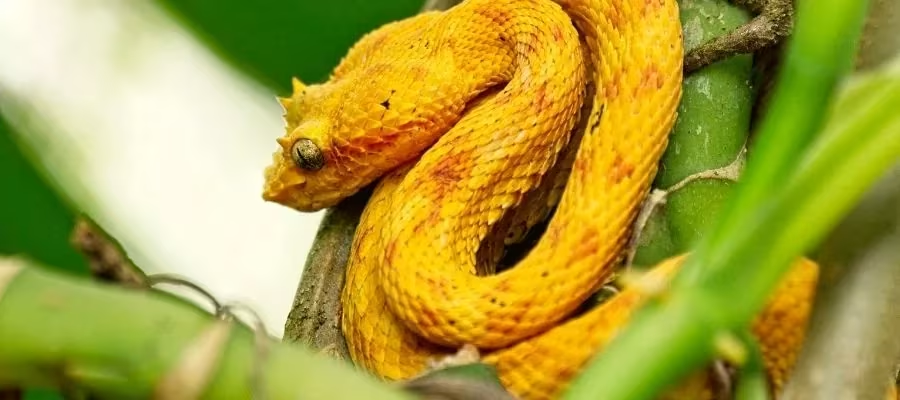
The Schlegel viper is a tree-lover and belongs to the viper family. With its distinctive ridges above the eye and striking colorations ranging from bright yellow to almost pink, it is easily recognized.
Regardless, it is best to avoid all snakes that have the triangular head and vertical pupils characteristic of the viper family.
6. The palm viper
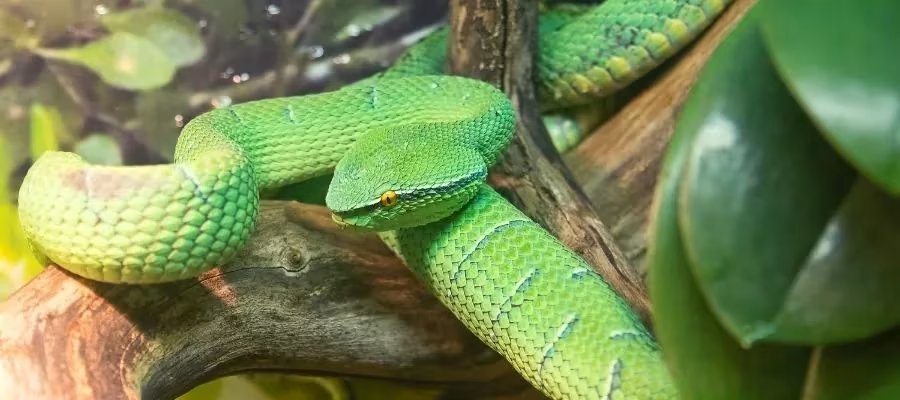
Also called "Lora Venenosa" in Costa Rica, the palm viper lives -as its name indicates - generally in the hollow of a palm leaf, in humid forests of altitude or in coffee plantations.
It is a rather small snake, measuring about 80 cm long. The Palm Viper has a particularly beautiful emerald green color, so it is easily recognizable. But beware! It can also camouflage itself in the leaves. So be careful and don't get too close.
7. The Tropical Rattlesnake
Measuring about 160 cm long, the Tropical Rattlesnake has a chestnut coloring with darker diamonds. The Central American rattlesnake is found in drier areas, usually in the provinces of Guanacaste or Puntarenas. It prefers the edges of solitary forests and it is more rare to see them.
This snake is very fast and can easily immobilize its prey by injecting its particularly toxic venom. Nevertheless, rest assured, it is extremely rare to meet it and even more to be a victim. Moreover, an effective treatment has been put in place to counter the effects of its venom.

Practical info :
What to do if you come across a snake?
Although a snake bite is very rare, you should always be careful. Here are a few recommendations to avoid any risk of being bitten.
Wear high shoes (rubber boots are ideal) and pants. Don't walk through the jungle barefoot!
Snakes are nocturnal animals so avoid venturing into the jungle alone at night, or else carry a torch and preferably go with a tour guide.
If you come across a snake, don't disturb it and stay at a reasonable distance. Remember, during the day, the snake sleeps. But you don't want to wake it up by stepping on it!
If you are wilderness camping, be careful not to plant your aunt near tall grass, a pile of rocks or near a log.
It is good to remember that you should avoid touching a dead snake as well. Indeed, shortly after death, the snake's nervous system continues to function and a bite is still possible (and yes!)
There is no reason, however, to remain locked up. It is estimated that about 30% of viper bites are "dry", meaning they do not contain venom. Most snakes will not bite unless disturbed. They usually run away as soon as they sense the approach of tourists.

What to do in case of snake bite?
If you are nevertheless a victim of a snake bite, immediately call 911, the national emergency number in Costa Rica. Be aware that Costa Rica is at the forefront of research regarding antidotes for snake venom.
While waiting for help to arrive, you can already clean the wound with water and a little soap if you have some to disinfect. Do not apply anything that is not water or soap as this could make the situation worse and do not apply a tourniquet or suck out the venom as this could be counterproductive. Also make sure you stay well hydrated while waiting for help.
While it's important to exercise caution and respect when encountering these creatures, seeing them in their natural habitat can be an unforgettable experience
Do you know the 29 best things to do in Costa Rica ?