
Spiders in Costa Rica: What to Expect, Avoid, and Admire in the Wild
About 2000 species of spiders have been counted in Costa Rica. Discovering spiders is one of the 29 best things to do in Costa Rica.
Worried about dangerous animals in Costa Rica? You’re not alone, many travelers type this into Google before their trip. The truth is, while Costa Rica is packed with wildlife (including spiders, snakes, and even crocodiles), serious incidents are rare if you know what to expect and follow basic precautions.
In this guide, we’ll take a closer look at spiders in Costa Rica, which species you might encounter, and how dangerous they really are. I’ll also cover other animals people often ask about (from crocodiles basking in rivers to venomous snakes in the rainforest) and share practical tips so you can feel safe while exploring the country’s incredible biodiversity.
And don’t worry: I’ve spent months here hiking, swimming, and spotting wildlife, and I’ll tell you exactly when to be cautious and when to just enjoy the pura vida vibes.
The tarantula
The different species of Tarantulas
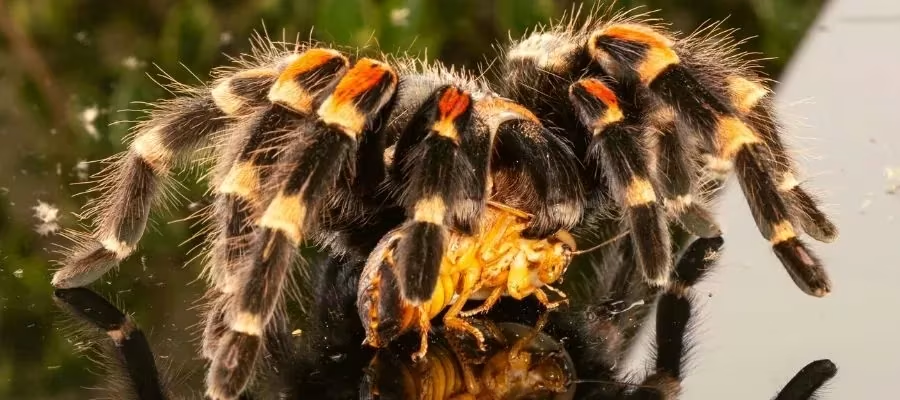
Costa Rica has a few species of tarantulas such as the Costa Rican tiger tarantula, the Costa Rican blue tarantula, or the Costa Rican zebra tarantula. Spiders can produce threads because they have a complex apparatus composed of glands that produce a liquid substance that hardens on contact with air to form threads. There are different types of glands, depending on the type of thread that needs to be produced.
Due to their lack of hearing and their poorly evolved eyesight, spiders have developed a great sensitivity to vibrations and air movements thanks to the abundant hairs (called bristles) that cover their bodies.

Know the other animals of costa rica
Life expectancy
Females can live between 10 and 30 years and males about 4 years depending on the species. This is because the male stops molting when he reaches sexual maturity, while the female continues. However, this species is known for its excessively slow growth, a female being able to moult only every two years.
Venom
Despite their threatening appearance, tarantulas are not the most dangerous spiders, far from it! Tarantulas are very shy and only attack humans when they feel they are in danger. With four pairs of legs, eight small eyes and an abundance of body hair, the venom of the tarantulas that inhabit the national soil is not lethal to humans, as is the case for tarantulas from other latitudes.
Their bite contains a mild venom that hurts at first but has no serious side effects. Even if their appearance is frightening, it is extremely rare that they attack humans! So you have almost nothing to fear.
Legends
Tarantulas are known in Costa Rica as "pica caballo", because there is a popular belief that during the night, when these animals come out of their caves in search of food, they urinate on the legs of horses, causing severe tissue damage.
However, scientific evidence indicates that equines develop bacterial infections in their feet due to exposure to wet soil and not due to tarantula bites.
Natural habitat ?

Costa Rican tarantulas can be observed below 2000 meters of altitude, in the tropical rainforest and dry. They can be found in most of the National Parks (Monteverde, Manuel Antonio, Braulio Carrillo, Tortuguero among others).
Diet
Tarantulas are mostly active at night and hunt small animals such as arthropods, birds, snakes, lizards, mice, crickets, insects and other small spiders.
What to do when you encounter a tarantula?
First of all, stay calm and remember that these animals are not a danger to humans. It is important to note that the size of the tarantula is not related to the strength of its venom. Indeed, among the smallest tarantulas are the black widow or wolf spiders of the genus Phoneutria, which are among the most venomous.
Don't try to grab them with your hands, hurt them or beat them. There are several ways to scare them away simply and without hurting them:
With a broom or a towel
By directing them to an exit
With a jar or large container that can be placed where the spider is and put the lid on one side until it can be closed etc.
You can then simply release it into the wild.
Tarantulas play an important role in the balance of ecosystems as population controllers for other animals. For example, their small relatives, the spiders, help control spoonbills and flies in homes.
Treating them with respect and not being afraid of them will contribute to their survival on the planet.
