
Things to Do in Manzanillo, Costa Rica’s Caribbean Coast
What to do in Manzanillo, Costa Rica: jungle beaches, wildlife, and pura vida essentials
Looking for a quiet, authentic slice of the Caribbean coast in Costa Rica? Manzanillo might be just what you're after. Tucked into the southeastern tip of the country, not far from the Panama border, this tiny fishing village sits at the edge of a lush wildlife refuge and offers something that’s getting harder to find these days: a raw, unspoiled beach town vibe.
In this guide, I’ll walk you through everything you need to know before heading to Manzanillo, from jungle hikes and secret beaches to snorkeling spots, wildlife sightings, and where to grab a good plate of Caribbean rice and beans. I’ll also share tips on when to go, how to get there, and why renting a car makes the whole experience way smoother. So if you're planning your Costa Rican adventure and want to see a different side of the country, keep reading.
Why visit Manzanillo? (besides the fact that it still feels like a secret)
While Puerto Viejo gets all the hype (and the party crowd), Manzanillo is where you go to exhale. It’s less polished, more local, and hugged by dense jungle that spills right onto the beach. You’ll see Afro-Caribbean culture in full bloom, hear reggae from backyard speakers, and watch howler monkeys leap overhead as you sip your morning coffee.
The pace is slow, the wildlife is close, and the sea is warm. It’s not for those looking for all-inclusive luxury or buzzing nightlife. But if you're chasing authenticity, eco-adventures, and a bit of “old Costa Rica” charm, you’re in the right place.

1. Enjoy the beautiful beaches
The coastline around Manzanillo is blessed with some of the calmest, most scenic beaches on Costa Rica’s Caribbean side, often with almost no one around. Seriously, on a weekday morning in the rainy season, you might share the sand with a fisherman, a few stray dogs, and a crab or two.
Best beaches in Manzanillo (and when to go):
Playa Manzanillo
This is the town’s main beach, and it’s postcard-perfect: wide, golden sand, gentle waves, and shallow waters that are ideal for swimming and snorkeling. The best part? You can walk straight from the town center and be in the water in minutes. Locals often play soccer here at sunset — don’t be surprised if you’re invited to join.
I once shared this beach with a capuchin monkey that decided my dry bag looked like a snack stash. Spoiler: it wasn’t.
Punta Uva
Okay, technically this one is a few kilometers north of Manzanillo, but it’s worth the short drive (or a 45-minute bike ride if you’re feeling active). Punta Uva is where the jungle leans dramatically over crystal-clear water, and you can kayak both the sea and the river. The beach is family-friendly, soft, and swimmable.

Tip: Rent a sit-on-top kayak for around $20–$30 USD for 2 hours. Ask for a route through the river mouth — you might spot sloths, toucans, and caimans.
Playa Grande
Just a short trail away through the refuge (I’ll get to that soon), Playa Grande lives up to its name. It’s less developed, great for surfing, and usually almost empty. The currents can be strong, so it’s better for walking, tide-pooling, or just having that “Robinson Crusoe” feeling. Bring water and sunscreen — there’s zero shade and no facilities.

You can spend lazy days at Punta Uva reading and playing in the waves. The beach is bordered by lush forests, offering plenty of shady spots to set up camp on the clear sand. Manzanillo is one of Costa Rica's most beautiful beaches.
2. surfing!
Manzanillo's main beach offers great waves and is somewhat protected by a live coral reef less than 50m offshore, making it a great place for beginners.
There are, however, surfing spots for the more experienced: reefs to the north and south of the main beach that break with big swells. These can be reached after a short walk through the forest. Note that some breaks are only accessible by boat.


3. Hiking Gandoca, Manzanillo Wildlife Refuge
This is the thing to do if you love nature. The Gandoca-Manzanillo Refuge (Reserva Gandoca-Manzanillo) is free to enter, uncrowded, and surprisingly wild; it feels more like a jungle expedition than a marked tourist trail.
You’ll walk along a narrow dirt path that snakes between beach and forest, with panoramic cliffside views and shaded jungle pockets where you might spot:
Sloths (both two- and three-toed)
Poison dart frogs
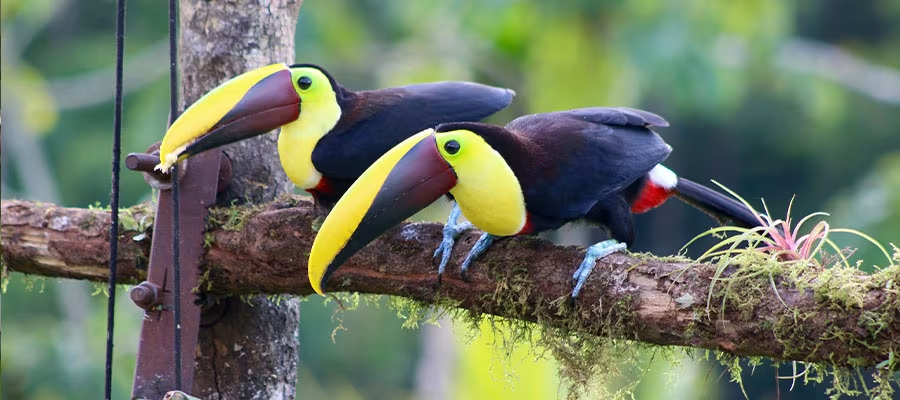
Toucans and oropendolas
Coatis, iguanas, and if you’re very lucky… a jaguarundi
Bring good shoes (the trail gets muddy), bug spray, snacks, and plenty of water. It’s hot and humid even on cloudy days.
One highlight is reaching Punta Mona, a quiet beach known for yoga retreats and permaculture farms. It’s about a 2-hour hike from the main entrance — you can return the same way or take a boat back with prior arrangement.

4. Kayaking through the jungle
One of my favorite adventures in this part of the country is kayaking from Punta Uva River to the sea, or vice versa. It's like floating through a National Geographic documentary, but you're the one in the frame.
You paddle past overhanging trees, through shaded mangroves, and into open ocean if the tide allows. I once had a howler monkey chorus serenade me from the treetops while a blue morpho butterfly followed me for at least 100 meters. No joke, I felt like I was in a Disney intro scene.
Rentals cost about $25 USD per person, guided tours around $40–50 USD and often include a short wildlife walk or beach picnic.
Some tours also offer sunset paddles, and if the clouds cooperate, it’s pure gold.

5. Visit Cahuita National Park
Cahuita is the most easily accessible national park in the Caribbean.
It consists of 2,732 acres of land and 55,200 acres of sea and was created to protect the largest coral reef in the country. With beautiful white sand beaches, abundant wildlife and a well-maintained hiking trail, this national park is a must-see for anyone visiting the Puerto Viejo area of the southern Caribbean of Costa Rica.
The 600-acre reef has about 35 species of coral, over 100 species of fish and shellfish, crustaceans and sea turtles.
There are also a few rivers in the park, allowing for a variety of wildlife sightings such as capuchin monkeys, herons, caimans, sloths, snakes and lizards and basilisks... that little neon green lizard that runs on the surface of the water!
Cahuita is not very touristy and is the ideal place for any traveler wishing to discover the fauna, the jungle and the beaches of Costa Rica in a virgin and peaceful area.
Opening hours and entrance fees :
The entrance to the Cahuita National Park is free, it is done by donation at the main entrance. However, if you enter the park through the Puerto Vargas sector which is closer to Puerto Viejo, the price is $5 USD for foreigners and 1,000 colones for Costa Ricans.
The national park is open every day from 8 am to 3 pm.

6. Snorkeling the reef and spotting sea life
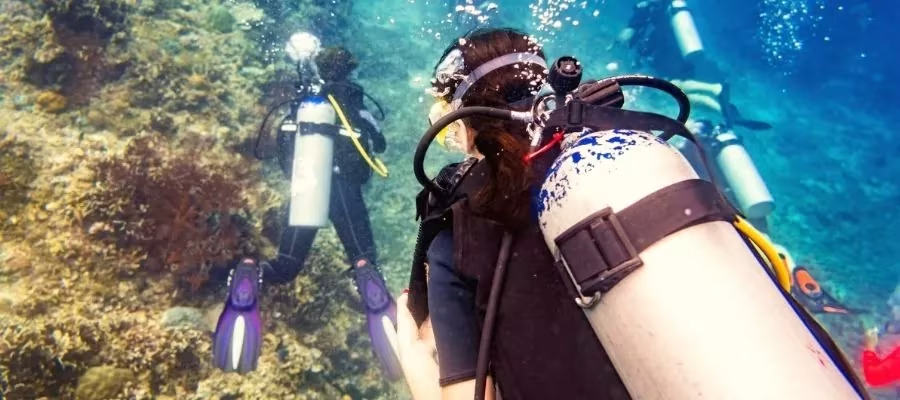
If you’ve ever dreamed of snorkeling right off the beach with clear visibility and zero crowds, Manzanillo will blow your fins off. The reef here is part of the Gandoca-Manzanillo Wildlife Refuge, which means it’s protected, and it shows.
During the dry season (roughly February to April), water clarity is at its peak. Expect to see parrotfish, angel fish, rays, and coral heads, sometimes just a few feet from shore. The best entry points are from Playa Manzanillo itself or just south, past the rocky outcrop.
Pro tip: Bring your own snorkel gear (or rent for $5–$10 from town). Morning is best before the waves pick up. Avoid standing on coral, it’s fragile and protected.
If you’re lucky (and it’s calm), you might even spot a green sea turtle gliding past the reef. It’s that magical.
7. Taste the local gastronomy
On the Caribbean coast, the dishes are different from the rest of the country. Here are some examples:
Rice and Beans: it is a "Gallo Pinto" (rice and beans) but with coconut milk. A typical Afro-Caribbean dish. From the first spoonful, you can appreciate the taste of coconut milk and Panamanian chili, to name a few. Sometimes it is accompanied by meat.
Bochinche casado: it is a dish mainly composed of spaghetti, mashed beans, patacones (fried green plantin), a portion of meat of your choice and green salad.
But also Patí, Rondón Caribeño, Plantintá (plantain pie), Hiel or Agua de sapo... there are dishes and flavours for every taste!

The Gallo Pinto dish
Where to eat in Manzanillo (and what to try)
This isn’t the place for fine dining, but if you like your food fresh, simple, and cooked with love, you're in luck.
Maxi’s by Ricky: Manzanillo's most iconic eatery. Caribbean rice & beans with coconut milk, whole fried red snapper, and patacones the size of your hand. Cold Imperial beer included, naturally.
Cool & Calm Café: Great spot for breakfast or casual smoothies and local plates. Super chill vibe, good wifi.
Soda El Árbol: Tucked just off the main road, this family-run soda serves big portions of casados (set plates) with chicken, fish or veggie options for around ₡3500–4500 colones ($6–$8 USD).
Tip: Order the agua de sapo. It’s a refreshing mix of ginger, lime, and raw sugar cane. No frogs involved, I promise.
8. Take a tour of Puerto Limón
Puerto Limón is the capital of the province of Limón, with a strong Afro-Caribbean influence.
Puerto Limón is also one of the oldest cities in Costa Rica, with a history dating back to the time of the discovery of America. The port itself was only founded in 1870, but for hundreds of years it has been an important embarkation and disembarkation point for the Caribbean.
The drive with a rental car in Costa Rica takes around 3 hours from San José, and you'll be dazzled by the lush rainforest on the way through the Braulio Carrillo Park.

Parque Vargas de Puerto Limon
Where to see sloths, toucans, and more
If you don’t see sloths on the trail, don’t worry: you absolutely will see them around town. I’ve spotted three-toed sloths hanging above the main road, just across from local sodas (small restaurants). Look up!
You’ll also hear howler monkeys, especially around sunrise and late afternoon. Their calls are like something between a roar and a death metal intro — unforgettable.
For more structured wildlife sightings (and a deeper understanding), consider visiting the Jaguar Rescue Center in nearby Puerto Viejo (15 min drive). It’s not in Manzanillo, but it’s a must-see if you're into conservation.
Practical tips and money matters
Cash is still king in Manzanillo, especially for small sodas, fruit stalls, and beach gear rentals. Bring colones or crisp USD in small bills (ten and twenty work best), most spots accept both. ATMs hide in Puerto Viejo, so withdraw before rolling south.
Car rental is the easiest way to roam; expect $45–$65 USD a day for a compact with basic insurance, bump that up if you want a 4×4. Gas runs around $6 USD a gallon, the only station sits on the main road near Hone Creek, fill up when you see it. Shuttles from San José cost $59–$69 USD one-way; buses are cheaper but slow, think five to six hours with a transfer in Limón.
Tours average $50–$90 USD per person, guides usually include gear and fresh pineapple. Eating local keeps budgets happy, an abundant casado plate rarely tops $8 USD, while beachfront cocktails hover around $7 USD. Surfboard rentals are $15–$20 USD a day, snorkel sets $5–$10 USD.

Best time to visit manzanillo
The southern Caribbean has its own rhythm, different from the Pacific. February to April brings plenty of blue skies and glassy water, ideal for snorkeling. September and October often see another dry pocket; locals call it the “secret summer.” May, June, November deliver afternoon showers, lush jungle, fewer travelers, excellent wildlife watching. December and January mix sun and brief downpours, still perfectly beach-worthy. Even in the wettest weeks the rain falls in bursts, then the sun steams everything dry.
Quick FAQ for first-timers in Manzanillo
Is Manzanillo safe for solo travelers? Yes, the village feels relaxed and welcoming, just practice common sense, lock your car, and skip lonely beach walks after dark.
Do I need a 4×4? Not strictly, the coastal road is paved, yet a higher clearance helps if you plan to explore backroads or visit Bri Bri waterfalls during the rainy season.
Can I use a credit card everywhere? Larger restaurants and lodges accept cards, smaller spots prefer cash. Keep small bills handy for fruit stands and parking attendants.
What about mosquitoes? They love this humid paradise. Pack repellent with DEET, wear light long sleeves at dusk, and choose accommodation with screens or nets.
Is the water safe to drink? Locals drink tap water, yet most travelers stick to filtered or bottled. Bring a reusable bottle and fill up at cafes that offer purified water.
Wrapping it all up
Manzanillo offers that rare mix of wild Caribbean coastline, Afro-Costa Rican soul, and unforgettable wildlife moments, without the crowds or clichés. One minute you’re snorkeling above coral gardens, the next you’re sharing a jungle trail with a sloth or sipping homemade cacao with an indigenous family in the hills.
It’s raw, it’s real, and it’s absolutely worth the trip.
To explore Manzanillo freely (and to reach the nearby waterfalls, hidden beaches, and chocolate farms on your own schedule) I highly recommend renting a car. Public transport is limited, and most of the region’s magic lies just off the beaten path. With your own wheels, you’ll stop for monkeys, linger at lookouts, and chase sunsets without checking bus schedules.
So pack light, grab your driver’s license, and hit the road with that laid-back pura vida mindset. Manzanillo’s waiting, and the road there is part of the adventure.