
When to Go to Costa Rica: Best Time to Visit by Season
When is the best time to visit Costa Rica? The answer depends on the kind of trip you're planning. Whether you're looking for sunny beach days, lush rainforests, incredible wildlife, fewer crowds or the best value for your budget, every season has something different to offer. In this guide, you'll discover Costa Rica's weather patterns, the differences between the dry and green seasons, what to expect month by month, and our practical tips to help you choose the perfect time for your itinerary, your activities and your road trip.

When is the best time to visit Costa Rica?
Costa Rica is a year-round destination, but the best time to visit depends on the experience you're looking for. If you want sunny skies, reliable road conditions and the best weather for exploring the country's beaches, volcanoes and national parks, the dry season, from December to April, is usually the ideal choice. If you prefer lush landscapes, lower prices and fewer tourists, the green season can be just as rewarding.
Unlike destinations with four distinct seasons, Costa Rica has two main travel seasons: the dry season and the green season, also known as the rainy season. This is a useful way to plan your trip, although weather conditions vary considerably depending on the region, elevation and whether you're travelling along the Pacific or Caribbean coast.
Ultimately, there isn't a single "perfect" time to visit Costa Rica. The best month for a beach vacation isn't always the best for wildlife watching, hiking through cloud forests or planning a road trip across the country. Choosing the right season starts with deciding what you want your trip to look like.

Costa Rica weather: dry season vs. green season
Costa Rica enjoys warm tropical temperatures throughout the year, but rainfall changes significantly from one season to another. These seasonal differences influence not only the scenery, but also road conditions, wildlife activity, prices and the overall travel experience.
Dry season (December to April)
The dry season is Costa Rica's busiest travel period. Most of the Pacific coast enjoys long sunny days with very little rain, making it the perfect time to relax on the beach, hike volcanoes, explore national parks and take a self-drive road trip.
It's also the most expensive time of year. Hotels, tours and rental cars are in high demand, especially during Christmas, New Year's and Easter Week, so booking well in advance is highly recommended.
Green season (May to November)
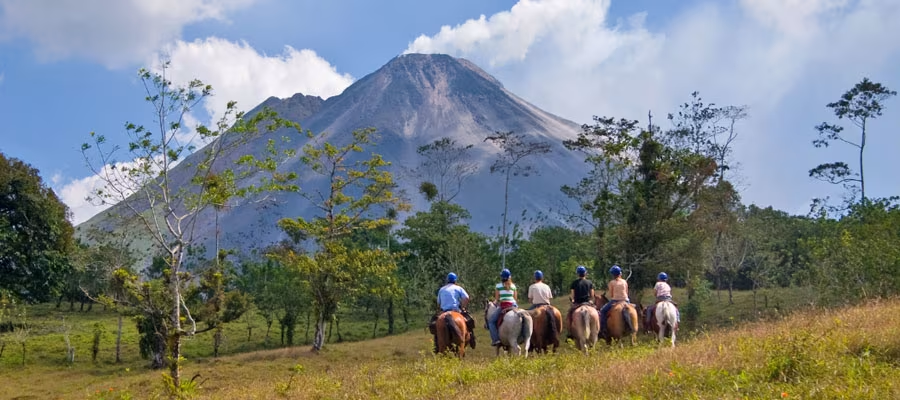
Don't let the name rainy season discourage you. During Costa Rica's green season, rain usually falls in the afternoon or evening, while mornings often remain bright and sunny. The country becomes incredibly lush, waterfalls are at their most spectacular and national parks feel even more vibrant.
Traveling during the green season also means fewer crowds and better prices, making it an excellent option if you're looking for a more relaxed experience or planning a longer stay.
Travel tip: If you're visiting during the green season and plan to explore remote areas such as the Osa Peninsula or mountain lodges, consider renting a 4WD. While most of Costa Rica's main roads remain accessible year-round, some unpaved roads can become challenging after heavy rainfall.


How does the weather vary across Costa Rica?
One of the biggest surprises for first-time visitors is how different the weather can be from one region to another. Although Costa Rica is a relatively small country, mountains, volcanoes and changing elevations create several distinct microclimates.
Region | Weather | Best time to visit |
Guanacaste | Hottest and driest region | December to April |
Central Pacific (Manuel Antonio, Jacó) | Warm and tropical year-round | December to April |
Osa Peninsula & Corcovado | Very humid tropical rainforest | January to April |
Caribbean Coast (Puerto Viejo, Cahuita, Tortuguero) | Rain throughout the year, but often sunnier in September and October | September to October |
Central Valley (San José, Cartago) | Mild temperatures all year | Year-round |
Monteverde | Cool, misty and humid cloud forest | December to April |
Arenal & La Fortuna | Warm with frequent showers | January to April |
Good to know: It's common to experience completely different weather on the same day. You might leave San José under cloudy skies, enjoy sunshine on the Pacific coast a few hours later, then end the day in the cool mist of Monteverde.

What's the best time to visit Costa Rica based on your travel plans?
Whether you're planning a beach vacation, a family road trip or a wildlife adventure, the best season depends on what you want to experience.
For beaches and sunshine
Would you like to explore Costa Rica's most beautiful beaches? Choose the dry season, from December to April, especially if you're visiting the Pacific coast. Expect warm temperatures, clear skies and ideal beach conditions.

For fewer crowds
If you prefer quieter national parks and more availability in hotels, May, June and November are excellent choices. You'll enjoy a more relaxed atmosphere without giving up too much sunshine.
For travelers on a budget
The green season generally offers the best value. Flights, accommodations and rental cars are often more affordable, especially outside local holidays.

For a self-drive road trip
Costa Rica is one of the best countries in Central America to explore by car. The dry season offers the easiest driving conditions, but a road trip during the green season can be just as rewarding if you adapt your itinerary and choose a 4WD when traveling off the beaten path.
For wildlife lovers
Costa Rica is one of the world's best destinations for wildlife watching. While you'll spot iconic species such as monkeys, sloths and colorful birds throughout the year, some species are much easier to observe during specific seasons. Planning your trip around these natural events can make your experience even more memorable.
Wildlife experience | Best time to visit | Best locations |
Sea turtle nesting | July to October (depending on the species) | Tortuguero National Park, Ostional, Playa Grande |
Humpback whales | July to October and December to March | Marino Ballena National Park, Golfo Dulce |
Scarlet macaws | December to April | Carara National Park, Osa Peninsula |
Sloths | Year-round | La Fortuna, Manuel Antonio, Cahuita |
Monkeys | Year-round | Manuel Antonio, Corcovado, Tortuguero |
Resplendent quetzals | February to June | Monteverde, San Gerardo de Dota |
Red-eyed tree frogs | May to November | Tortuguero, Sarapiquí, Arenal |
American crocodiles | Year-round | Tárcoles River |
Dolphins | Year-round | Golfo Dulce, Marino Ballena |
Migratory birds | December to April | Caño Negro Wildlife Refuge, Tortuguero |
Travel tip: Wildlife is active throughout the year, but early mornings offer the best chances of spotting animals. Guided walks led by local naturalists can dramatically increase the number of species you'll see, especially in rainforests and national parks.
Costa Rica weather by month
Every month offers a different experience in Costa Rica. Some are perfect for beach vacations and road trips, while others are ideal for wildlife watching, lush rainforest scenery or traveling on a budget.
Use the table below to compare the seasons at a glance, then explore each period in more detail.
Month | Weather | Crowds | Budget | Our opinion |
January | ☀️☀️☀️☀️☀️ | ⭐⭐⭐⭐⭐ | 💰💰💰 | One of the best months to visit |
February | ☀️☀️☀️☀️☀️ | ⭐⭐⭐⭐ | 💰💰💰 | Perfect for road trips |
March | ☀️☀️☀️☀️ | ⭐⭐⭐⭐ | 💰💰💰 | Excellent weather throughout the country |
April | ☀️☀️☀️ | ⭐⭐⭐⭐⭐ | 💰💰💰 | End of the dry season |
May | 🌤️🌤️🌤️ | ⭐⭐ | 💰 | Great value for money |
June | 🌤️🌤️ | ⭐⭐ | 💰 | Lush landscapes and fewer visitors |
July | 🌤️🌤️🌤️ | ⭐⭐⭐ | 💰💰 | Short dry spell on the Pacific coast |
August | 🌦️🌦️ | ⭐⭐ | 💰 | Good for wildlife watching |
September | 🌧️ | ⭐ | 💰 | Best for the Caribbean coast |
October | 🌧️ | ⭐ | 💰 | Wettest month on the Pacific coast |
November | 🌤️🌤️🌤️ | ⭐⭐ | 💰💰 | One of the best shoulder-season months |
December | ☀️☀️☀️☀️ | ⭐⭐⭐⭐ | 💰💰💰 | Return of the dry season |
January, one of the best months to visit Costa Rica
January is one of the best months to explore Costa Rica for the first time. The dry season is well established, sunny days are the norm across the Pacific coast and road conditions are excellent for a self-drive itinerary. It's the perfect time to combine beaches, volcanoes, cloud forests and national parks.
Highlights
Guanacaste beaches
Manuel Antonio National Park
Palmares Festival
Scenic road trips across the country
Our tip: Book your rental car and accommodations well in advance. January is one of the busiest months of the year, and the best options often sell out quickly.

February, the driest month of the year
February usually brings Costa Rica's most reliable weather. Rainfall is minimal across much of the Pacific region, making it an excellent month for hiking, wildlife watching and exploring several regions during the same trip.
Highlights
Monteverde Cloud Forest
Arenal Volcano
Puntarenas Carnival
Quetzal spotting in the highlands
Our tip: If you're planning a two-week road trip, February offers some of the easiest driving conditions of the year.
March and April, sunshine and peak travel season
Warm, sunny weather continues across most of the country. These months are ideal for visiting beaches, national parks and volcanoes, but they're also among the busiest, especially during Easter Week, when many Costa Ricans travel within the country.
Highlights
Manuel Antonio
Tamarindo
Pacific beaches
National parks before the rainy season begins
Our tip: If possible, avoid traveling during Easter Week. Prices increase significantly, beaches become crowded and availability is limited.

May and June, the best balance between weather and budget
The green season begins gradually. Mornings are often sunny before afternoon showers arrive, while forests become greener and waterfalls more spectacular. Tourist numbers also drop, making these months a great choice for travelers looking for better value.
Highlights
Arenal Volcano
Waterfalls at their best
White-water rafting
Lush national parks
Our tip: May and June are among our favorite months to visit Costa Rica. They offer an excellent balance between pleasant weather, lower prices and fewer crowds.
July and August, a pleasant surprise
July often brings the Veranillo de San Juan, a short dry spell that usually affects the Pacific coast. This makes it a surprisingly good month for outdoor activities, even though the green season is already underway.
Highlights
Sea turtle nesting
Whale watching in Golfo Dulce
Pacific coast beaches
National parks
Our tip: If you're traveling during the summer holidays, July generally offers more stable weather than August.

September and October, best for the Caribbean coast
These are the wettest months on the Pacific coast, but they're often the sunniest months along Costa Rica's Caribbean coast. It's also one of the best times of the year for wildlife lovers and travelers looking for a quieter experience.
Highlights
Puerto Viejo
Cahuita National Park
Tortuguero
Limón Carnival
Our tip: Planning a Caribbean-focused itinerary? September and October can be excellent months, even though much of the Pacific coast experiences heavy rainfall.
November and December, the return of the dry season
November marks the transition between the green and dry seasons. Rain gradually decreases, landscapes remain lush and prices are still reasonable. From mid-December onward, the high season returns and demand increases rapidly.
Highlights
National park hikes
Pacific coast sunsets
Festival of Lights in San José
Beginning of the beach season
Our tip: November is one of Costa Rica's best-kept secrets. You'll often enjoy pleasant weather, fewer visitors and better prices before the holiday crowds arrive.

Common mistakes to avoid when planning your trip to Costa Rica
Choosing the right time to visit Costa Rica isn't just about the weather. Here are a few common mistakes that can affect your trip, and how to avoid them.
Assuming it rains all day during the green season: Many travelers avoid Costa Rica between May and November because they expect constant rain. In reality, mornings are often warm and sunny, while showers usually arrive later in the afternoon or evening. Planning outdoor activities early in the day is often all it takes to make the most of your trip.
Thinking the weather is the same across the country: Costa Rica may be small, but its weather varies significantly from one region to another. While September and October are among the wettest months on the Pacific coast, they're often some of the sunniest months along the Caribbean coast.
Booking too late during the high season: If you're traveling between December and April, especially during Christmas, New Year's or Easter Week, don't wait until the last minute. Hotels, tours and rental cars can sell out months in advance, and prices increase as availability becomes limited.
Renting the wrong vehicle for your itinerary: Most of Costa Rica's main roads are perfectly suitable for a standard car. However, if your itinerary includes remote beaches, mountain lodges or the Osa Peninsula during the green season, a 4WD can make your journey much easier and safer.
Underestimating driving times: Distances may look short on a map, but mountain roads, winding routes and slower speed limits often make journeys longer than expected. When planning a road trip, focus on quality rather than trying to visit too many destinations in a limited time.
Our advice: The best time to visit Costa Rica isn't necessarily the most popular one. Start by deciding what you want to experience, then choose the season that best matches your itinerary, budget and travel style.
Frequently asked questions
Can you visit Costa Rica all year round? Yes. Costa Rica is a year-round destination. Every season has its own advantages, whether you're looking for sunshine, wildlife, lush landscapes or lower travel costs.
What is the best month to visit Costa Rica? January and February are among the most popular months thanks to their sunny weather and excellent road conditions. If you prefer fewer crowds and better prices, May, June and November are also excellent choices.
When is the rainy season in Costa Rica? The green season generally runs from May to November. Rain usually falls in the afternoon or evening, while mornings often remain pleasant for sightseeing and outdoor activities.
What is the wettest month in Costa Rica? October is usually the wettest month on the Pacific coast. However, the Caribbean coast often enjoys drier weather during September and October.
What's the cheapest time to visit Costa Rica? Traveling during the green season, especially between May and November (excluding local holidays), usually offers the best value for flights, hotels and rental cars.
When is the best time to see sea turtles? Depending on the species, nesting season generally takes place between July and October, particularly in Tortuguero National Park, Ostional and Playa Grande.
When can you see whales in Costa Rica? Humpback whales migrate through Costa Rican waters twice a year: from July to October and from December to March, making Costa Rica one of the few places where whale watching is possible during much of the year.
Do I need a 4WD to visit Costa Rica? Not necessarily. A standard vehicle is suitable for most popular destinations. A 4WD is recommended if you plan to visit remote areas, travel during the green season or drive on unpaved roads.
Is Costa Rica affected by hurricanes? Costa Rica is less exposed to hurricanes than many Caribbean destinations. While heavy rainfall can occur during the green season, direct hurricanes are extremely rare.
How many days should I spend in Costa Rica? A stay of 10 to 15 days is ideal for discovering several regions without spending too much time on the road. If you have three weeks, you'll be able to explore the country at a more relaxed pace.
So, when is the best time to visit Costa Rica?
Costa Rica is a destination that can be enjoyed throughout the year. Whether you choose the sunny days of the dry season or the lush landscapes of the green season, the best time to visit ultimately depends on the experiences you're looking for. By matching your travel dates with your itinerary, budget and favorite activities, you'll enjoy a trip that's perfectly suited to your expectations.
Planning to explore Costa Rica at your own pace? Renting a car is one of the best ways to discover the country's beaches, volcanoes, rainforests and national parks, while enjoying the freedom to travel wherever and whenever you want.