
Poás Volcano - Costa Rica
Poás Volcano, Costa Rica: how to visit one of the country’s most famous craters
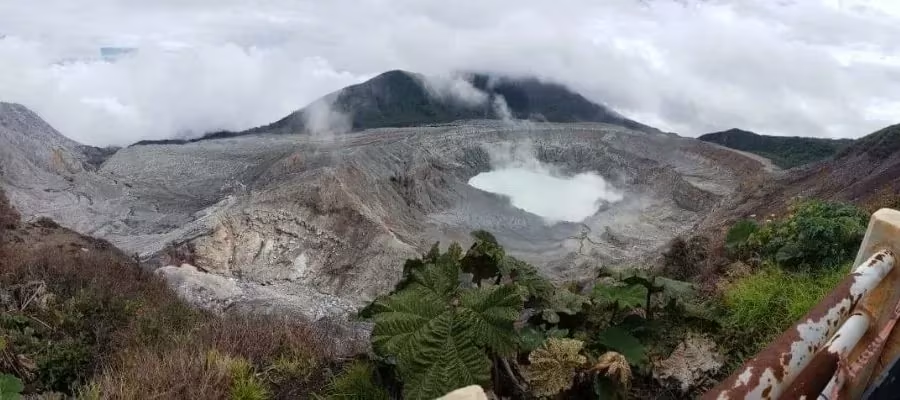
Thinking about visiting Poás Volcano? This active giant in Costa Rica’s Central Valley is one of the most accessible volcanoes in the country, and one of the most spectacular. Standing on the viewing platform, you can look straight down into a massive crater often filled with clouds of steam and a turquoise lake that looks almost unreal.
In this guide, I’ll cover everything you need to know about visiting Poás Volcano National Park: how to get there, entry fees and reservation requirements, the best time of day to see the crater, and nearby attractions worth adding to your trip. I’ll also share a few tips from my own visits, including how fast the weather can change up here.
Getting there is easy: Poás is less than 1.5 hours from San José, and renting a car or SUV right at the airport makes it simple to drive up on your own schedule, combine the visit with a coffee tour, and enjoy the Central Valley at your own pace.
The Poás volcano
This is a very accessible national park. You can follow a paved road with your rental car to the wheelchair-accessible visitor center near the summit. The visitor center contains information about the history of the volcano. Other amenities include a café, restrooms and a museum.
A 15-minute walk from the visitor centre, the main crater offers a spectacular view. Nearly 1.6 km in diameter, the crater's rain-fed sulphur basin still bubbles and emits smoke into the air. Although the last major eruption was in 1910, visitors can still see geysers exploding in the air up to 250 m high. Around the huge main crater is the Laguna Botos, a beautiful blue-green acid lake, and on the opposite side is the von Frantzius cone.
The park is full of dense vegetation and small wildlife. It is common to see bird species such as the quetzal, emerald toucanet, sparrow, hummingbird and robin.
Small mammals such as rabbits, squirrels, snakes, frogs and a plethora of insects live here, even coyotes! You will see them as you walk along the Botos Lagoon Trail, the Sombrilla de Pobre Trail and the Escalonia Trail.
The different zones within the protected area include mainly the very humid forest. Walking along the Botos trail, you arrive at the Botos Lake, a beautiful crater with a diameter of 400 meters. This lake has a beautiful jade color and is frequented by many of the park's bird species.
What to see around Poas Volcano National Park?
La Paz Waterfall Garden
If you're looking for an incredible excursion near the volcano on your next trip to Costa Rica, choose La Paz Waterfall Gardens.
Surrounded by lush flora and fauna, beautiful hiking trails and a coffee plantation, La Paz is a private ecotourism attraction and the perfect place for a family visit. Only an hour from San Jose and Juan Santamaria International Airport, it is rich in biodiversity.
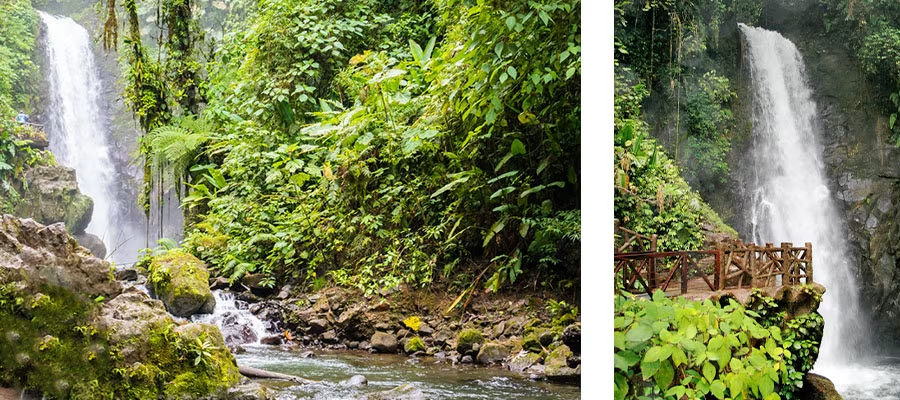
One of the most popular attractions is the world's largest butterfly garden. You will also see an animal sanctuary, a hummingbird garden, a beautiful bromeliad garden, an orchid garden, a frog pond, a snake garden and five amazing waterfalls!
Visit La Paz for one of the most memorable tours in Costa Rica and one of the most popular in the Central Valley.La Paz is open from 8 to 5 all year round and there is no need to book. Guided tours are available, but it is also possible to walk around the park on your own. It takes about 2 hours to walk through the entire park, so it is best to arrive before 3pm, especially considering that it usually rains in the afternoons during the rainy season.
Coffee plantations
Doka coffee plantation
You will have the opportunity to learn not only how the Doka estate cultivates its precious coffee beans, but also the history of its agricultural technique. Here, coffee beans are grown traditionally with natural crop protection. After witnessing the preparation and roasting process, you will be invited to taste your own cup of Tres Generaciones coffee to savour the result of all this hard work.

Starbucks' Hacienda Alsacia
Yes, yes, Starbucks owns a coffee farm! Hacienda Alsacia is a 240-hectare coffee farm near the Poás volcano that serves as a global research and development center and working farm for Starbucks. Now open to the public, visitors will be able to experience sustainable coffee firsthand, including the agronomy work that Starbucks has supported and invested in for two decades. Here you can enjoy a great cup of coffee with a breathtaking view of the plantation and the mountains, sitting in one of the typical rocking chairs of the area.
How to get there: Hacienda Alsacia is located in San Luis, Sabanilla, Alajuela, on the slopes of the Poas volcano, about 45 minutes from San Jose, the capital of Costa Rica. Tickets to visit the Hacienda Alsacia Visitor Center cost 25 USD and include a 90 minute guided tour, coffee tastings, parking and a bandana to go. For more information, please visit: www.starbuckscoffeefarm.com

Bajos del Toro
If you love mountains, natural landscapes and hiking, then Bajos del Toro is the place to be. Here you'll find sublime landscapes and magnificent Costa Rican waterfalls in close proximity to one another (Catarata del Toro, Cascade Río Agro, Cascade El Paraiso, Cascade Tesoro Escondido, etc.).
Practical information
Watch the weather
Be careful, if you want to enjoy the good weather and the clear view, go as soon as the park opens! Otherwise, you risk rain and a sea of clouds that will hide the view of the crater.
The dry season is from January to April. It rains less during these months.
The rainy season runs from May to November. The rainiest months are September and October. The last two weeks of July are good. There is a lull in the rainfall.
What should you wear? Good walking shoes, a rain jacket and in the rainy season an umbrella. The weather is cool because the Poas volcano is 2697 meters above sea level.
How to book your tickets?
If you have decided to visit Poas Volcano National Park during your trip, there are two things you need to do:
Register a free online account with SINAC (Sistema Nacional de Areas de Conservación), Costa Rica's national system of conservation areas.Reserve the date and time for your visit to the national park, which requires online prepayment of the Poas Volcano National Park entrance fee. Here is the SINAC link: https://serviciosenlinea.sinac.go.cr/

Rates
Adults (13+ years old) who do not live in Costa Rica: $15.00 USD Children (2-12 years old) living in Costa Rica:500 colonesChildren (2-12 years old) who do not live in Costa Rica: 5 USD Children under 2 years old :FREE
Timetable
Poás Volcano National Park is open from 7 a.m. to 1:20 p.m., including holidays. Bring water and wear comfortable clothes for a walk, but hiking boots are not necessary.

How to get to Poas Volcano
From San José and Alajuela
By car :
Route 1: From San José, take the General Cañas highway to the city of Alajuela. From there, take road number 712 towards Poasito, passing through the communities of Itiquis and Fraijanes, following the signs for the volcano.
Route 2: Through Heredia, going up to Barva de Heredia - Varablanca - Poasito.
By bus :
You have to go to Alajuela if you come from San José. The TUASA bus station is in front of the La Merced church in the centre. And then take the connection :
Company: Coopetransasi
Address: Terminal FECOSA, between Avenida Central and 2, Calles 6 and 10, 100 meters south of Terminal TUASA.
Departure time for the national park: 9 a.m.
Time of return to Alajuela: 12:30
Please book at 10:40 or 11:00 if you are using the public bus service to visit Poas Volcano National Park.
From Liberia
Whether by car or by bus, go to Alajuela or San José and follow the same directions as above.