
Santa Rosa National Park
Santa Rosa National Park is one of the most underrated parks in Guanacaste, and it’s very different from the rainforest image most travelers have of Costa Rica. This is tropical dry forest country, hot, open, and surprisingly wild, with a strong historical side and a few remote beaches that require real planning. Before you go, it’s important to understand how the park is organized, when reservations are needed, and which areas are actually accessible depending on the season.
In this guide, I’ll cover the essentials travelers are looking for, entrance fees and opening hours, how to visit La Casona, what wildlife you can realistically see, how access works for Playa Naranjo (Witch’s Rock) and why Playa Nancite is restricted, plus the best time to visit and driving tips from Liberia Airport. Clear, practical, no fluff, so you can decide if Santa Rosa fits your Costa Rica itinerary.

Quick facts to know before visiting Santa Rosa National Park
Santa Rosa National Park is located in northwestern Costa Rica, in the Guanacaste province, about 1 hour from Liberia Airport (LIR) by car, depending on road conditions.
Opening hours
Daily, generally 8:00 a.m. to 3:30 p.m.
Last entry is earlier than closing time, plan accordingly if you want to hike and visit La Casona without rushing.
Entrance fee
Around $15 USD per adult (foreign visitors)
Reduced rate for children
Payment is typically done online via the national park system, cash on site is not always an option.
Reservations
Strongly recommended, and sometimes required, especially in high season
Booking is done per park sector, Santa Rosa sector is the main one for first-time visitors.
Main areas you can visit
Santa Rosa sector: La Casona, short trails, dry forest wildlife
Playa Naranjo sector: beach access and Witch’s Rock (seasonal, road conditions apply)
Playa Nancite: restricted access, research area only, not a casual visit.
Facilities
Parking available at the Santa Rosa sector
Basic restrooms
No restaurants inside the park, bring water and snacks, heat is no joke here.
This is not a park you improvise last minute. Knowing which sector you’re visiting, how you’re getting there, and whether your vehicle matches the conditions makes the difference between a smooth visit and a frustrating one.

Why Parque Nacional Santa Rosa is different from other national parks in Costa Rica
Santa Rosa National Park doesn’t feel like most national parks travelers picture when they think of Costa Rica. No dense rainforest, no hanging bridges, no constant humidity. Here, you’re in a dry tropical forest, one of the most distinctive ecosystems in the Guanacaste Tourism Conservation Area, and one of the most protected wilderness landscapes in Costa Rica. Dusty trails, leafless trees in the dry season, wide open skies, but that’s exactly what makes the experience unique.
This is also one of the most historically important places in the country. La Casona isn’t just a quick stop, it’s where Costa Rica defended its sovereignty in 1856, and that context gives real depth to the visit, even if you’re not usually into history. I’ve brought friends who expected “just another park”, and they left talking more about that story than the wildlife.
Nature-wise, Santa Rosa rewards patience rather than spectacle. Wildlife is there, monkeys, coatis, deer, plenty of birds, but sightings feel earned, not staged. Go early, move slowly, and you’ll understand why this park is often appreciated more by travelers who enjoy quiet, heat, and raw landscapes over classic postcard views. This park also protects some of the most ancient lands on the Santa Elena Peninsula, shaped by volcanic and tectonic history.

Things to do in the Santa Rosa sector
Visit La Casona
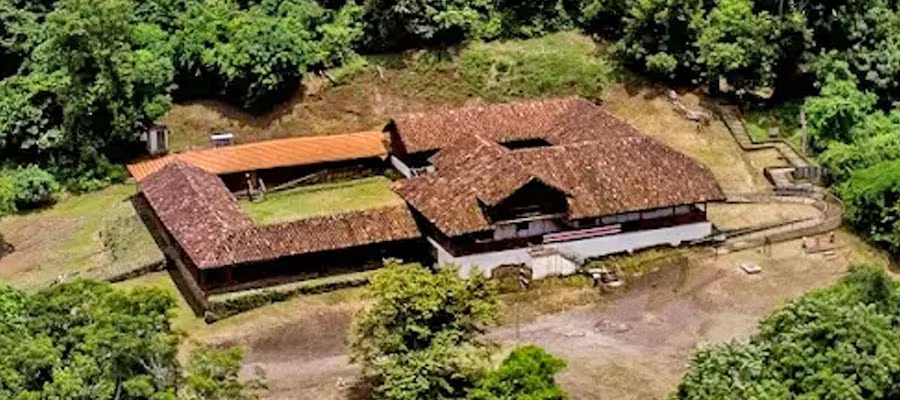
This is the heart of the Santa Rosa sector, and honestly, even travelers who say “I’m not really into history” usually end up glad they stopped. La Casona is a former hacienda turned historical museum, one of the most important sites for understanding Costa Rica’s country’s history and the 1856 Battle of Santa Rosa, and the visit is short, clear, and well contextualized. Today, Historical Museum La Casona stands as a symbol of national identity within this protected wilderness area. You can walk through the building, read the panels in English, and get real insight into why this place matters nationally, not just locally. I usually budget 20 to 30 minutes, enough to absorb the story without dragging it out.
Walk the short dry forest trails
Around La Casona, a few easy hiking trails loop through the dry forest, including sections of the Los Patos Trail, ideal for short wildlife walks.. They’re not long hikes, think short walks rather than treks, but they’re perfect for wildlife spotting if you go early. I’ve seen howler monkeys crossing the canopy, coatis moving fast through the undergrowth, and plenty of birds that thrive in dry conditions. Midday heat is intense here, so mornings are by far the best window.

Take time to observe, not rush
This sector isn’t about checking boxes. There’s no waterfall at the end of the trail, no big reveal. What makes it rewarding is slowing down, listening, watching movement in the trees, and understanding how different this ecosystem is from the rest of Costa Rica. Bring water, a hat, and don’t underestimate the sun, shade is limited.
Beaches, surf, and the access reality check
Playa Naranjo and Witch’s Rock
This is the beach most people are asking about, and for good reason. Playa Naranjo sits on the Pacific side of the park and is home to Witch’s Rock, a legendary surf spot you’ve probably seen in photos, with its spectacular world famous waves. The beach itself is wide, raw, and beautiful, but access is not guaranteed year-round. In the dry season, a high-clearance vehicle, ideally a 4x4, is strongly recommended for the last stretch. In the rainy season, access can be limited or closed altogether due to river crossings and road conditions. This is one of those places where checking conditions the day before really matters.

Playa Nancite and turtle nesting
Playa Nancite is internationally known for olive ridley sea turtles and their massive nesting events called arribadas, but this is not a beach you can casually visit. Access is restricted and reserved for research or permitted visits only. Showing up without authorization won’t work. If your main goal is turtle nesting, Santa Rosa isn’t the easiest option, and other beaches in Guanacaste or the Nicoya Peninsula are far more visitor-friendly.

Bottom line
Santa Rosa’s beaches are incredible, but they reward preparation. Before planning your day around them, always ask two questions, is the sector open, and does my vehicle match the conditions. Getting this right is the difference between an unforgettable stop and a wasted drive.
How to get there and what car you really need
Most travelers reach Santa Rosa National Park from Liberia Airport (LIR), which makes this one of the easiest national parks to add to a Guanacaste road trip, at least on paper. From the airport or downtown Liberia, plan about 1 hour of driving to the Santa Rosa sector, using paved roads almost the entire way. The last kilometers are slower, but manageable in normal conditions.
Where things change is after the main sector. If you’re heading only to La Casona and the short trails, a standard car is usually fine in the dry season. For Playa Naranjo, or if you’re visiting outside peak dry months, a high-clearance vehicle is strongly recommended, and a 4x4 becomes the safer choice, especially after rain. In the green season, access to beach sectors can be restricted or temporarily closed, regardless of the vehicle.
A local tip, don’t assume Google Maps knows the latest conditions. Before you leave Liberia, check park sector status or ask locally, it can save you a long turnaround. Santa Rosa is close, but it’s still very much a park where road conditions dictate the experience, not the distance.
What to pack and safety notes
For Santa Rosa National Park, bring plenty of water, sun protection, closed shoes, and light clothing, the heat is intense and shade is limited.
There’s no food inside the park and cell signal can be spotty, so plan ahead and respect restricted areas, especially near research sites and beaches.

FAQ about Santa Rosa National Park
Do I need to book in advance? Yes, reservations are recommended and sometimes required, especially in high season.
How much is the entrance fee? Around $15 USD per adult for foreign visitors, children pay less.
Can I visit Playa Naranjo year-round? No, access depends on road conditions and the season, and may be restricted in the rainy months.
Is Playa Nancite open to visitors? No, it’s a protected research site, access is limited and not open for casual visits.
Is Santa Rosa worth it if I’ve already seen rainforest parks? Yes, it offers a completely different ecosystem and a strong historical angle you won’t find elsewhere in Costa Rica.
Final thoughts: is Santa Rosa National Park worth it?
Santa Rosa National Park is absolutely worth it if you’re traveling through Guanacaste and want something different from the classic rainforest experience. It’s hot, dry, sometimes demanding, but it delivers real history, raw landscapes, and a sense of space that many other parks don’t. Plan it well, choose the right sector, and Santa Rosa becomes a strong, no-nonsense stop on a Costa Rica road trip, not flashy, but memorable.
