
Birdwatching in Costa Rica: Top Species, Tips & Where to Go
Iconic birds of Costa Rica: what you can really expect to see
Costa Rica is one of the easiest places in the world to spot wildlife, and even if you’re not a birder, you’ll see colorful Costa Rica birds everywhere, from hotel gardens to national parks and even along the Pacific Coast. With tropical birds like the resplendent quetzal, scarlet macaws, toucans and dozens of hummingbirds, the country gives travelers a front-row seat to some of the most beautiful birds in Central and South America. Throughout Costa Rica, you’ll encounter a wide array of bird species and habitats, making it a truly exceptional destination for bird enthusiasts. It’s a true bird watcher’s paradise in this beautiful country, known for its natural beauty and remarkable bird diversity, where you can observe both iconic species and more unusual birds without needing specialized experience.
In this guide, we’ll explore the most iconic avian species of Costa Rica, where to see them, the regions that make watching birds incredibly easy, practical tips for beginners, the best times of day and a short FAQ to help you plan your trip like someone who truly knows the country.
Pura vida, let’s jump in.
Why Costa Rica is a paradise for bird lovers
Costa Rica may be small, but it packs more than 900 bird species, which is why travelers often spot wildlife without even trying. The country is home to a large population of resident birds, and many species can be seen in different habitats throughout the year. Few destinations in Central and South America offer such diversity in such a compact area. The mix of cloud forests, rainforests, wetlands, volcanoes, mangroves and Pacific Coast habitats creates a natural “bird corridor”, meaning you can see completely different species just by driving an hour or two. For bird watchers, this density is a dream.
Even beginners notice how easy it is here. You walk out of your lodge in Arenal and hear toucans calling, you sit for breakfast in Monteverde and hummingbirds swarm the feeders, you take a boat in Tortuguero and suddenly you’re surrounded by herons, kingfishers, parrots and other tropical birds that feel straight out of a wildlife documentary. Wading birds such as herons and egrets are especially common in wetland areas. Unique birding opportunities also await in the northern part and southern Costa Rica, where distinct habitats support a variety of rare and endemic species. It’s the kind of place where the wildlife comes to you, and that makes it perfect for travelers who want memorable sightings without booking a full birdwatching expedition.
For US and Canadian visitors, this combination of accessible trails, short distances, guided and self-guided options and year-round visibility makes Costa Rica one of the easiest and most exciting destinations for watching birds in all of Central and South America. It’s a genuine bird watcher’s paradise. Birders often keep a bird list to track the new species and other species they encounter during their trip, making each visit a unique and rewarding experience.

The most iconic birds of Costa Rica (and where to find them)
Resplendent quetzal: the bucket-list bird
The resplendent quetzal is the superstar of Costa Rica birds, famous for its emerald feathers and long tail that moves like silk in the wind. Even non-birders get emotional when they finally spot one in the cloud forest.
Where to see it: Monteverde, San Gerardo de Dota
Best time: Early mornings, especially in the dry season
Tip: A local guide increases your chances a lot

Scarlet macaw: rainbow wings in the wild
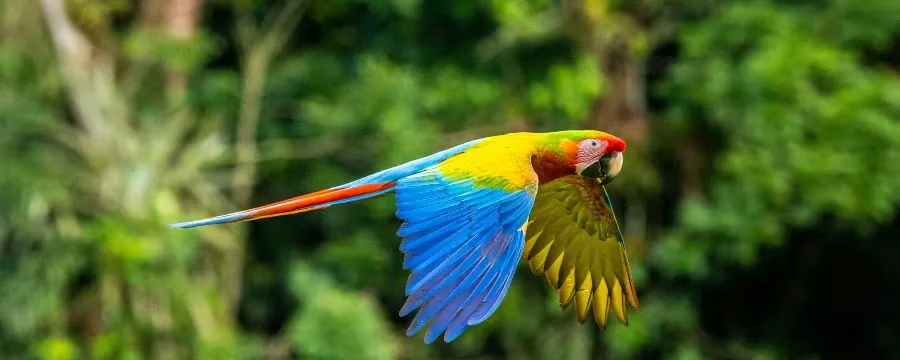
The scarlet macaw is impossible to miss with its bright red, blue and yellow wings. Seeing them flying in pairs over the forest or feeding in seaside almond trees is one of the classic Costa Rica moments. Great green macaws, another impressive macaw species native to Central and South America, can also be spotted in Costa Rica, especially in the northern lowland forests, where they are known for their social behavior and status as one of the largest flying parrots.
Where: Osa Peninsula, Carara area, Central Pacific
Best time: Mornings, when they move between feeding spots
Tip: Listen for their loud calls before you see them
Toucans: the classic Costa Rica wildlife icon
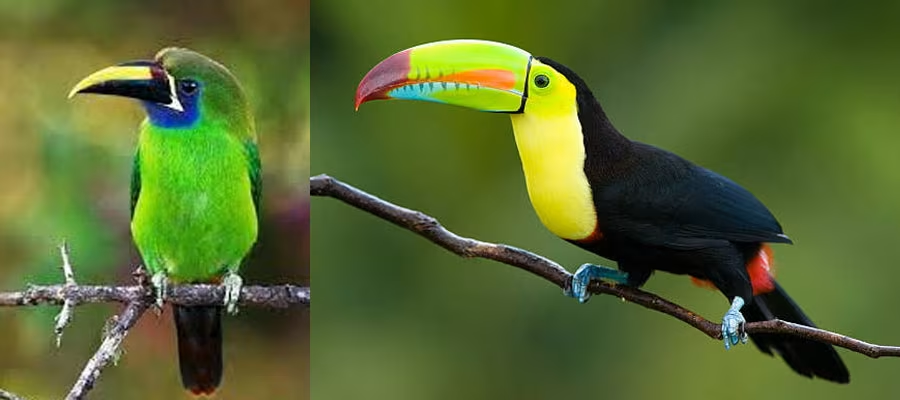
Whether it’s the keel-billed toucan, the yellow-throated toucan, or the striking black mandibled toucan with its large, contrasting bill, these birds look straight out of a cartoon with their oversized colorful bills. They’re surprisingly common, even around lodges.
Where: Arenal, Sarapiquí, Caribbean lowlands
Best time: Dawn and late afternoon
Tip: Watch for them hopping between fruiting trees
Hummingbirds: tiny, fast and everywhere
Costa Rica is packed with hummingbirds, and even beginners can spot several species in a single morning. Their speed, color and confidence around feeders make them a perfect wildlife moment for families. Birders may hope to see specialty species such as the snowcap hummingbird, with its distinctive white head, the rare white crested coquette, and the mangrove hummingbird, which can be found in mangrove habitats and on specialty birdwatching tours.
Where: Monteverde, cloud forest lodges, Arenal gardens
Best time: All day, especially near flower-rich areas
Tip: Slow movements help you get closer for photos

Motmots: the relaxed beauties of the forest edge
The turquoise-browed motmot and its relatives, including the broad-billed motmot with its thick beak and distinctive tail, sit calmly on branches, showing off their colorful tails. Every traveler ends up loving them.
Where: Guanacaste, Monteverde, Central Valley trails
Best time: Early mornings
Tip: They like quiet edges, near forest and open space

Tanagers: small bursts of color
Red, blue, yellow, neon green… tanagers add flashes of color everywhere. They’re easy to see in gardens, making them perfect for beginners. Among them, the speckled tanager stands out as a particularly striking species found in Costa Rica.
Where: Arenal, Caribbean side, Monteverde
Best time: Mornings during feeding activity
Tip: Fruit feeders at lodges attract several species

Clay-colored thrush (yigüirro): Costa Rica’s national bird
It’s simple-looking, but locals love it. The yigüirro sings loudly at the start of rainy season and appears in almost every garden, making it the most familiar bird in the country.
Where: Almost everywhere, even cities
Best time: Early mornings during breeding season
Tip: Listen for its clear, melodic song

Yellow-billed cotinga: one of Costa Rica’s rarest birds
The yellow-billed cotinga is one of the most elusive bird species in Costa Rica, a snowy-white bird with a bright yellow bill that instantly stands out when you’re lucky enough to see one. It lives mainly in the Pacific coast mangroves and nearby rainforest, making it one of the most sought-after birds for serious bird watchers. The turquoise cotinga, another rare and beautiful cotinga species found in similar habitats, is also highly prized by birders for its vibrant blue-green plumage and limited range.
Where to see it: Southern Pacific coast, especially around Sierpe, Golfo Dulce, Piedras Blancas National Park and the mangroves near Golfito.
Best time: Early mornings, although sightings are never guaranteed due to the species’ rarity.
Why it’s special: It’s considered endangered, found only in a tiny region of Central and South America, and depends heavily on healthy mangroves. If this bird is high on your wishlist, hire a local guide who specializes in cotinga habitats.

Best places in Costa Rica to see birds (even if you’re not a birder)
Monteverde and San Gerardo de Dota: cloud forest hotspots
If spotting a resplendent quetzal is on your list, Monteverde Natural Reserve is where your chances are highest. Cloud forests create the perfect conditions for quetzals, hummingbirds and dozens of colorful tanagers.
What to expect: Cool misty trails, easy access, lots of wildlife
Best for: First trip birdwatchers and first-time visitors who want guaranteed sightings

Arenal, Sarapiquí and Caño Negro: rainforest and river species
These regions are packed with toucans, parrots, kingfishers, herons and countless small birds, along with many other species that contribute to the incredible diversity of birds Costa Rica is known for. Even walking around your lodge can feel like a mini-safari.
What to expect: Warm weather, lush rainforest, birds at every turn, and unique birding opportunities along the Caribbean coast
Best for: Families and travelers who want easy, high-reward birding

Osa Peninsula and Carara: macaw territory
If you want to see scarlet macaws or even the endangered great green macaw, this is the place. The Central Pacific and the southern rainforest, including the renowned Corcovado National Park on the Osa Peninsula, offer some of the most impressive wild macaw sightings in the country.
What to expect: Remote forests, quiet beaches, dramatic photo opportunities, and unique birding opportunities in southern Costa Rica
Best for: Travelers who want big, colorful wildlife moments

Tortuguero and the Caribbean wetlands: birds along the water
Boat tours in Tortuguero’s canals are perfect for spotting herons, egrets, and a wide variety of wading birds such as spoonbills, ibises, and storks, along with hawks and kingfishers. The dense vegetation and calm water make wildlife surprisingly easy to see. The Tarcoles River is another top spot for birdwatching in Costa Rica, known for its rich biodiversity and abundance of bird species.
What to expect: Peaceful boat rides, constant bird activity
Best for: Beginners, nature lovers and visitors seeking relaxed exploration

Conservation efforts for Costa Rica’s birds
Costa Rica’s reputation as a bird watcher’s paradise is no accident: behind the scenes, a huge amount of work goes into protecting the country’s more than 900 bird species. The nation’s two coastlines and diverse landscapes create habitats for an incredible range of avian species, from the dazzling scarlet macaw to the legendary resplendent quetzal. But these beautiful birds face real challenges, including habitat loss from deforestation, climate change, and illegal hunting.
To safeguard these iconic species and the ecosystems they depend on, Costa Rica has become a global leader in conservation. Over a quarter of the country is protected as national parks, wildlife refuges, and biological reserves, providing safe havens for birds and other wildlife. Reforestation projects help restore critical rainforest habitats, while community-based initiatives encourage locals to become stewards of their natural resources.
Special attention is given to threatened species like the scarlet macaw, whose populations have rebounded in areas where forests are protected and poaching is controlled. The resplendent quetzal, another symbol of Costa Rica’s natural heritage, benefits from the preservation of cloud forests and the creation of biological corridors that allow birds to move safely between habitats.
Visitors can support these efforts simply by choosing eco-friendly lodges, joining responsible birdwatching tours, and respecting park rules. Every traveler who values Costa Rica’s birds helps ensure that future generations will also experience the magic of seeing these beautiful species in the wild. Conservation here isn’t just about protecting birds, it’s about preserving the vibrant heart of Costa Rica itself.
Practical tips for birdwatching in Costa Rica
Best time of year: Birdwatching is great year-round, but you’ll get clearer skies and easier trails in the dry season. If you want the resplendent quetzal, late dry season is ideal, especially in cloud forests.
Best time of day: Early mornings offer the highest activity. Birds feed, call and move more at dawn, so getting up a bit earlier pays off quickly.
Do you need gear? Not really. A simple pair of binoculars makes a huge difference, but many travelers spot amazing birds with just a phone camera and a bit of patience. Lodges with feeders give you easy close-up views.
Remember to slow down, stay quiet and keep a respectful distance so the birds behave naturally and you enjoy a more authentic wildlife experience.
FAQ about birds of Costa Rica
How many bird species are there in Costa Rica? Costa Rica hosts more than 900 bird species, making it one of the most bird-rich countries in Central and South America, especially considering its small size. Many birders keep a comprehensive bird list to track the species they encounter in Costa Rica, documenting the country's impressive diversity and enhancing their birding experience.
What is the national bird of Costa Rica? The clay-colored thrush (yigüirro). It may not be the flashiest bird, but locals love it, and its song marks the start of the rainy season.
Where can I see the resplendent quetzal? Your best chance is in the cloud forests of Monteverde and San Gerardo de Dota, two of the top spots in Central America for this iconic species.
Can I see scarlet macaws in the wild? Yes. They’re common along the Pacific Coast, especially in the Osa Peninsula and around Carara National Park, where these beautiful birds thrive.
Do I need a guide for birdwatching? You don’t have to, but many bird watchers choose a guide because they can identify calls, spot hidden birds and know where species are most active.
Is birdwatching good for beginners or families? Definitely. Birds Costa Rica are colorful, easy to observe and active year-round, which makes the country perfect for first-timers exploring Central America or South America. The incredible diversity of birds in Costa Rica means that even beginners can spot a wide range of unique and beautiful species. Costa Rican birds are especially easy to observe, making the country an ideal destination for those new to birdwatching.
Final thoughts
Costa Rica is one of the easiest places in Central America to enjoy wildlife, and even casual travelers end up spotting beautiful birds without going on a full birdwatching tour. From toucans calling in the rainforest to macaws flying over the Pacific Coast, the country gives you the kind of close-up encounters that many bird watchers travel across South America and beyond to find.
Whether you’re visiting cloud forests, river wetlands or beachside national parks, the sheer variety of bird species makes every day feel unique. Costa Rica is also part of a broader birding region that includes North and South America and nearby Western Panama, making it a key destination for those interested in the continent's rich avian diversity. Slow down, keep your eyes open and let Costa Rica show you why it’s considered one of the top birding destinations in the region.
Pura vida, and enjoy the birds of Costa Rica.