
Best diving spots in Costa Rica
If you’re wondering whether diving in Costa Rica is worth it, the answer is yes, especially if you’re into sharks, rays and volcanic rock formations that make every dive feel a bit more adventurous than your usual tropical reef trip. The country, whose name means 'rich coast' (a nod to its abundant marine and terrestrial biodiversity) offers everything from beginner-friendly sites on the Pacific coast to dramatic deep-water dives around the Catalina Islands, bull sharks at the Bat Islands, reef life at Caño Island and, for the truly committed, bucket-list expeditions to Cocos Island.
In this guide, we’ll break down the best dive sites in Costa Rica, what marine life you can expect, the difference between Pacific and Caribbean diving, when conditions are best, how to choose a region depending on your experience and budget, and practical tips like typical prices, gear recommendations and which places are ideal for beginners versus advanced divers. We’ll also cover day trips, liveaboards, safety basics and a FAQ to help you plan your dives confidently.
Ready to explore the country’s underwater side? Let’s dive in, it's one of the best activities to do in Costa Rica!
Is Costa Rica good for scuba diving?
Yes, Costa Rica is great for scuba diving. The Pacific coast offers the best action with sharks, rays, turtles and huge fish schools, while the Caribbean coast adds reef diving when conditions allow. Sites like the Catalina Islands (manta rays), the Bat Islands (bull sharks) and Caño Island (reef sharks and turtles) make Costa Rica stand out for its big marine life and volcanic rock landscapes.
Cocos Island (one of the world’s top dive sites) delivers hammerheads and dramatic deep walls for advanced divers. Overall, Costa Rica offers options for beginners, intermediates and thrill-seekers looking for memorable underwater experiences.

Best diving regions in Costa Rica (quick overview)
Costa Rica has several distinct dive regions, each offering a different style of marine life and underwater scenery. Here’s a quick snapshot to help you understand where to go depending on your level, your travel route and what kind of experience you want.
Guanacaste & Gulf de Papagayo: This region is known for its rich marine biodiversity and excellent visibility. It features a variety of local dive sites that are easily accessible from main towns, making it convenient for divers to explore multiple spots within a short boat ride.
Catalina Islands: Famous for encounters with manta rays and other pelagic species, these islands are a must-visit for experienced divers seeking adventure.
Bat Islands: Advanced divers flock here for the chance to see bull sharks and large schools of fish in deeper waters.
Central Pacific (Herradura, Jacó, Manuel Antonio): This area is particularly suitable for beginner divers due to its calm conditions and protected bays, offering easy access to vibrant reefs and marine life.
Tortuga Island: Known for its clear waters and beginner-friendly wrecks, Tortuga Island is ideal for beginner divers looking for a safe and enjoyable introduction to diving.
Many of these regions are within an hour drive from major tourist hubs or airports, making travel between dive destinations convenient for visitors.

Region / Dive Area | Best for | Highlights | Signature Marine Life | Logistics / Access |
Guanacaste & Gulf of Papagayo | Beginners & intermediate divers | Easy day trips, volcanic pinnacles, great Pacific marine life, Catalina Islands | Manta rays, large fish schools | Quick access (30-min boat rides), many professional dive shops |
Bat Islands (Islas Murciélagos) | Advanced divers only | Strong currents, adrenaline dives, the iconic Big Scare site | Bull sharks | Challenging conditions, not suitable for beginners |
Caño Island (Uvita & Drake Bay) | All levels (best overall for recreational divers) | Clear water, stable conditions, excellent biodiversity | Reef sharks, turtles, rays, massive fish schools | Boat trips from Uvita or Drake Bay, protected biological reserve |
Central Pacific (Manuel Antonio & Quepos) | Beginners & intermediate divers | Calm seas, good option if diving is just part of your trip | Mixed Pacific marine life around rock formations | Easy access, visibility varies but dives are relaxed |
Tortuga Island (Jacó, Herradura, Montezuma) | Beginners & mixed groups | Warm water, simple logistics, great for snorkeling + diving combos | Reef fish, turtles; Caroline Star wreck dive | Very accessible; ideal for casual divers |
Nicoya Peninsula (Santa Teresa, Malpaís, Cabuya) | Intermediates | Boutique-style diving, volcanic rock reefs, surf-town vibe | Rays, reef fish | Smaller dive operations, more rustic logistics |
Caribbean Coast (Puerto Viejo, Cahuita) | Beginners & intermediates (weather-dependent) | Reef diving with a Caribbean feel | Turtles, nurse sharks, reef species | Conditions vary; diving is great when seas are calm |
Cocos Island | Advanced divers | One of the world’s top dive destinations; remote, liveaboard-only | Hammerheads, sharks everywhere, deep walls | Accessible only by liveaboard; demanding conditions |

Guanacaste from Papagayo: Catalina and Bat Islands
Guanacaste is one of the best bases for scuba diving in Costa Rica, especially around Papagayo bay: Playas del Coco, Playa Hermosa, Tamarindo and Flamingo. Nutrient-rich upwellings in this region attract large schools of fish and pelagic species, making the underwater experience especially vibrant. The region has easy boat access, warm water most of the year and dozens of volcanic rock formations that attract sharks, rays and huge schools of fish.
For divers, witnessing these large schools is a major highlight. It’s the most convenient area for day-trip diving on the Pacific coast, making it ideal if you want to mix beach time with underwater adventures.
Catalina Islands: manta rays, volcanic pinnacles and big schools of fish
The Catalina Islands, often called the “Cats”, are one of Costa Rica’s most iconic dive spots. You can expect volcanic arches, dramatic rock formations and plenty of marine life. Conditions vary by day, but when visibility opens up, the dives feel incredible.
What you can see: giant manta rays (a key attraction, seen year-round), giant Pacific manta rays (in season), devil rays, turtles, white-tip reef sharks, massive schools of jacks and grunts, colorful fish, surgeon fish...
Best season for mantas: generally December to April
Skill level: beginners and intermediates do well here, though some sites have current
Boat time: ~20-40 minutes from Playa Flamingo or Playas del Coco
On one of my dives, a manta ray circled us twice before gliding off into the blue, and every diver on the boat came up grinning like it was Christmas morning.

Bat Islands (Islas Murciélagos): bull shark diving for advanced divers
If you’re looking for something intense, the Bat Islands, located inside Santa Rosa National Park, offer some of the wildest diving in the country. This is where you come for bull sharks, deep sites and strong currents.
What you can see: bull sharks (the main attraction), large rays, spotted eagle rays, mobula rays, big schools of fish, occasional pelagics cruising the blue
Season: roughly June to October
Skill level: strictly advanced (AOW) + comfort with current and depth
Boat time: about 60-90 minutes from Playas del Coco
Why go: it’s exhilarating, raw, and one of Costa Rica’s most unforgettable diving experiences
Travel tip: If you’re renting a car, staying in Playas del Coco gives you the closest access to both Bats and Catalinas.

Caño Island & the South Pacific (Uvita and Drake Bay)
Caño Island is widely considered one of the best places for scuba diving in Costa Rica, thanks to its clear water, calm conditions and exceptional marine life. As a protected biological reserve, it offers healthy reefs, rocky slopes and sandy areas where reef sharks, rays, turtles and big fish schools gather.
Departing from Uvita or Drake Bay, divers enjoy some of the most reliable visibility in the country and easy access to top sites. With thriving biodiversity and expert local operators, Caño Island delivers the perfect mix of accessible diving and unforgettable wildlife encounters, making it a must-do in the South Pacific.
What you can see: white-tip reef sharks (almost guaranteed), white tip sharks (often seen in nurseries and feeding), sea turtles, eagle rays, stingrays, schooling fish, occasional dolphin or whale sightings on the boat ride
Visibility: often 10-25+ meters, especially in summer months
Depth: most sites range from 12-30 meters
Skill level: perfect for Open Water and Advanced divers
Vibe: calm, clear, wild, very “Pacific Costa Rica”
On one dive near El Barco, a turtle hovered calmly above the reef while three reef sharks circled below us, and the whole group was so mesmerized that nobody checked their gauges for a good minute.

Diving from Uvita vs. Drake Bay
You can reach Caño from two main bases, each offering a distinct travel style.
From Uvita: Most dive shops offer day trips to Caño Island, which typically involve about an hour boat ride each way. This makes it convenient for those staying in Uvita to access the island for diving and snorkeling.
From Drake Bay: The boat ride is usually shorter, around 40 minutes, making it a popular choice for travelers based in Drake Bay.
Diving from Uvita | Diving from Drake Bay |
|---|---|
Easier to access for most travelers (close to the highway) Longer boat ride: usually 60-90 minutes Great if you want to combine diving with whale watching or exploring Marino Ballena National Park | Much closer to Caño Island (boat rides often 35-50 minutes) More intense jungle atmosphere, ideal for wildlife lovers Best choice if diving is a big focus of your trip Many lodges include diving packages |
Typical prices: ~140-180 USD for a 2-tank dive with park fees and lunch
Conditions: generally gentle, but surge and occasional currents are possible

Central Pacific & Tortuga Island: easy diving for mixed groups
The Central Pacific coast isn’t Costa Rica’s most famous dive region, but it’s a great choice if you want something simple, accessible and close to major tourist hubs like Jacó, Herradura and Manuel Antonio. The calm waters and protected areas here make it particularly suitable for beginner divers, with sites that are perfect for those new to diving, casual divers or families traveling together.
You’ll find volcanic rock formations, plenty of small reef fish, octopus, turtles and the occasional white-tip shark cruising by. It’s relaxed, it’s warm and it’s easy to combine with beach days or canopy tours.
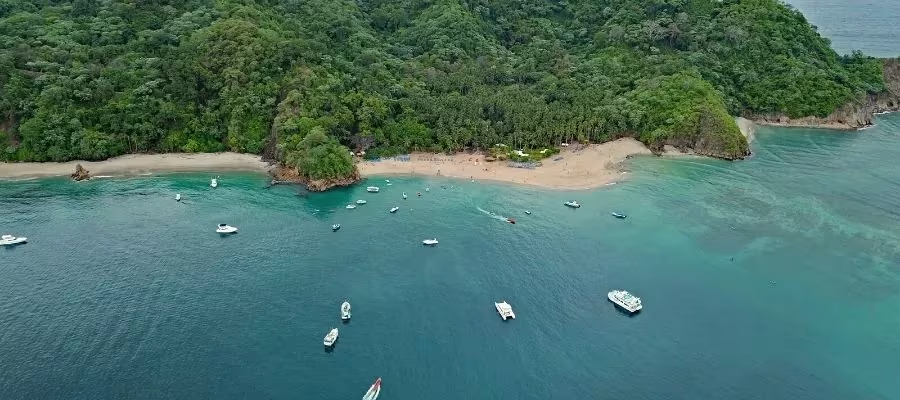
Tortuga Island: one of the best beginner-friendly dive spots in Costa Rica
Tortuga Island is famous for its clear water, smooth conditions and shallow reefs, which makes it ideal for first-time divers or certified divers looking for a mellow day trip. The Franklin Chang Diaz is a popular wreck dive site here, attracting divers interested in exploring accessible wrecks teeming with marine life.
What you can see: turtles, pufferfish, moray eels, stingrays, angelfish and butterflyfish, small white-tip reef sharks at deeper sites...
Why it’s popular:The water here is usually calmer than in Guanacaste, the visibility is better than many nearshore sites, and the whole trip feels like a tropical day cruise. Many boats mix diving and snorkeling groups, which is perfect for couples or friends with different experience levels.
Typical prices: ~120-160 USD for a 2-tank dive including lunch
Boat ride: ~45-75 minutes depending on the departure point
Skill level: beginners welcome, great for rusty divers
The first time I dove Tortuga, a turtle drifted past our group so slowly that everyone forgot to kick, and we just hovered there watching it glide into open water.
Diving near Manuel Antonio & Quepos
The diving around Manuel Antonio is less consistent in terms of visibility, but the sites have interesting rock formations and lots of macro life. Surrounded by lush rainforests, this area is perfect for nature lovers who want to combine diving with trekking and exploring Costa Rica’s rich biodiversity. It’s a solid “bonus dive” destination if you’re already staying in the area for beaches and wildlife.
What you can see: octopus, rays, turtles, eels, colorful reef fish
Skill level: good for beginners and intermediates
Vibe: easy, relaxed, close to shore
Why go: It’s accessible, family-friendly and a nice add-on if you’re not planning your whole trip around diving.

Caribbean diving (Puerto Viejo & Cahuita)
While most travelers come to Costa Rica for Pacific coast diving, the Caribbean coast offers something totally different: warm blue water, calmer reefs, and a much more laid-back vibe. Conditions here depend heavily on weather and swell, but when the sea is flat, diving can be beautiful, especially for beginners or anyone who prefers colorful reef life over big pelagics.
What Caribbean diving is like
Dives here are generally shallower and easier, with gentle currents and bright reef patches where you can spot turtles, nurse sharks, rays, colorful fish, and tons of tropical fish. It’s not as dramatic as Caño or Guanacaste, but it’s a great option if you’re already staying in Puerto Viejo or Cahuita.
Typical marine life: green and hawksbill turtles, nurse sharks, southern stingrays, lobster, crabs, eels, schools of reef fish and colorful fish, occasional eagle rays
Best season for Caribbean diving: The Caribbean has its clearest water in September and October, with another smaller window sometimes in March. Outside these months, swells can make visibility poor.
Best conditions: flat seas, little wind
Skill level: perfect for beginners or anyone who prefers relaxed dives

Where to dive
Cahuita National Park (reef zone): Snorkeling is more common here, but on good days, some operators offer shallow intro dives near the reef.
Puerto Viejo & Punta Uva: These areas offer small-scale dive operations that focus on mellow, colorful reef dives. It’s boutique-style diving with a super friendly atmosphere.
Who should dive the Caribbean coast?
beginners
families
snorkelers who want to try scuba
travelers who prefer warm, shallow, low-stress dives
anyone visiting the region during the clear-water season
If your priority is sharks, rays or adrenaline, stick to the Pacific. But if you love relaxed tropical reefs and easy logistics, the Caribbean is a pleasant surprise.
Cocos Island: the ultimate bucket-list dive
For experienced divers, Cocos Island is the kind of place that sits on your bucket list for years, and once you finally make it there, you understand immediately why people compare it to Galápagos. This remote destination is renowned for offering world class diving experiences. It’s massive, volcanic and absolutely packed with life. You’re not here for pretty corals or easy dives, you’re here for the feeling of being surrounded by hundreds of schooling hammerheads in deep blue water.
What makes Cocos Island so legendary
Cocos is a UNESCO World Heritage Site, located about 36-40 hours offshore by liveaboard. That’s a long way to go, but the payoff is unreal.
What you can see:
schooling scalloped hammerhead sharks (the main attraction)
tiger sharks
Galápagos sharks
rays (eagle rays, mobulas)
huge fish schools
deep walls and strong currents
whale sharks (occasional)
Dirty Rock (a favorite dive site at Cocos Island)
Cocos Island is legendary for its abundance of pelagic species, including sharks, manta rays, and tunas, drawn by nutrient-rich waters. Divers can also spot a remarkable variety of macro species: tiny fish, crustaceans, and other small marine life, making every dive unique.
Every dive feels like a big-animal safari. Conditions can be intense, but the adrenaline is part of the magic.
The moment I dropped at Alcyone, I looked down and saw a river of hammerheads moving through the current, and for a second I forgot to breathe, which is ironic for a place famous for bubbles.

Who Cocos Island is for
advanced divers only
AOW + Nitrox strongly recommended
comfort with deep dives, current and limited visibility
divers who want pelagics over reefs
travelers ready for a full liveaboard experience
This is not Caribbean-style diving, and it’s not a quick day trip. It’s a serious expedition, but also one of the best dive destinations in the world for people who love raw, powerful, big-animal dives.
Logistics & cost
Access: only by liveaboard
Duration: 8-10 days
Outbound crossing: ~36 hours
Approx. price: 5,000-7,000+ USD depending on the boat and season
Seasons: hammerheads year-round, but the rainy season brings richer currents and more pelagics
Practical information for diving in Costa Rica
Best time to dive in Costa Rica
Costa Rica is a year-round diving destination, but conditions change depending on the coast.
Pacific coast (Guanacaste, Catalina, Bat Islands, Caño Island)
Best visibility: December to May
Manta rays: December to April
Bull sharks (Bat Islands): June to October
Sea conditions: calmer during the dry season, rougher with swells in rainy months
South Pacific (Uvita & Drake Bay)
Best months: January to May
Rainy season: still diveable but with choppier surface conditions
Bonus: humpback whales visible from the boat (Aug-Oct)
Caribbean coast (Cahuita & Puerto Viejo)
Best window: September-October, sometimes March
Weather dependent: visibility can swing from excellent to poor within days
Perfect for: beginners and reef-focused divers

Required skill levels
Costa Rica has dive sites for every experience level, but some regions are more demanding.
Beginner divers: Tortuga Island, Manuel Antonio, Caribbean coast - these sites offer calm waters, protected areas, and are ideal for new or less experienced divers.
Intermediate: Guanacaste (Catalinas), Caño Island
Advanced only: Bat Islands (strong currents, deep dives), Cocos Island (expedition-level conditions)
If you haven’t dived in a while, plan a refresher dive in Guanacaste or Jacó before attempting more challenging sites.
Certification & agencies
You’ll find PADI, SSI and RAID dive centers across the country.
Open Water is enough for most Pacific and Caribbean sites.
Advanced Open Water + Nitrox is strongly recommended for Catalina, Bat Islands, deep sites at Caño and essential for Cocos Island.
Always bring your logbook and certification card, operators will check your level before taking you out.
Typical prices
Prices vary by region, but here’s a general idea:
2-tank local dive: 95-150 USD
Catalina Islands: 120-160 USD
Bat Islands: 160-220 USD
Caño Island (from Uvita/Drake Bay): 140-180 USD
Discover Scuba (beginners): 110-150 USD
Liveaboard to Cocos Island: 5,000-7,000+ USD
Most day tours include snacks, water, tanks, weights and a guide.
Equipment & what to bring
Water temperatures range from 25-29°C (77-84°F), but thermoclines can be chilly, especially in Guanacaste.
Recommended gear:
3mm or 5mm wetsuit depending on the season
reef-safe sunscreen
motion sickness tablets (Pacific swell can be rough)
backup mask if you have your own
GoPro or underwater camera if you want photos, visibility can drop, but marine life makes up for it
Most dive shops provide full rental equipment.
Getting around: do you need a rental car?
If you’re diving in multiple regions, yes, renting a car is the easiest option.Dive centers in Guanacaste, Uvita and Drake Bay are spread out, and public transport is slow.
A 4x2 SUV is enough for most dive towns, while a 4x4 is useful if you’re staying in remote lodges (especially around Osa Peninsula).
Safety & conditions
Conditions can change quickly, follow your guide’s briefing
Surge is common on volcanic rock sites
Currents can be strong at advanced sites
Watch your air consumption, dives here can be deeper
Always dive with reputable operators; avoid tours with unusually low prices
Costa Rica’s dive centers are well-regulated and prioritize safety.
Special case: Cocos Island (only for advanced divers)
If you’re looking at Cocos Island, treat it as a completely separate trip.
Access: liveaboard only
Crossing: ~36 hours each way
Trip duration: 8-10 days
Level: Advanced + Nitrox, strong current & depth comfort
Why go: schooling hammerheads, tiger sharks, rays, massive pelagics
Price: 5,000-7,000+ USD
It’s one of the best dive destinations on Earth, but not part of a typical Costa Rica itinerary.
FAQ about diving in Costa Rica
Is Costa Rica good for scuba diving? Yes. Scuba diving in Costa Rica is excellent, especially on the Pacific coast where you can see sharks, rays, turtles and massive schools of fish. The Caribbean can also offer clear, calm reef diving when conditions are right.
What are the best dive sites in Costa Rica? For most travelers: Catalina Islands, Caño Island and Tortuga Island. For advanced divers: Bat Islands (bull sharks) and Cocos Island (hammerheads).
Can beginners dive in Costa Rica? Absolutely. Tortuga Island, Manuel Antonio and the Caribbean coast are perfect for beginners or rusty divers. Many schools offer Discover Scuba experiences.
When is the best time to dive in Costa Rica?
Pacific coast: December-May (best visibility), manta rays Dec-Apr
Bat Islands: June-October
Caribbean coast: September-OctoberCosta Rica is diveable all year, but conditions shift by region.
How much does diving cost in Costa Rica? Expect roughly 95-160 USD for a 2-tank dive, 140-180 USD for Caño Island, and 5,000-7,000+ USD for a Cocos Island liveaboard.
Do I need a wetsuit? Yes. Water temps range from 77-84°F (25-29°C) but thermoclines can be chilly. A 3mm or 5mm wetsuit works best.
Is diving in Costa Rica safe? Yes, as long as you dive with reputable operators and follow briefings. Some sites (Bat Islands, Cocos) require strong skills due to currents and depth.
What marine life can I see? Depending on the region: manta rays, reef sharks, bull sharks (Bat Islands), turtles, eagle rays, huge schools of fish, hammerheads (Cocos Island)...
Do I need a rental car to go diving? Not always, but it makes logistics much easier, especially in Guanacaste, Uvita and Drake Bay where dive shops and beaches are spread out.
Is Cocos Island worth it? If you’re an advanced diver who loves big animals, yes, it’s one of the world’s top dive destinations. But it’s expensive, remote and requires a 10-day trip.
Conclusion
Diving in Costa Rica is the kind of experience that stays with you long after you dry off your gear. One day you’re drifting over volcanic rock formations watching turtles slide between the shadows, the next you’re dropping into deep blue water with rays gliding overhead or cruising past a school of jacks so dense it feels like it’s blocking the sun. Whether you stick to easy sites on the Central Pacific, venture down to Caño Island or chase bigger animals in Guanacaste, the country gives you that mix of raw nature, warm water and unpredictable wildlife that makes every dive feel like a small adventure.
And if you ever decide to push further (Bat Islands or the legendary Cocos) you’ll understand why Costa Rica keeps showing up on “best diving in the world” lists. It’s not polished or predictable, but it’s exciting, wild and genuinely memorable.
If you love the ocean, Costa Rica delivers. Pack your mask, charge your GoPro, and get ready for some seriously good underwater moments. Pura vida, and happy diving.