
Costa Rica Symbols
National symbols of Costa Rica: what they mean and where to spot them
Costa Rica isn’t just about waterfalls, sloths and surfboards, it’s also a country with a strong identity, proudly expressed through its national symbols.
From the iconic red-white-and-blue flag to the gentle call of the Yigüirro, each symbol tells a story about Costa Rica’s values: peace, biodiversity, and pura vida.
In this article, you’ll discover:
what the Costa Rican flag really stands for
the surprisingly peaceful tone of the national anthem
the country’s official flower, tree, and bird
why the sloth is considered a national icon
and what “Pura Vida” really means (spoiler: it’s more than just a catchphrase)
I’ll also share a few local tips and personal moments from my travels across the country, because the best way to understand a culture is to experience it with your own two feet (and maybe a pair of binoculars).
The Costa Rican flag: a symbol of liberty, peace and pride
Costa Rica’s flag features five horizontal stripes: blue at the top and bottom, two white stripes in between, and a bold red stripe in the center. It’s simple, elegant, and loaded with meaning:
Blue represents the sky, freedom, and opportunity
White stands for peace and wisdom
Red honors the blood shed by those who defended the country
Fun fact: the official version of the flag (used by government buildings and schools) also includes the national coat of arms, a small emblem showing three volcanoes, two ships on each coast, and a rising sun. Classic Costa Rica: peaceful, stable, and always facing the ocean.
Travel tip: If you’re walking through San José, stop by the Plaza de la Democracia. You’ll often see the flag raised there, waving in front of the National Museum. It’s a quick and meaningful photo stop, right in the heart of the capital.

The national anthem: no war, just peace
Unlike many Latin American anthems filled with drums, battles, and heroic sacrifice, Costa Rica’s national anthem (Noble patria, tu hermosa bandera) takes a completely different route.
It speaks of peace, liberty, and love for the homeland, with a special focus on education and national pride, no swords, no enemies, just dignity.
The music was first composed in 1852 to welcome diplomatic delegations. The lyrics came later, adding meaning without losing the soft tone.
Traveler tip: If you happen to be in Costa Rica on September 15, the country's Independence Day, you’ll hear it sung in schools and town squares across the country, often by kids in traditional dress, waving flags with all the energy in the world. It’s heartwarming and genuinely uplifting.
The national flower: Guaria Morada (Guarianthe skinneri)
Costa Rica’s national flower is a beautiful purple orchid, chosen in 1939 for its symbolism of hope, peace, and delicate beauty. The Guaria Morada is often associated with spiritual traditions, and some Costa Ricans believe it brings good fortune and positive energy to the home.
It blooms between February and April, and can be found in mountainous areas, especially in the Central Valley.
Where to see it:
Visit the Lankester Botanical Garden near Cartago, one of the best spots for orchid lovers.
Or look for them in private gardens and front porches in small towns, where locals often keep a few in clay pots.

The national tree: Guanacaste (Enterolobium cyclocarpum)
Towering and wide, the Guanacaste tree is a symbol of strength, protection, and prosperity. It was named the national tree in 1959 and is especially common in the province that shares its name, Guanacaste, in the northwest.
Its broad crown provides shade in the dry season, and its presence in the landscape is unmistakable. Farmers, schoolchildren, and bus drivers all seek its shade during the heat of the day.
The tree also has practical uses: its lightweight wood is used in furniture, and its round, ear-shaped seeds are often turned into jewelry or crafts sold at roadside stalls.
Travel tip: You’ll see Guanacaste trees all over Liberia and the Santa Rosa National Park region. Driving through during the dry season, they create a natural canopy over the road, it’s like driving through a green cathedral.

The national bird: Yigüirro, the humble voice of the rainy season
Forget the flashy toucan or the majestic quetzal, Costa Rica chose a much simpler bird as its national symbol: the Yigüirro (Turdus grayi), also known as the clay-colored thrush.
Why? Because it’s everywhere, and because its gentle song announces the arrival of the rainy season, a big deal in a country where water sustains nearly everything.
The Yigüirro was declared the national bird in 1977, not for its looks, but for what it represents: everyday beauty, harmony with nature, and connection to the land.
Where and when to hear it: Between April and June, you’ll hear its distinctive tune early in the morning, especially in rural towns, gardens, and forest edges. I remember waking up to it one foggy morning in Monteverde, it felt like the jungle’s version of a lullaby.

The sloth: Costa Rica’s unofficial mascot
Technically, the sloth isn’t an official national symbol, but ask any local or tourist, and they’ll tell you it absolutely should be.
With its slow movements, gentle smile, and tree-hugging lifestyle, the sloth perfectly embodies Costa Rica’s laid-back rhythm and deep respect for nature.
There are two species in the country:
The three-toed sloth, the one you’ll see smiling in all the memes
The two-toed sloth, nocturnal and a little harder to spot
Sloths have become ambassadors for eco-tourism and wildlife conservation, and spotting one in the wild is often the highlight of any trip.
Where to see sloths in Costa Rica:
Manuel Antonio, Cahuita, and Tortuguero national parks
Rescue centers like Toucan Rescue Ranch or the Sloth Sanctuary near Limón
Or sometimes… just in the tree above your hotel balcony (yes, it’s happened to me)
Quick tip: To find one, don’t look for movement, look for a ball of fur curled up in the branches. Patience and good binoculars help.

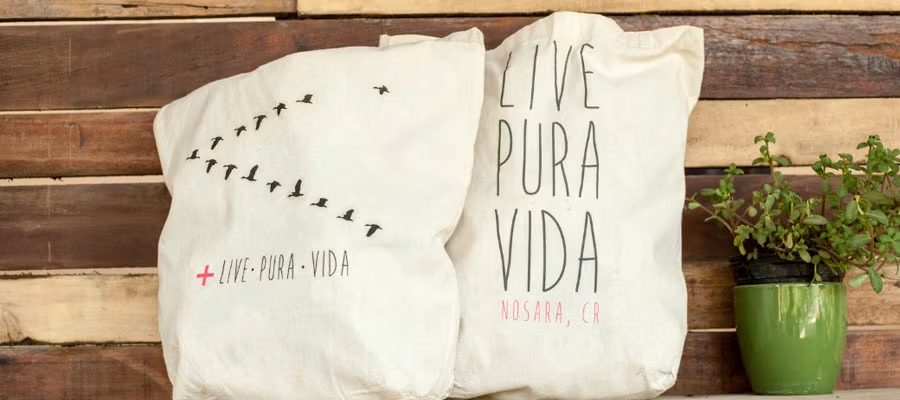
“Pura Vida”: more than just a slogan
Two words. One philosophy.
Pura Vida literally means “pure life”, but in Costa Rica, it’s used to say hello, goodbye, thank you, no worries, life’s good, it’ll all be fine… and pretty much everything in between.
It’s more than just a phrase, it’s a state of mind, a way of being. It reflects the country’s optimistic, relaxed, and friendly spirit.
You’ll hear it from everyone: taxi drivers, grocery clerks, park rangers, your Airbnb host, the guy selling fresh pineapple by the road.
My first “Pura Vida” moment? Lost in Alajuela, sweaty and confused, trying to figure out a local bus schedule. A kind older man saw me struggling, gave me a smile, and said “Tranquilo, mae… Pura Vida.” And suddenly, the stress just… melted. That’s the magic of Costa Rica.
What these symbols say about Costa Rica
Costa Rica’s national symbols go way beyond flags and flowers. They speak to the heart of what makes this country special: its commitment to peace, its love of nature, and its simple, joyful approach to life.
Whether it’s the sound of the Yigüirro calling in the rain, a purple orchid blooming in a garden, or a sloth snoozing in the trees, these emblems remind us that you don’t need noise to be powerful, and that there’s beauty in slowing down.
So next time you visit Costa Rica, keep your eyes and ears open, the symbols are all around you. And once you feel them, you’ll understand what Pura Vida truly means.
Practical tips for travelers who want to connect with Costa Rica’s identity
Botanical lovers: Head to the Lankester Botanical Garden (Cartago) to see native orchids, including the Guaria Morada.
Cultural explorers: Visit San José around September 15 (Independence Day) for parades, flags, and live renditions of the national anthem.
Wildlife enthusiasts: Plan a nature-filled itinerary: parks like Manuel Antonio, Cahuita, Tortuguero, and Monteverde offer great chances to spot sloths, birds, and trees that define Costa Rica’s character.
Quick FAQ about Costa Rica’s national symbols
Are all these symbols official? Most of them are. The flag, anthem, flower, tree, and bird are official national emblems. The sloth is unofficial, but loved like a celebrity.
Can I experience all of them on one trip? Absolutely. With a 10-14 day itinerary, you can easily visit places where each symbol is visible, from botanical gardens to national parks.
What does “Pura Vida” really mean? It means “pure life”, but locals use it in a dozen different ways. It’s a mindset: easygoing, optimistic, and present.
Why isn’t the toucan the national bird? Because Costa Rica chose the Yigüirro, it may not be flashy, but it’s deeply connected to daily life and seasonal rhythms.
What’s so special about the Guanacaste tree? Its wide canopy, protective shade, and symbolism of abundance made it the perfect choice as a national tree, especially for the province that bears its name.
