
Top Things to Do in Tortuguero, Costa Rica
Discovering Tortuguero, Costa Rica’s Wild Side (and How to Get There)
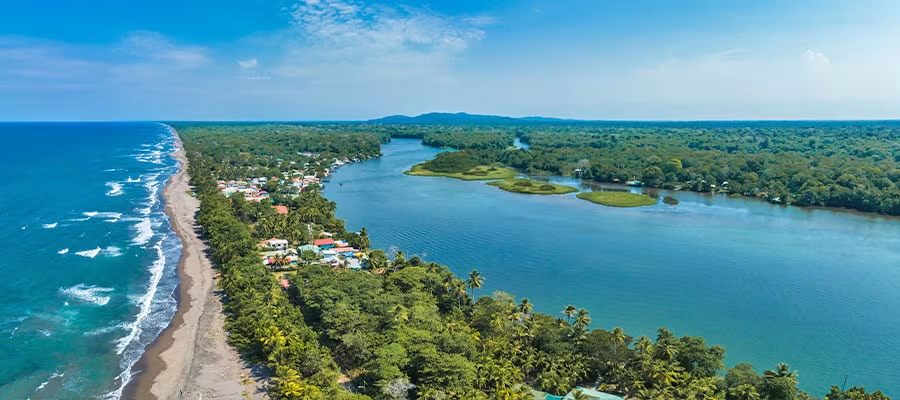
If you're dreaming of a place where jungle meets the sea, where monkeys howl at dawn and turtles nest under moonlight, then Tortuguero is calling your name. Tucked away on Costa Rica’s remote northern Caribbean coast, this national park is only accessible by boat or small plane: no roads, no traffic, just raw, untouched nature. And yet, it’s one of the country’s most unforgettable experiences.
In this guide, we’ll cover everything you need to know to make the most of your time in Tortuguero. From the best months to spot sea turtles and the must-do canoe tours, to how to get there (hint: it’s an adventure in itself) and where to stay. We’ll also dive into tips for navigating the canals, spotting wildlife, and making sure your visit supports local conservation efforts.
Planning to explore more of the Caribbean coast before or after your Tortuguero adventure? Renting a car at San José Airport is your best bet for flexibility and comfort, especially if you’re continuing toward Puerto Viejo or Cahuita.
Top things to do in Tortuguero
1. Explore Tortuguero National Park (on foot, by boat, or by kayak)
This is the reason people come to Tortuguero. And honestly? It’s worth every drop of sweat and every mosquito bite (bring repellent!). Spanning nearly 77,000 hectares of protected land and marine ecosystems, Tortuguero National Park is a vast tropical wilderness of wetlands, rainforest, beaches, and winding canals, often nicknamed the “Amazon of Costa Rica.”
There are three main ways to explore the park, each offering a completely different vibe, and they’re all worth trying if you have time.
By boat or kayak: glide through the canals
The most popular way to discover the park is from the water, drifting through the narrow canals framed by towering trees and thick foliage. Local guides will help you spot many animals as howler monkeys, caimans, toucans, sloths, and even the elusive manatees (if you're lucky).
Kayaking lets you get up close to nature, no engine, no noise, just you and the jungle. Perfect for birdwatchers and photographers.
Motorboat tours cover more ground and are ideal for families or those short on time.
Most guided wildlife excursions last around two hours. Early-morning canal tours are particularly rewarding, as the forest is cooler and many animals are at their most active. Some lodges include one or more guided boat excursions in their accommodation packages, so check what is already included before booking extra tours.
Kayaking is another excellent option for exploring the quieter canals, but conditions matter. Heavy rain and stronger currents can sometimes make kayak tours unsuitable, and some operators apply a minimum age for children. Always confirm the conditions and age requirements with your guide.
Tip: Early morning tours (around 6am) are when the jungle is most alive with sound and movement.

On foot: hike the park’s forest trails
There’s also a network of walking trails just behind the beach and near the ranger station. The most accessible one is the Gavilan Trail, a flat loop that’s great for spotting birds, small mammals, and frogs. Just know it can get muddy and slippery, waterproof hiking shoes are a solid investment here.
Distance: approx. 2 km
Difficulty: Easy to moderate
Access: Via the park’s main entrance, a short walk from the village
Tip: Go with a guide: they’ll point out animals you’d never spot on your own.

At night: go on a jungle night safari
When the sun goes down, a whole new cast of characters emerges from the shadows. Join a guided night walk to spot tree frogs, tarantulas, snakes, nocturnal birds, and sleeping lizards. You might even catch the glowing eyes of a caiman lurking in the canals.
It’s a little spooky, very exciting, and always memorable, just bring a red-light headlamp, not a bright flashlight, to avoid disturbing the wildlife.
Tortuguero National Park practical info:
Opening hours: 6am–12pm and 1pm–4pm
Entrance fee: $16.95 USD for non-resident adults and $5.65 USD for non-resident children
Tickets: Purchase through the official SINAC reservation system
Tour duration: Most guided boat, kayak, and wildlife tours last around 2 hours
Best time for wildlife: Early morning, especially around sunrise
Bring: Insect repellent, sunscreen, reusable water bottle, waterproof bag, rain jacket or poncho, binoculars, and shoes that can handle mud
Tour prices vary considerably depending on the operator, group size, and whether the excursion is included in a lodge package.

2. Watch sea turtles nesting on the beach
Tours take place after dark under a tightly controlled conservation program. Unlike most other activities in Tortuguero, the turtle nesting experience is managed through the national park system rather than simply as a standard hotel excursion.
Your hotel or tour operator can usually arrange the booking for you. Visitors are assigned to one of two evening sessions, generally from 8pm to 10pm or from 10pm to midnight, as well as to a specific section of the nesting beach. Groups are small and accompanied by an authorized guide.
Once you arrive, don’t expect to wander freely along the beach looking for turtles. Trained spotters locate turtles that have reached an appropriate stage of the nesting process, then alert the guides. Visitors wait away from the nesting area until they are allowed to approach.
This system is designed to minimize disturbance. You may be able to watch a turtle laying her eggs, covering the nest, or returning to the sea, but visitors are deliberately kept away during the most sensitive stages of the process.
And importantly: seeing a turtle is never guaranteed. This is a completely natural event. On busy nights or when only a few turtles are nesting, you may also spend quite a lot of time waiting before getting a brief opportunity to observe one.
Pro tip: Bring water, bug spray, and wear dark clothes. The humidity is real, and mosquitoes know it.

Practical info
Season: July to October (green turtles); March to June (leatherbacks)
Tour cost: ~$25–$30 USD per person
Duration: about 2 hours
Tour times: Usually 8pm–10pm or 10pm–midnight
Booking: Required in advance via your hotel or tour agency (limited slots)
Park fee: $15 USD (included or not depending on the tour operator)
No cameras or lights allowed
Clothing: Wear dark, discreet clothing so you do not disturb the turtles
Footwear: Wear closed shoes or hiking shoes, as you may walk along forest trails and on wet sand
Rain: Bring a lightweight poncho or waterproof jacket; tropical showers are common at night
A useful trick during heavy rain is to wear a cap underneath your hood: the peak keeps the hood away from your face and stops rain from running directly into your eyes.
Is the turtle nesting tour worth it?
It can be an extraordinary wildlife experience, but it is worth knowing what to expect. The experience is deliberately highly regulated, and that can make it feel less spontaneous than other wildlife encounters in Tortuguero.
You may spend part of the evening waiting in darkness, moving only when your guide receives instructions from the turtle spotters. If several groups are waiting for the same turtle, the viewing time can also feel short.
For some travelers, seeing a sea turtle lay her eggs is one of the highlights of Costa Rica. Others find the organization restrictive or the wait frustrating. Going in with realistic expectations makes a big difference: this is first and foremost a conservation program, not a wildlife show.
3. Hike up Cerro Tortuguero for panoramic views
Ready to stretch your legs a bit? While most of Tortuguero is best explored by boat, there's one hike worth doing: Cerro Tortuguero, an ancient volcanic hill just across the river from the main village. The trail is short but steep, cutting through thick jungle where you might spot monkeys, toucans, or even a sloth if you’re lucky.
At the top, you’ll be rewarded with a sweeping view of the canals, forest, and coastline, a totally different perspective of the region. It’s especially beautiful early in the morning before the heat sets in.
Practical info:
Location: North side of the main canal (boat ride required to access)
Trail length: ~1.2 km round trip
Time: 45 min to 1 hour total (depending on pace)
Difficulty: Moderate (steep and humid, but short)
Entry fee: Usually included in a guided tour (~$25 USD pp)
Guide: Required (you can’t hike it on your own)

4. Relax on the remote beaches
Let’s be clear: the beaches around Tortuguero aren’t your typical Costa Rican beach paradise. You won’t find beach bars, snorkeling tours, or surfers here, and swimming is not recommended due to strong currents, rough waves, and dangerous riptides.
But still… these beaches have a wild, untouched beauty that’s pretty hard to beat. Think long stretches of black volcanic sand, swaying palms, driftwood scattered like sculptures, and not a building in sight. If you're looking for peace and raw nature, this is your spot.
Best beaches to check out:
Playa Tortuguero (main beach): This is the long stretch right in front of the village. Perfect for early morning walks, sunrise photos, or just soaking in the jungle-meets-ocean vibe. Turtle nesting takes place here from July to October, it’s the heart of the action.
Tip: You can often spot turtle tracks here at sunrise during nesting season.
Playa Norte (North Beach): Less trafficked, slightly wilder, and deeper into the park. The best place to feel like you’re alone on a deserted beach. It’s also a key nesting site for turtles and sometimes monitored by researchers.
You’ll need to walk a bit past the airstrip or reach it via a guided tour.
Playa Sur (South of the village): Quieter still, more remote, and often completely empty. This one’s more for those who enjoy meditative silence or want to write poetry while listening to crashing waves (no joke, I’ve done it).

Important: Swimming is strongly discouraged at all beaches due to dangerous rip currents. These beaches are best for walks, wildlife spotting, and admiring the raw Caribbean coastline, not for getting in the water.
5. Explore Tortuguero village
It’s tiny, colorful, and full of local charm. Tortuguero village is a narrow strip of homes, restaurants, and shops nestled between the beach and the canals. There are no roads, just sandy paths and plenty of friendly locals.
Pop into a soda (local eatery) for fresh Caribbean-style rice and beans, check out the souvenir shops for handmade crafts, and visit the Sea Turtle Conservancy center to learn more about the green sea turtles you came to see.
The village is also home to the Sea Turtle Conservancy Visitor’s Center, a small but worthwhile stop if you want to understand why Tortuguero became such an important sea turtle conservation site. Exhibits explain the turtles’ life cycle, migration, nesting, and decades of research carried out here.
The center is located just north of the village and currently charges a small entrance fee of around $2.50 USD, which helps support conservation work. It is an easy visit to combine with a walk through the village and along the beach.
Practical info
Size: Walkable in ~20 minutes
Main spots: Sea Turtle Conservancy, church, art galleries, cafes
Don’t miss: Try a fresh coconut or homemade empanada from a local vendor


6. Spot wildlife everywhere (yes, even jaguars)
One of the most magical things about Tortuguero is how alive the whole area feels and abundant wildlife. Every boat ride, hike, or even quiet moment in your lodge can turn into an unexpected wildlife encounter. Expect to see howler monkeys, white-faced capuchins, sloths, caimans, river turtles, and dozens of bird species, from toucans to kingfishers and tiger herons.
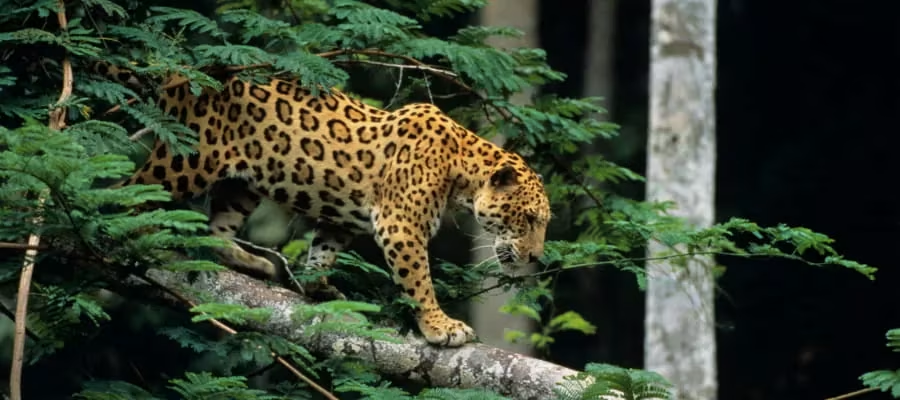
But let’s talk about the big one: jaguars. Tortuguero is one of the very few places in Costa Rica where they’re still occasionally spotted, not by tourists, but through camera traps set up by researchers. These majestic cats come to the beach at night to hunt sea turtles, especially during nesting season. You won’t likely see one (they’re incredibly shy), but knowing they’re out there adds a real thrill to your visit.
One thing to keep in mind: wildlife sightings are never guaranteed. Heavy tropical rain can make animals less active or harder to spot, especially during boat excursions. Even so, Tortuguero is so rich in wildlife that monkeys, birds, reptiles, frogs, and tropical plants often turn up when you least expect them.
Practical info
Best time to see wildlife: Early morning (5:30–8:00 AM) and late afternoon (3:30–6:00 PM)
Tours: Book a guided canal tour or early morning boat safari for the best chance of sightings
What to bring: Binoculars, insect repellent, camera with zoom lens
Jaguar sightings: Extremely rare; ask guides about research updates
Where to stay in Tortuguero: village or jungle lodge?
Where you stay in Tortuguero completely changes the experience. The first decision isn’t really which hotel to choose, but whether you want to stay inside Tortuguero village or in a lodge surrounded by the canals and rainforest.
Stay in Tortuguero village for freedom and a lower budget
For backpackers, independent travelers, and anyone watching their budget, staying in the village is usually the easiest option.
Everything is within walking distance: small restaurants and sodas, grocery stores, the beach, local tour operators, boat taxis, and the docks used by public boats.
You can organize your days independently, eat wherever you want, and book activities one by one rather than relying on your accommodation.
The village itself is small and simple rather than a major attraction, but that is also part of its appeal. Life here follows the rhythm of the boats, the weather, and the Caribbean coast.
Stay in a jungle lodge for an all-in-one Tortuguero experience
If your budget allows, staying outside the village offers a completely different experience. Many lodges are accessible only by boat and are surrounded by canals, tropical forest, or the Caribbean coastline.
Once you arrive, you will generally spend most of your time at the lodge or on excursions departing directly from it, so location, meals, facilities, and included activities matter much more than they would in the village.
Larger eco-lodges such as Evergreen or Mawamba provide comfortable rooms and extensive facilities in the rainforest, but don’t automatically expect conventional resort standards. Many Tortuguero lodges deliberately use natural ventilation and ceiling fans instead of air conditioning.
For travelers looking for more comfort, properties such as Tortuga Lodge & Gardens or Manatus offer a more upscale experience, with higher-end accommodation and dining. Some premium packages include all three meals as well as transportation or selected excursions.
Tip: Compare packages rather than room prices alone. In Tortuguero, a rate that looks expensive may already include meals, boat transfers, guided canal tours, or village visits.

Check which activities your hotel package already includes
Many lodge packages include activities such as:
Early-morning wildlife boat tours
Guided canal excursions
Walks through private rainforest trails
Visits to Tortuguero village
Meals and boat transfers
However, do not assume that the sea turtle nesting tour is included. Turtle watching during nesting season follows a separate regulated system and should be confirmed specifically with your hotel.
Some lodges also offer additional experiences such as kayaking, night walks, massages, or spa treatments surrounded by the rainforest.
How to get to Tortuguero
Getting to Tortuguero isn’t as straightforward as hopping in a car and driving there, there are no roads to the village. But that’s exactly what makes the journey so special.
By car + boat (most common route)
The most popular (and budget-friendly) way to reach Tortuguero is to drive to La Pavona and take a boat from there.
Drive time from San José to La Pavona: ~3.5 hours
Boat ride from La Pavona to Tortuguero: ~1–1.5 hours
Parking fee at La Pavona: Around $10 USD per day
Boat departure times: Usually 7:30am, 11am, and 1pm (but double-check locally)
You don’t need a 4WD to get to La Pavona, but roads can get rough in rainy season, especially the last stretch. If you're renting a car, an SUV is a safer bet.
La Pavona is the main gateway to Tortuguero and usually the simplest option for independent travelers.
From San José, drive toward Guápiles and Cariari before continuing to La Pavona. From there, public and private boats travel along the river toward Tortuguero.
The journey by boat normally takes around 1 to 1.5 hours, although water levels can make the trip shorter or longer.
Several shared boats operate each day. Exact schedules vary slightly between operators, but departures generally run from early morning until late afternoon. Always check the latest departure times before driving to La Pavona, particularly if you plan to take one of the final boats of the day.
La Pavona is convenient and efficient, but it is also the busiest gateway to Tortuguero.
Caño Blanco: a quieter and more scenic alternative
Caño Blanco offers another approach to Tortuguero, particularly for travelers coming from the Caribbean coast or for lodges that arrange their own transfers.
Unlike La Pavona, Caño Blanco does not have the same regular public boat network. Boat transportation from here should therefore be arranged in advance with your lodge or a private operator.
The journey can be longer, but that is part of its appeal. The route passes through narrower waterways and feels more like the beginning of your rainforest experience rather than simply a transfer.
River conditions change throughout the year, so hotels and operators sometimes adapt the embarkation point according to rainfall and water levels.
By shuttle or public transport
Don’t want to drive? You can also book a shuttle (shared or private) from San José, which includes both land and boat transportation.
Public bus + boat option is also available, but it’s longer and requires multiple transfers (San José > Cariari > La Pavona > boat).
By plane
Yes, there’s a small airstrip in Tortuguero, and domestic flights from San José take just 30 minutes.
Sansa Airlines runs daily flights
Expect to pay around $80–$120 USD one way (luggage weight restrictions apply)
Flying is the fastest way to get there, but you’ll miss out on the jungle riverboat ride, which is half the fun!
FAQ about Tortuguero, Costa Rica
Is Tortuguero worth visiting? Absolutely! If you're looking for wildlife, nature, and a unique experience far from crowds and resorts, Tortuguero is one of the most magical places in Costa Rica. It's not about fancy hotels or nightlife, it’s about jungle, turtles, and tranquility.
When is the best time to see green sea turtles in Tortuguero? The endangered green sea turtle nesting season runs from July to October, with the highest activity usually in August and September. Leatherbacks come earlier in the year, between March and May. Night tours are mandatory and must be guided.
Can I swim at Tortuguero Beach? Not really. The ocean here is rough, with strong rip currents and no lifeguards. It’s great for a walk or sunrise, but not safe for swimming.
Is it always raining in Tortuguero? Tortuguero is one of the wettest parts of Costa Rica, even in the dry season. It can rain any time of year, but the showers are part of the dense rainforest charm. Pack light rain gear and quick-dry clothes.
Is Tortuguero expensive? It can be, since everything must be brought in by boat or plane. But you can keep costs manageable by choosing budget lodges, joining small-group tours, and eating at sodas (local diners).
Do I need a car to visit Tortuguero? Actually, you can’t drive to Tortuguero village at all. Most travelers drive to La Pavona, park their car, and take a boat in. Renting a car is still useful if you plan to explore more of the Caribbean coast afterward (like Cahuita, Puerto Viejo, or Manzanillo).
What wildlife can I expect to see? Besides turtles, you might spot monkeys, toucans, crocodiles, sloths, caimans, river otters, and dozens of bird species. It’s a paradise for animal lovers and photographers, especially Tortuguero National Park
How long should I stay in Tortuguero? 2 to 3 days is perfect for most travelers. You’ll have time for a canal tour, a night walk, a turtle watching tour (in season), and a bit of downtime by the water.

Final thoughts: a jungle escape like no other
Tortuguero isn’t your typical Costa Rica destination, and that’s exactly the point. There are no roads, no loud bars, no big-name hotels. Just you, the jungle, and the pulse of nature all around. Whether you're paddling through quiet canals at sunrise, watching a sea turtle lay her eggs under a full moon, or waking up to howler monkeys in the trees, the experience is raw, wild, and unforgettable.
And while you won’t need a car in Tortuguero, renting one is still your best move for exploring the rest of the Caribbean coast, especially if you’re planning to visit Puerto Viejo, Cahuita, Manzanillo, or heading back through San José or Arenal. A 4WD or SUV is a smart choice during the rainy season and gives you the freedom to go wherever the road (or river!) takes you.