
Exploring Tenorio Volcano National Park
Why Tenorio Volcano is a must for Costa Rica travelers
Looking for that surreal turquoise river you keep seeing on Instagram? Yep, that’s Río Celeste, and it flows right through Tenorio Volcano National Park, a place that’s still flying under the radar for many travelers. But if you're planning a trip to Costa Rica and want something that mixes lush jungle, a volcano, natural hot springs, and one of the most unique rivers in the world, you’re in the right place.
In this article, we’ll cover everything you need to know about visiting Tenorio Volcano, from hiking trails and hot springs to wildlife, entrance info, how to get there, and what to expect on the trail. Whether you're traveling as a couple, with kids, or on a friends’ adventure trip, Tenorio fits all kinds of vibes, nature, wow-moments, and just enough challenge to make you feel alive.
Let’s get into it.
What makes Tenorio Volcano National Park so special?
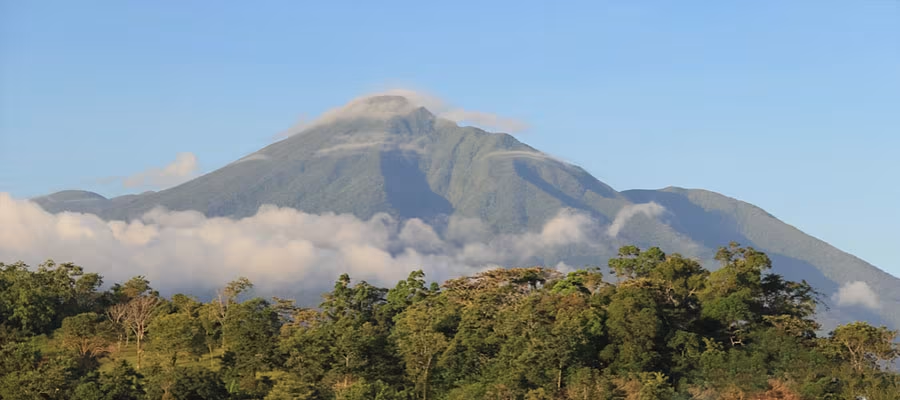
It’s not just a volcano. It’s an entire ecosystem wrapped around a dormant volcano, with trails leading you through dense rainforest, waterfalls that look photoshopped, bubbling thermal springs, and yes, that iconic turquoise river created by a freaky natural chemical reaction. The colors look fake, but they’re real. It’s like walking through an enchanted forest, only it’s sweaty, humid, and alive with howler monkeys and the occasional toucan flyby.
And guess what? Even though it's located in Guanacaste Province, one of Costa Rica’s most visited regions, Tenorio still feels wild and off-the-beaten-path. You won’t find big resorts or party beaches here. What you’ll find instead is peace, mud, mystery, and magic.
If you’ve been to La Fortuna and want something just a bit more raw (but still doable with kids or grandparents who hike), this one’s for you.

Top things to see inside the park
Hiking through Tenorio Volcano National Park isn’t just about checking off a waterfall. It’s a full-on nature experience with surprises at every turn. Here’s what you absolutely shouldn’t miss:
Catarata Río Celeste (Rio Celeste Waterfall)
The showstopper. After a steep staircase descent through the jungle, you’ll reach the viewing platform facing a surreal cascade of turquoise blue. It’s one of the most photographed spots in Costa Rica for a reason, and yes, it looks just like the pictures (on dry days).
Fee: Park entry $12/adult, $5/child (ages 2-12)
Time to visit: ~30 min one-way to the waterfall viewing platform, 250 steps down/up
Practical info: Trail section is paved until stairs, then concrete & steps; handrails available
Kids: Accessible for families with kids 6+, stairs can be tiring but manageable with breaks

Los Teñideros (River Confluence Point)
This is where the magic happens. Two clear rivers (the Buenavista and the Sour Creek) merge, and a rare chemical reaction turns the water electric blue. There’s nothing quite like it in the world, science meets fairy tale.
Fee: Included
Time to visit: 5-10 min
Practical info: A short bridge leads you to this magical meeting of two rivers turning turquoise
Kids: Great science-and-nature moment; a very kid-friendly stop

Los Borbollones (Bubbling Hot Springs)
Keep walking and you’ll smell it before you see it. This steaming pool bubbles from underground geothermal activity. The water’s not for soaking (it’s boiling hot) but the sight and sound are mesmerizing. And yes, it smells a little like eggs.
Fee: Included
Time to visit: 5-10 min stop
Practical info: Natural geothermal vents, water steams and bubbles, don't touch, only observe
Kids: Fascinating for curious minds, but supervise around hot vents

Laguna Azul (Blue Lagoon)
A calm, intensely blue pool surrounded by thick rainforest. It’s peaceful, photogenic, and a great spot to catch your breath. No swimming allowed, but perfect for a break and some wildlife spotting.
Fee: Included in park entry
Time to visit: 10-15 min walk off the main trail; factor in 5-10 min to enjoy the view
Practical info: Rocky/stepped descent; no swimming allowed; perfect

Wildlife & birdwatching
If you're lucky, you might spot howler monkeys, white-faced capuchins, coatis, or even a sloth hanging out overhead. The trails are also home to colorful frogs, lizards, and hundreds of bird species. Keep your eyes (and ears) open!
Fee: Included
Time to enjoy: Anytime on trail
Practical info: Park is home to howler monkeys, coatis, toucans, frogs, motmots, pumas and more
Kids: A highlight, pack binoculars and keep eyes/ears peeled

Hike through tropical rainforest
The trail is a loop through a humid tropical forest brimming with life. Towering trees, thick vines, giant leaves, butterflies everywhere, it feels like you’re walking through a scene from Avatar.
Tip: Bring binoculars if you love birds. Tenorio is home to toucans, motmots, and trogons, plus dozens more you’ll hear but not see unless you come prepared.
Fee: Included
Time to visit: Entire trail is ~6 km / 3.7 mi, plan 2.5-4 h round-trip
Practical info: Trail includes gravel paths, muddy sections in rainy season, signage but no maps inside
Kids: Suitable for active families; bring snacks and breaks

Natural hot springs (outside main trail)
After your hike, nothing beats dipping your tired legs into one of the area’s rustic hot springs. These hidden gems near Tenorio offer a natural, soothing reward, no luxury spa here, just warm riverbanks, jungle sounds, and pure pura vida vibes.
Fee: Free or small parking fee; rustic and off the beaten path
Time to visit: 30 min-1 h extra post-hike
Practical info: Access via side trails or near Heliconias trails; water temps vary, none are spa-like
Kids: Great for relaxing after hike, just supervise

Heliconias hanging bridges & Lago Danta trail (optional add-on)
If you’re up for more adventure, the nearby Heliconias trails are worth the detour. Between rainforest canopy bridges and the peaceful Lago Danta, this off-the-radar spot gives you a different angle on Tenorio’s wild side, less crowded, more immersive.
Fee: Separate from park (~$10-15 guided)
Time to visit: 2-4 h
Practical info: Elevation gain moderate, trail connects into park's northern end
Kids: Popular with families; canopy views, good wildlife spotting

All these stops are connected via a well-maintained loop trail, roughly 3.7 miles round trip. Plan for 2.5 to 4 hours depending on how many selfies you take, how hot it is, and whether you get stuck in a troop of coatis.

How to get to Tenorio Volcano National Park
From Liberia: About 1h45 to 2h15 by car. The easiest route is via Route 1 to Bijagua, a charming little town where many travelers stay.
From La Fortuna: It takes roughly 2.5 hours. The road is scenic but can be rough, especially in the rainy season. A 4x4 is strongly recommended.
From San José: Expect 4 to 5 hours of driving, so it’s best to overnight nearby.
Pro tip: Rent a 4WD or at least a sturdy SUV. Even though the last part of the road is gravel, in the wet season (May to November), puddles can swallow small sedans whole. I once saw a couple try to make it in a Yaris… the car survived, their relationship probably didn’t.
When to visit and what to pack
Best time to go:
Dry season (Dec to April) offers clearer skies, turquoise water at its brightest, and easier hiking.
Rainy season (May to November) means more mud and higher river levels, but fewer tourists and more vibrant jungle colors.
What to pack:
Trail shoes with good grip
Rain jacket (yes, even in dry season)
Water and snacks (no services inside the park)
Camera or phone with a waterproof pouch
Swimsuit (for nearby hot springs)
Bug spray and sunscreen
Bonus tip: Don’t wear white sneakers. They’ll come out Costa Rican jungle brown.
Where to stay near Tenorio Volcano
Most travelers choose to stay in Bijagua, the charming gateway town to the park. It’s small, local, and surrounded by lush green hills. You’ll find cozy eco-lodges, cabins with volcano views, and even farm stays.
Top picks:
Casitas Tenorio: Lovely bungalows, homemade breakfast, and a garden full of toucans.
Rio Celeste Hideaway Hotel: Upscale jungle vibes, close to the river, with a killer pool.
Heliconias Lodge: Affordable and immersed in nature, with private trails and hanging bridges.
Tip: Book ahead in high season (especially Dec-Feb). Rooms fill up fast near the park entrance.
FAQ - Your questions about Tenorio Volcano National Parc
Is swimming allowed in the Rio Celeste? Not inside the national park. The iconic blue waters are protected. But there are free access spots downstream near Bijagua where swimming is allowed, ask a local!
Is it really that blue? Yes, when the weather cooperates! On dry, sunny days the color is unreal. After heavy rain, it can turn murky, so plan accordingly.
Is the trail hard? It’s not Everest, but expect mud, stairs, and humidity. Most people can do it, but take your time and bring water.
Are guides required? Not for the main trail. But if you want to spot wildlife or learn more about the park’s geology, hiring a local guide in Bijagua is 100% worth it.
Can I visit with kids? Absolutely! Just note that strollers won’t make it, and little legs might get tired. Bring snacks and pace the adventure.
Why rent a car for your visit
Public transportation doesn’t get you close enough, and tours don’t offer much flexibility. Renting a car is the best way to explore Tenorio at your own rhythm. You can stay late, find hidden hot springs, or take a spontaneous detour through the mountains.
Looking for a rental? Book your car with Jumbo Car Costa Rica and pick it up in Liberia or San José. Our fleet includes 4x4s, SUVs, and automatic cars, perfect for exploring parks like Tenorio with zero stress.