
Jaguar Costa Rica
Jaguars in Costa Rica: where they live, how to (maybe) see one, and why they matter
Are there jaguars in Costa Rica? Absolutely. They roam silently through the rainforests of the Osa Peninsula, slip between trees near Tortuguero, and leave paw prints on remote jungle paths most travelers will never see. These majestic wild cats are elusive, powerful, and wildly symbolic of the country’s incredible biodiversity, revered as a remarkable animal in Costa Rica's culture and natural heritage. The jaguar is not only a symbol within Costa Rica, but also holds great importance across Central America as a keystone species and a focus of regional conservation efforts.
In this article, I’ll break down everything you need to know about jaguars in Costa Rica:
where they live and how conservation efforts are helping protect them
how (and where) you might spot one in the wild
how jaguars and sea turtles cross paths in Tortuguero
what to know about safety, eco-ethics, and local guides
the best places to base yourself if you’re hoping for a real jungle encounter
Costa Rica's unique biodiversity and rainforests as vital habitats for jaguar conservation
Even if you never see one, understanding the jaguar’s role in Costa Rica’s ecosystems will add depth to your trip, and foster a deeper connection with Costa Rica's natural world, adding a bit of thrill to every hike through dense forest.
Planning to explore the Osa or Tortuguero regions? You’ll want to rent an SUV or 4×4 right at the airport (San José or Liberia) so you can venture deeper into wildlife-rich areas on your own schedule.
Meet the jaguar: Costa Rica’s most iconic wild cat
Stepping into the rainforest in Costa Rica, you’re entering jaguar territory. These powerful cats are more than elusive predators, they’re keystone species, vital to the health of the entire ecosystem. Though rare to spot, they still roam protected zones like Corcovado and Tortuguero National Parks, quietly reminding us of Costa Rica’s deep commitment to wildlife conservation.
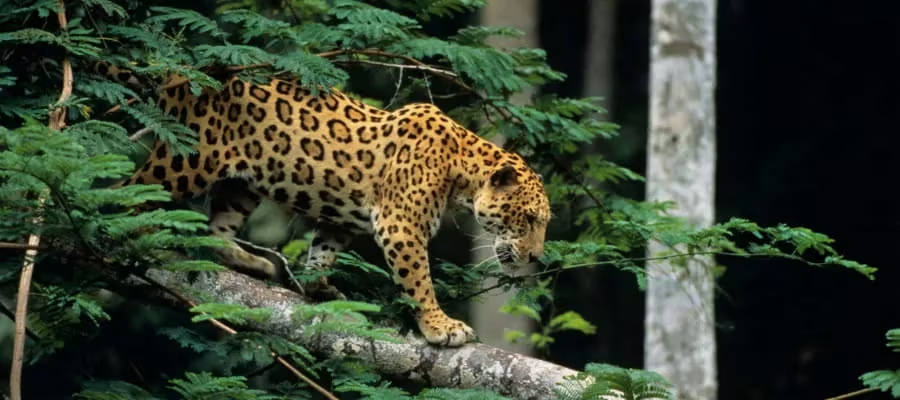
What makes jaguars unique
Size & strength: Jaguars are the largest cat in the Americas, and third-largest in the world. Built like tanks, they have stocky frames, strong legs, and crushing jaws.
Coat & camouflage: Their golden-yellow coats with black rosettes help them blend into dappled jungle light. Some are black jaguars, whose melanism gives them an even stealthier look.
Hunting style: Unlike other big cats, jaguars go straight for the skull, one powerful bite ends it. Their prey list? Monkeys, capybaras, peccaries, fish, even crocodiles and sea turtles.
Behavior: They’re solitary, secretive, and mostly nocturnal. They also love water, a trait that sets them apart from most cats. You might catch one swimming across a river or prowling near a mangrove edge.
Every feature, from their quiet movements to their piercing gaze, makes jaguars perfectly adapted to Costa Rica’s dense forests, wetlands, and remote riverbanks.
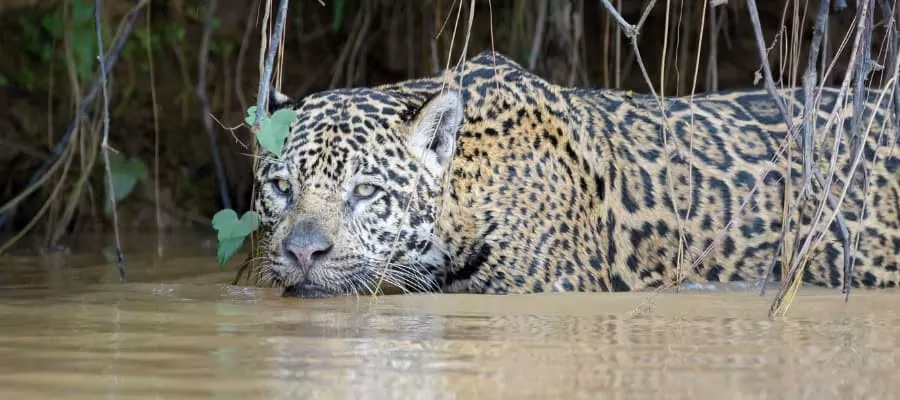
Where jaguars live in Costa Rica
Jaguars are incredibly shy and territorial, which makes spotting one a real challenge, but knowing where they live is the first step. Costa Rica's rainforests, with their dense rainforests and dense vegetation, provide ideal natural habitats for these elusive wild cats.
The strongest populations of jaguars in Costa Rica are found in the south and Caribbean lowlands, especially in protected areas that offer large, undisturbed habitats. These tropical forests are crucial for the survival of jaguars and other wild cats, highlighting the importance of conservation efforts to protect their natural habitats.

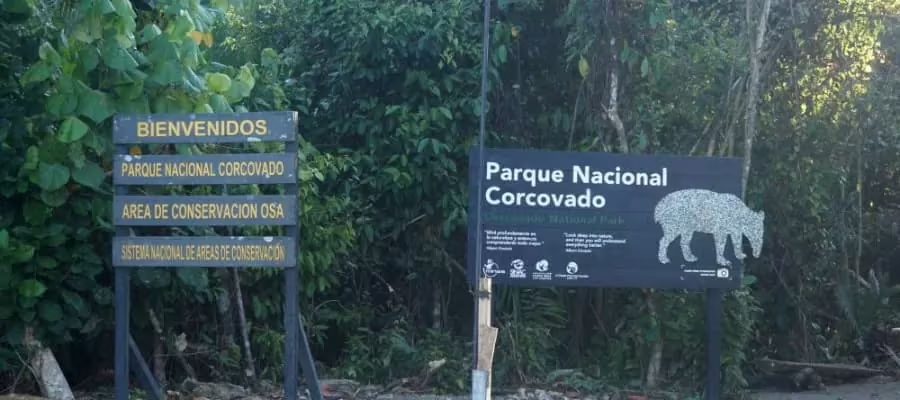
Osa Peninsula & Corcovado National Park
This is the wild heart of Costa Rica. Corcovado is often called “the most biologically intense place on Earth”, and it’s where I’ve heard local guides whisper, “We saw fresh jaguar tracks this morning.” These jaguar tracks are a key sign of their presence and make wildlife observation here especially authentic. It’s not unusual for researchers or rangers to spot jaguars here, scientists have identified eight jaguars roaming Corcovado National Park, and while tourists rarely get lucky, it’s the top place where your chances are more than just theoretical.
Piedras Blancas & the Golfo Dulce Forest
Connected to Corcovado by what’s called the Jaguar Corridor, this less-visited area includes protected reserves that serve as critical habitats for jaguars and other wildlife, supporting big cat movement. A few remote eco-lodges here use trail cameras and camera traps, along with wildlife guides, to monitor and observe local wildlife. If you’re looking for that feeling of being alone in the jungle with only howler monkeys and shadows… this is it.
Tortuguero National Park
On the Caribbean coast, this park is more famous for sea turtles, but jaguars are part of the equation, too. In fact, here’s where researchers discovered jaguars preying on green sea turtles, especially during nesting season. Visitors don’t hike in Tortuguero, but boat tours and night stays offer a different kind of wild.

The Caribbean Foothills and Talamanca Mountains
Though less visited by tourists, the southern Caribbean corridor, which includes parts of the Talamanca Range and Indigenous reserves, plays a vital role in jaguar movement between Panama and Costa Rica. It’s remote, lush, and full of life.
The region's cloud forests, with their high elevations and moist, dense vegetation, provide a unique habitat for rare wild cats such as the spotted cat (oncilla), making it a hotspot for biodiversity.
The Jaguar Corridor (and why it matters to your trip)
You might not realize it when you’re driving through Costa Rica’s lush hills or winding along jungle roads, but you’re traveling through part of the Jaguar Corridor, a massive conservation project that stretches from Mexico all the way down to Argentina, connecting habitats across Latin America to support jaguar populations conservation on a continental scale.
Costa Rica plays a key role in this initiative, thanks to its network of national parks, biological corridors, and private reserves. These areas aren’t just pretty landscapes; they’re lifelines that allow jaguars (Panthera onca) and other wildlife to move, hunt, and reproduce without getting isolated by human development.
So what does this mean for you as a traveler?
It means that when you hike in places like Corcovado, Barra Honda, or even Tenorio, you’re stepping into ecosystems where jaguars might pass through at night.
It means that those remote eco-lodges with no Wi-Fi and solar panels aren’t just “off-grid experiences”, they’re helping protect vital habitat.
It also means you should drive a little slower on rural roads, especially near Tarcoles, Golfito, or La Amistad, where wildlife crossings are common.
These corridors not only benefit jaguars but also support other species that share their habitat, helping to maintain ecological balance and biodiversity.
I’ve had several hikes where I never saw a jaguar, but later saw footprints in the mud or heard a guide mutter “el tigre” with a smile. There’s something deeply humbling about knowing they’re out there, watching, maybe, from behind the trees.

Credits: Costa Rica Découverte
Threats to jaguars in Costa Rica
Jaguars may be top predators, but in Costa Rica, they're under serious pressure. Habitat loss from farming, roads, and development is fragmenting their forest territory, cutting off movement and reducing prey. Isolated populations struggle to survive, and when jaguars get too close to farms, conflicts with humans often turn deadly.
Poaching remains a threat too, with illegal trade in jaguar parts driven by black market demand. Fortunately, Costa Rica’s protected areas and wildlife corridors help connect habitats and give these big cats a fighting chance.
Conservation projects (like camera trap monitoring, local education, and conflict mitigation) are working to change the narrative. Whether you're traveling, donating, or just spreading awareness, you can play a small part in protecting jaguars and Costa Rica’s rich biodiversity.
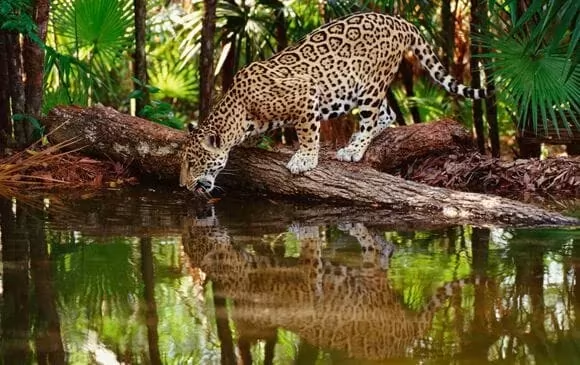
Can you actually see a jaguar in Costa Rica? (And how?)
Let’s be honest: seeing a wild jaguar in Costa Rica is incredibly rare. This isn’t like spotting monkeys on the beach or sloths in a tree near the road. Jaguars are elusive, mostly nocturnal, and they actively avoid humans.
Jaguar attacks on humans are extremely rare and virtually nonexistent in protected areas, so visitors have no reason for concern.
But that doesn’t mean it’s impossible.
So... is it worth trying?
Yes, if you know what to expect. Your goal shouldn't just be to see a jaguar, but to immerse yourself in the kind of untouched nature where they still roam freely. In that sense, the journey is the real reward.
Here’s what increases your chances:
Go where they live: Head to places like Corcovado, Piedras Blancas, or the southern Caribbean foothills.
Stay overnight in eco-lodges close to national parks or deep in private reserves.
Join guided night hikes or camera trap tours, which offer a glimpse into nocturnal jungle life.
Visit during turtle nesting season in Tortuguero, when jaguar activity rises.
Insider tip: Some remote lodges in Osa have camera trap photos of jaguars they’ll proudly show you at dinner, ask!
And here's the fun part: even if you don’t spot a jaguar, you might see fresh paw prints, hear mysterious rustles in the dark, or come across a kill site (yes, really, nature is wild). On one of my treks near Dos Brazos, we followed a guide into a clearing where a tapir had recently been taken down. It was chilling… and incredible.

A quick note on ethics
Skip any place that guarantees jaguar sightings. That usually means captivity, not conservation. True ecotourism is about respect, patience, and letting nature unfold on its terms.
Practical tips, where to stay, and what to expect
You don’t need to be a biologist to go looking for jaguars, but you do need to plan smart. Here's what to know before heading into jaguar territory:
Where to stay
Corcovado / Osa Peninsula: Look into places like Luna Lodge, El Remanso, or La Leona Ecolodge. They’re remote, solar-powered, and surrounded by primary forest.
Tortuguero: Stay in Tortuga Lodge or Mawamba Lodge, both great bases for boat safaris.
Southern Caribbean / Talamanca: Selva Bananito and Almonds and Corals combine wildlife and cultural immersion.
What to pack
Lightweight, breathable long-sleeves (for sun and bugs)
Waterproof hiking boots
A dry bag and flashlight for night hikes
Binoculars or a good zoom lens, just in case
Patience (lots of it)
What to expect
Most jaguar encounters are indirect: tracks, camera trap shots, or guides recounting stories
You’ll likely see tons of other wildlife: peccaries, howler monkeys, macaws, tapirs...
Jungle weather is unpredictable. Embrace the mud.
And remember, jaguars are not out to get you. They avoid humans, and there’s no need to be afraid, just respectful. The idea that you’re walking through the same forest as one of the world’s most elusive cats? That’s already magic.